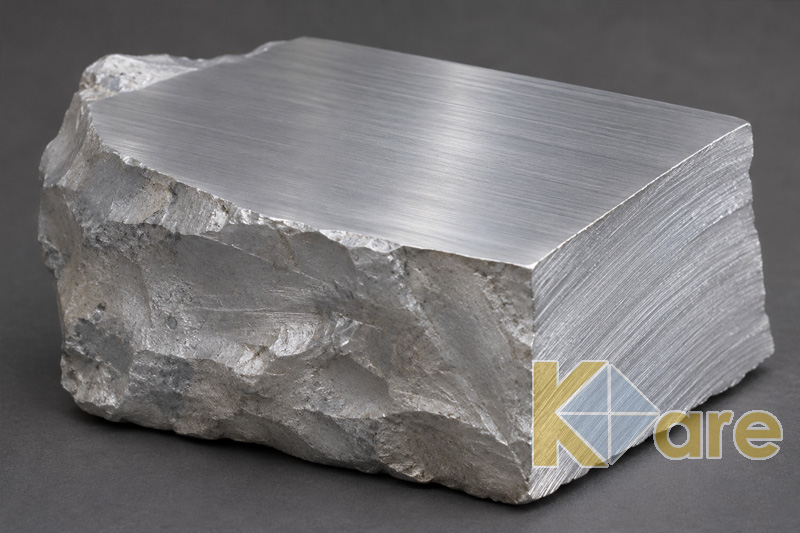
Duralumin is a traditional name for a group of wrought aluminium-based alloys (Al) containing copper (Cu), magnesium (Mg) and other alloying elements. These materials combine low density with high strength after appropriate processing. They are used in aviation, mechanical engineering, transport equipment and the manufacture of load-bearing components.
What is duralumin?
Duralumin belongs to the family of heat-treatable aluminium alloys. Aluminium forms the base of the material, while copper, magnesium and additional elements enable higher strength than commercially pure aluminium.
The name duralumin does not identify a single, precisely defined grade. It is usually associated with wrought Al–Cu–Mg alloys, particularly certain materials in the 2xxx series. Not all aluminium alloys in this series have the same composition or properties.
The English name is duralumin, while the German name is Duraluminium. When selecting a material for technical use, the specific grade and delivery condition must be stated rather than relying on the general name alone.
Chemical composition of duralumin
The principal component of duralumin is aluminium. Its most important alloying elements are copper and magnesium. Depending on the grade, manganese, silicon and other elements are also present within specified limits.
For example, EN AW-2024 contains 3.8–4.9% copper, 1.2–1.8% magnesium and 0.3–0.9% manganese. Aluminium makes up most of the remainder. These values apply to a specific grade and do not represent a universal composition for all duralumin alloys.
| Element | Symbol | Role in the alloy |
|---|---|---|
| Aluminium | Al | Forms the alloy base and provides low density |
| Copper | Cu | Contributes to the formation of strengthening phases and increased strength after heat treatment |
| Magnesium | Mg | Works with other components to contribute to age hardening |
| Manganese | Mn | Influences the microstructure and properties of certain grades |
| Silicon | Si | Present in some grades and influences phase formation and processing characteristics |
The designation Al + Cu + Mg indicates the principal alloying system but does not replace the complete chemical composition. Identification requires checking all specified elements.
Physical and mechanical properties
- Density: approximately 2.8 g/cm³; the exact value depends on the grade.
- Colour: silvery grey with a metallic lustre.
- Strength: strongly dependent on composition, heat treatment and delivery condition.
- Specific strength: the combination of low density and high strength allows lighter structures.
- Ductility: depends on the material condition; forming is generally easier in a softer condition.
- Electrical and thermal conductivity: generally lower than those of commercially pure aluminium.
- Magnetic properties: an ordinary magnet cannot distinguish duralumin from most other aluminium alloys.
Tensile strength, hardness and elongation cannot be represented by one value for the entire alloy family. Even within a single grade, these properties vary with temper, thickness and product form.
European duralumin alloy grades
European documentation identifies wrought aluminium alloys using the EN AW designation system. Materials commonly described as duralumin are typically found in the 2xxx series, with copper as the principal alloying element.
| Grade | Composition designation | Characteristics | Applications |
|---|---|---|---|
| EN AW-2017A | AlCu4MgSi(A) | Heat-treatable aluminium-copper alloy containing magnesium and silicon | Machined components, forgings, mechanical engineering and aircraft structural parts |
| EN AW-2024 | AlCu4Mg1 | Al–Cu–Mg alloy used for components with demanding strength requirements | Aircraft structures, load-bearing components and machined stock |
EN is the European standards system. EN 573-3 specifies the chemical composition of wrought aluminium alloys, while EN 515 defines temper designations. Requirements for particular products are covered by the relevant standards, such as the EN 485 series for sheet, strip and plate or the EN 755 series for extruded products. European standards adopted in Latvia may carry the designation LVS EN.
Aircraft products may be subject to additional industry specifications. A shared general name or similar composition does not automatically make materials interchangeable.
Corrosion resistance
An oxide film forms on the surface of aluminium alloys, but it does not make duralumin completely resistant to corrosion. Several aluminium-copper alloys have lower corrosion resistance than many Al–Mg and Al–Mg–Si alloys.
Depending on the application, protection may include coatings, painting, suitable anodising processes or cladding. Clad sheet has a protective surface layer whose composition differs from that of the core material.
Service conditions must also account for contact with other metals, moisture, the condition of the protective layer and joint design. Damage to a coating can change the corrosion conditions.
Production and processing
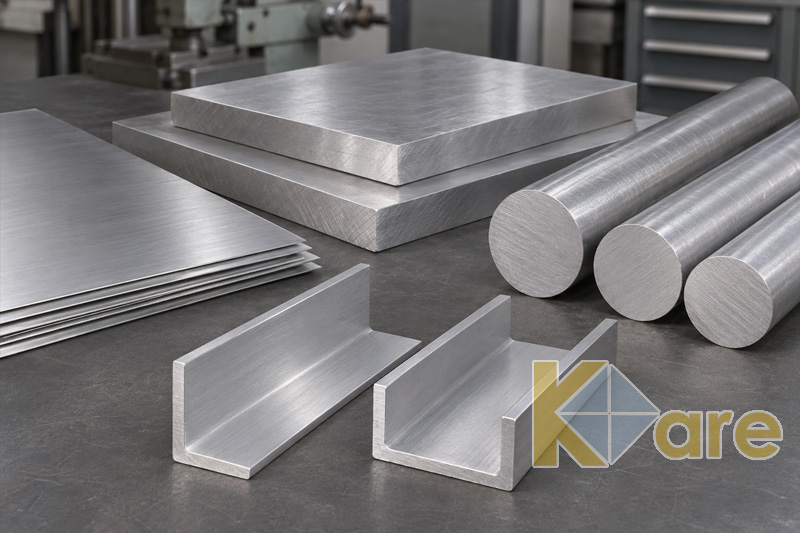
Duralumin alloys are supplied as sheet, plate, strip, rod, profiles, tube and forgings. They are primarily wrought materials: the required shape is obtained by rolling, extrusion, forging and subsequent machining.
Strengthening involves solution heat treatment, quenching and ageing. Strengthening precipitates form within the microstructure during ageing. Depending on the grade and process, ageing may take place at room temperature or at an elevated temperature.
Temper designations help explain the processing history. For example, T4 means solution heat treatment followed by natural ageing to a substantially stable condition, while T3 also includes cold working. The complete temper designation must be checked in the documentation.
Many common duralumin alloys have limited suitability for conventional fusion welding. Joint selection must consider the risk of defects and changes in strength; riveted and mechanical joints are widely used in structures.
Applications
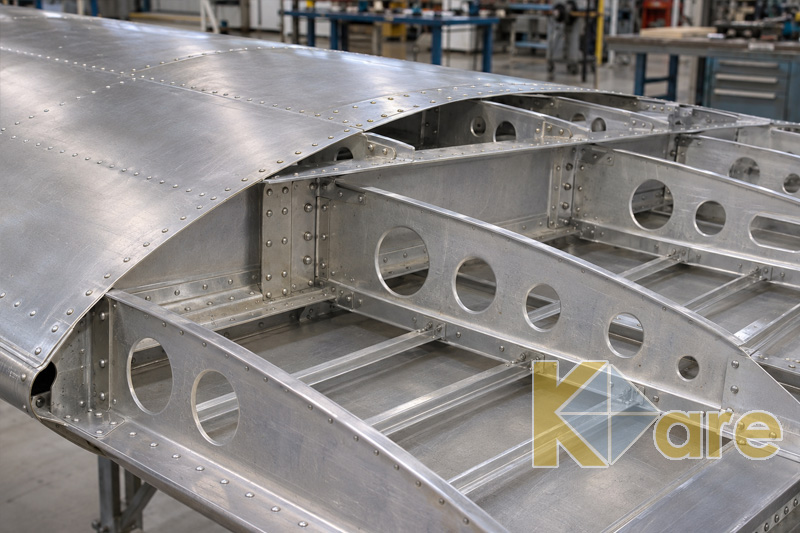
- Aircraft industry: skin panels, structural members and other components made from grades specified in the design documentation.
- Mechanical engineering: load-bearing parts, brackets, housings and mechanism components.
- Transport equipment: components requiring a combination of strength and low weight.
- Instrument manufacturing: machined parts and structural equipment components.
- Semi-finished products: sheet, plate, rod, profiles and forgings for subsequent manufacture.
- Special structures: components with specified requirements for weight, strength and service conditions.
Duralumin, commercially pure aluminium and silumin: what is the difference?
These materials are all aluminium-based, but their compositions, production methods and applications differ. A similar silvery appearance does not make them the same material.
| Characteristic | Duralumin | Commercially pure aluminium | Silumin |
|---|---|---|---|
| Principal composition | Al + Cu + Mg, with additional elements depending on the grade | Al with limited impurity content | Al + Si, with possible additional elements |
| Typical characteristic | Strengthening by heat treatment | High ductility and conductivity | Good casting properties in common casting grades |
| Typical products | Sheet, plate, rod, profiles and forgings | Sheet, strip, wire and other semi-finished products | Cast housings and other cast components |
| Strength | Depends on grade and temper; after strengthening, generally higher than commercially pure aluminium | Relatively low and dependent on condition | Depends on grade, casting quality and heat treatment |
| Identification in scrap | By markings and chemical composition | By documentation and analysis | By composition and supporting product characteristics |
Not every strong aluminium component should be called duralumin. For example, 7xxx series alloys with zinc as the principal alloying element belong to a different group.
Advantages and limitations
The main advantages of duralumin are low density, high strength after appropriate processing and suitability for manufacturing a wide range of structural components. Many grades also offer good machinability.
Limitations include the need for corrosion protection in certain environments, restrictions on fusion welding and the dependence of properties on heat treatment. Heating during manufacturing, repair or service can change the material’s temper and strength.
For critical products, it is important to consider not only the grade but also the working direction, thickness, delivery condition and quality control requirements.
Duralumin in scrap metal
Duralumin scrap arises during the manufacture and dismantling of aircraft, transport and engineering components. It may include sheet and plate offcuts, rod, profiles, forgings, machined components and swarf.
During scrap acceptance, aluminium-copper alloys must be distinguished from commercially pure aluminium, silumin, aluminium-magnesium alloys and other aluminium alloys. Copper content is important when selecting the recycling route.
Cladding, paint, anodised layers, steel fasteners and other foreign materials can complicate assessment. A component’s appearance and origin help with preliminary sorting but do not replace composition analysis.
Sorting and composition analysis
Sorting takes into account the contents of copper, magnesium, manganese, silicon, zinc and other specified elements. Identification uses markings, accompanying documentation and suitable instrumental analysis methods.
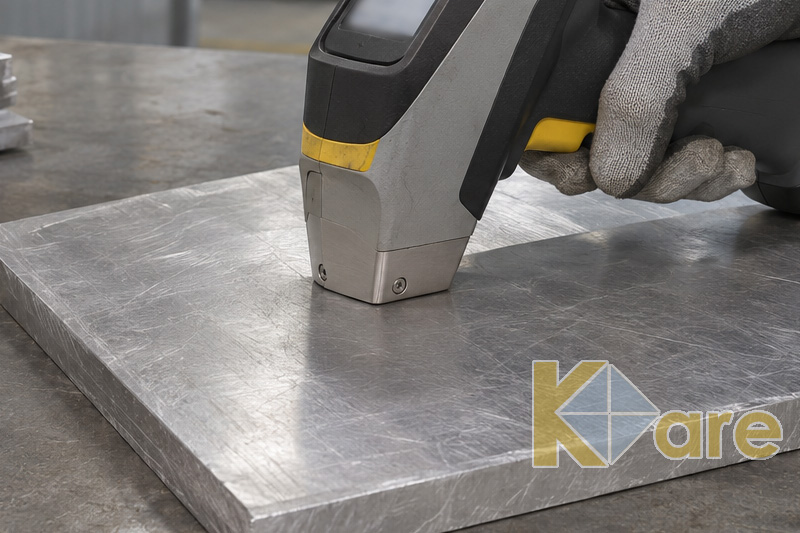
X-ray fluorescence analysis (XRF) can identify many alloying elements, but its ability to measure light elements, particularly magnesium, depends on the instrument and analysis conditions. Optical emission spectrometry (OES) may be used for more comprehensive composition analysis.
Coatings and cladding can give a misleading indication of the composition of the core material. Where necessary, a prepared surface of the base metal is analysed. Chemical analysis alone does not determine the heat treatment condition.
Scrap of known grades should preferably be stored separately. Swarf should be separated from solid scrap, taking account of oil, moisture and foreign inclusions.
Recycling duralumin
Duralumin scrap is a valuable secondary aluminium raw material. After sorting, removal of foreign materials and preparation, it is directed to an appropriate metallurgical recycling process.
The furnace charge is selected with regard to the copper, magnesium and other component contents. Uncontrolled mixing of duralumin with other aluminium alloys can make it difficult to achieve the required composition of the new metal.
Remelting eliminates the previous heat treatment condition. The properties of the new product are established afresh through its composition, manufacturing process and subsequent treatment.
Separate collection of aluminium alloys helps preserve the quality of secondary raw materials and broadens the opportunities for their reuse.