Magnesium (Mg) — Chemical Element
Magnesium — one of the lightest structural metals
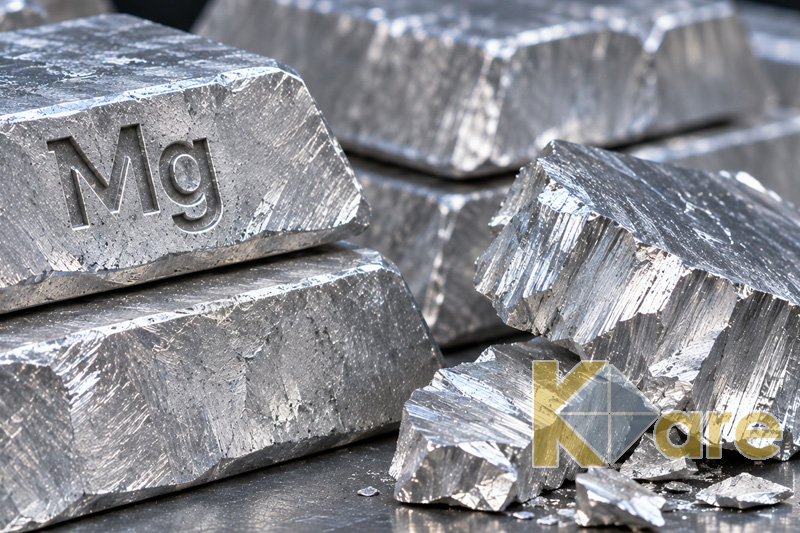
Magnesium (Mg) is a chemical element with atomic number 12, belonging to group 2 of the periodic table. It is a silvery-white metal characterized by low density, high chemical reactivity and the ability to burn with an intense white flame. Magnesium is an alkaline earth metal and is widely distributed in nature in minerals and dissolved salts.
Thanks to its low mass and distinctive chemical properties, magnesium plays an important role in modern industry. It is used in metallurgical processes, chemical manufacturing, pyrotechnics and other technological fields. Magnesium is also an essential biological element required for the normal functioning of plants, animals and humans.
Main characteristics of magnesium
Physical properties
Magnesium is a lightweight, silvery-white metal with a metallic lustre. Its density is approximately 1.74 g/cm³, considerably lower than that of aluminium, iron and copper. At room temperature, magnesium has limited ductility, but at elevated temperatures it becomes easier to work and form.
Magnesium melts at approximately 650 °C and boils at around 1091 °C. The metal conducts heat and electricity. When exposed to air, its surface develops a thin oxide layer that slows further oxidation of solid bulk magnesium under ordinary conditions.
Chemical properties and magnesium combustion
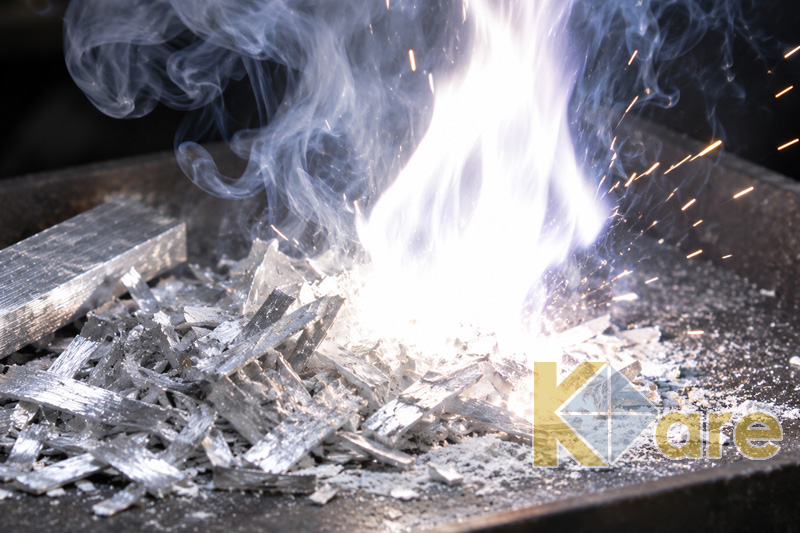
Magnesium is a chemically reactive metal. When heated, it readily reacts with oxygen and can burn with an extremely bright white flame, forming magnesium oxide (MgO). Combustion releases considerable heat, and the intense radiation also includes ultraviolet light.
Magnesium reacts with dilute acids, releasing hydrogen. Bulk magnesium reacts relatively slowly with cold water, but the reaction becomes faster when heated. Fine magnesium particles, turnings and powder present a significant fire hazard. Burning magnesium must not be extinguished with water or ordinary carbon dioxide fire extinguishers; suitable Class D extinguishing agents are required.
Applications of magnesium
Metallurgical industry
Magnesium is used as a reducing agent in certain metallurgical processes, including titanium production. It is also used to remove sulphur from molten cast iron and in other metal treatment processes.
Pyrotechnics and lighting effects
Because it burns with an intense white flame, magnesium is used in specialized pyrotechnic compositions, illumination devices and signalling equipment.
Chemical industry
Magnesium serves as a raw material for producing various chemical compounds. In organic synthesis, it is used to prepare organomagnesium reagents needed for the manufacture of complex chemical substances.
Electrochemical protection
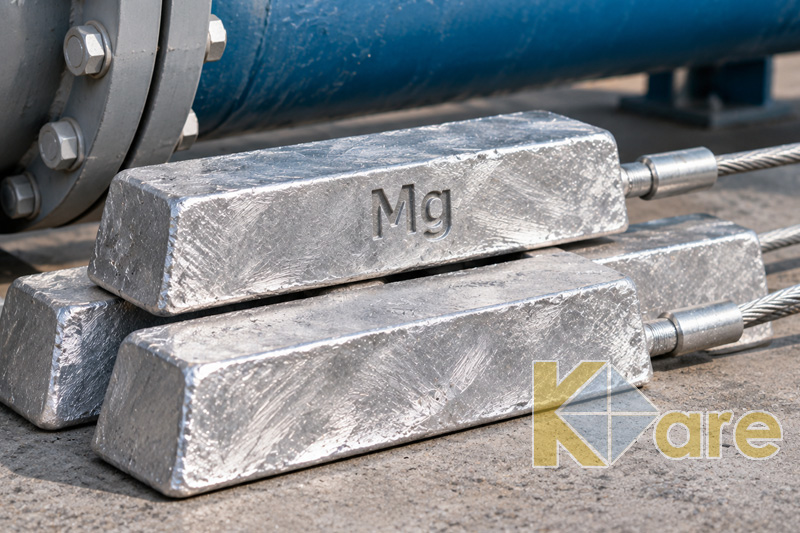
Due to its high electrochemical activity, magnesium is used in sacrificial anodes to protect steel pipelines, tanks, water heaters and other metal structures against corrosion.
Magnesium production
Because of its high chemical reactivity, magnesium does not occur naturally as a free metal. It is obtained from natural compounds found in magnesite, dolomite, seawater and salt brines. The main industrial production methods are electrolysis of molten magnesium salts and thermal reduction of magnesium compounds.
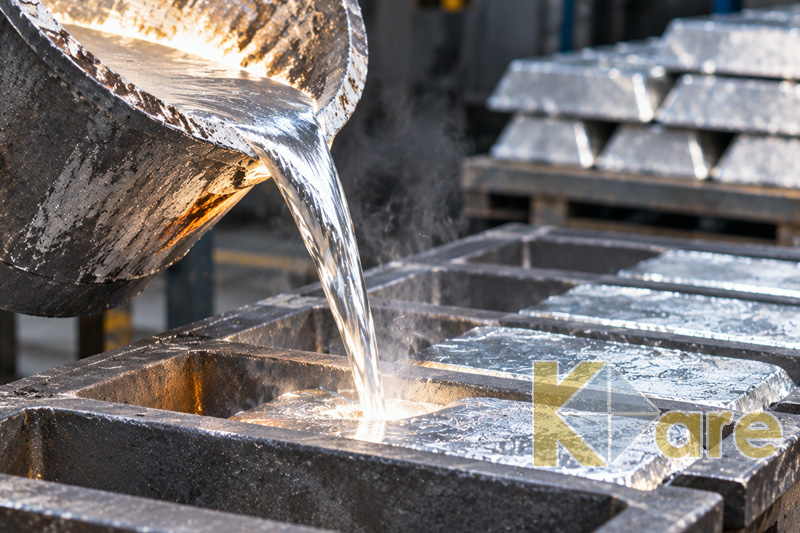
Electrolytic production uses prepared anhydrous magnesium chloride. In thermal processes, magnesium compounds are reduced at high temperatures, after which the resulting metal is purified and cast into moulds. The choice of technology depends on the raw materials, energy requirements and production conditions.
Magnesium in nature and recycling
Magnesium is an abundant element in the Earth's crust. It occurs in numerous minerals and is present in seawater as dissolved salts. In living organisms, magnesium ions participate in many biochemical processes, while in plants magnesium is the central atom of the chlorophyll molecule.
Metallic magnesium can be recycled. It can be recovered from production residues and end-of-life metal products and returned to industrial use. Collection, storage and recycling of magnesium waste require special attention to its chemical reactivity and fire hazards, particularly when handling fine turnings and powders.