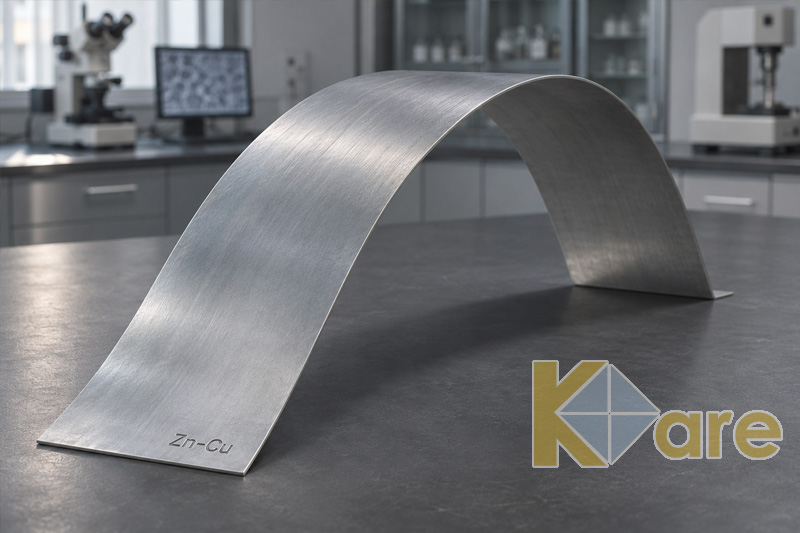
Zinc-copper alloys are zinc-based materials alloyed with copper. Copper additions change the microstructure and mechanical properties of zinc. Practical materials include both binary Zn–Cu compositions and more complex systems, notably zinc-copper-titanium alloys for rolled sheet products.
What are zinc-copper alloys?
In this group, zinc is the base metal and copper is an alloying element. The notation Zn + Cu describes a material system rather than a single grade, fixed percentage composition or guaranteed set of properties.
The Atlas treats this group separately from brass, which is copper-based. The order of the symbols alone does not replace chemical analysis: identification requires the actual composition and material designation.
Many common copper-containing zinc materials also contain additional elements. Architectural titanium zinc, for example, belongs to the Zn–Cu–Ti system rather than being a strictly binary Zn–Cu alloy.
Chemical composition
| Element | Symbol | Role in the material |
|---|---|---|
| Zinc | Zn | Base metal determining the fundamental characteristics of the zinc material |
| Copper | Cu | Alloying addition influencing microstructure, strength and hardness |
| Titanium | Ti | Helps improve creep resistance in Zn–Cu–Ti alloys |
| Aluminium and other elements | Al and others | May occur in particular commercial compositions; contents are specified for the material |
A single percentage composition table cannot cover both binary Zn–Cu and multicomponent alloys. Even small changes in alloying additions and impurities can influence processing and service performance.
Physical and mechanical properties
- Appearance: zinc-rich compositions are generally silvery-grey; coatings and surface condition can alter the colour.
- Density: composition-dependent; lightly alloyed zinc materials are close to zinc at approximately 7.1–7.2 g/cm³.
- Strength and hardness: depend on copper content, phase constitution and processing.
- Ductility: strongly influenced by temperature, microstructure and the condition of the rolled product.
- Creep: important under sustained loading and cannot be assessed from copper content alone.
- Melting: melting temperature and range depend on the specific composition.
- Corrosion behaviour: depends on environment, microstructure and surface condition; adding copper does not automatically improve corrosion resistance.
How copper affects zinc
Depending on concentration and thermal history, copper can be present in solid solution and participate in the formation of other phases. Changes in microstructure affect resistance to deformation, strength and hardness.
The outcome depends on casting, rolling and subsequent processing as well as composition. Consequently, “more copper means better properties” is not a valid rule for the whole group: improvements in certain characteristics may accompany changes in ductility and dimensional stability.
Commercial materials and designations
The term “zinc-copper alloys” does not identify one universal grade. Ordering requires a full material designation, chemical composition, product form and specified mechanical properties.
An important commercial example is rolled titanium zinc containing copper and titanium additions. In European practice, EN 988 covers rolled flat zinc and zinc alloy products for building. It is not a general specification for every binary Zn–Cu alloy.
| System | Composition | Characteristics |
|---|---|---|
| Zn–Cu | Zinc and copper | Binary system; properties depend on Cu content and processing |
| Zn–Cu–Ti | Zinc, copper and titanium | Used, among other applications, for architectural rolled sheet |
| Zn–Al–Cu with other additions | Zinc, aluminium, copper and additional elements | Separate multicomponent casting systems, including certain Zamak and ZA grades |
Production and processing
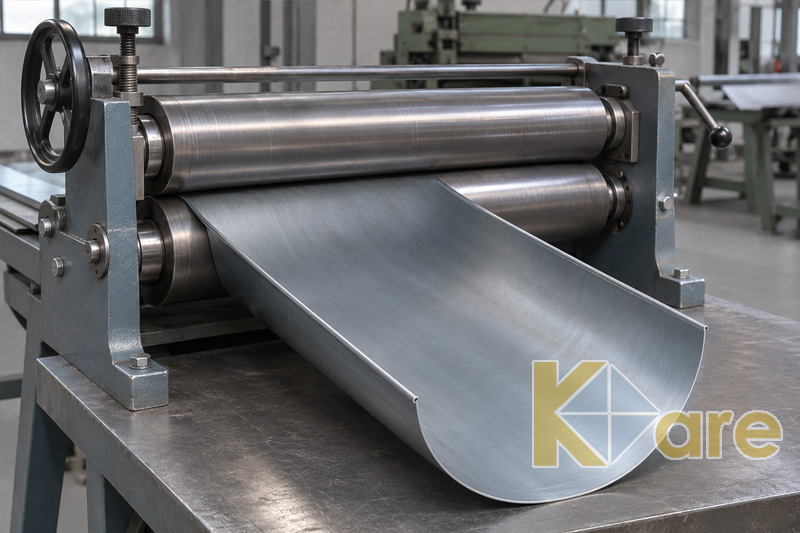
Production involves preparing a melt of the required composition and controlling its solidification. For sheet products, the resulting stock is rolled using conditions that develop the required microstructure and properties.
Rolled products can be supplied as sheets, coils and strips. Cutting, bending, profiling and joining must suit the particular material. For architectural titanium zinc, manufacturer guidance on forming temperature, rolling direction and joint construction is especially important.
Applications
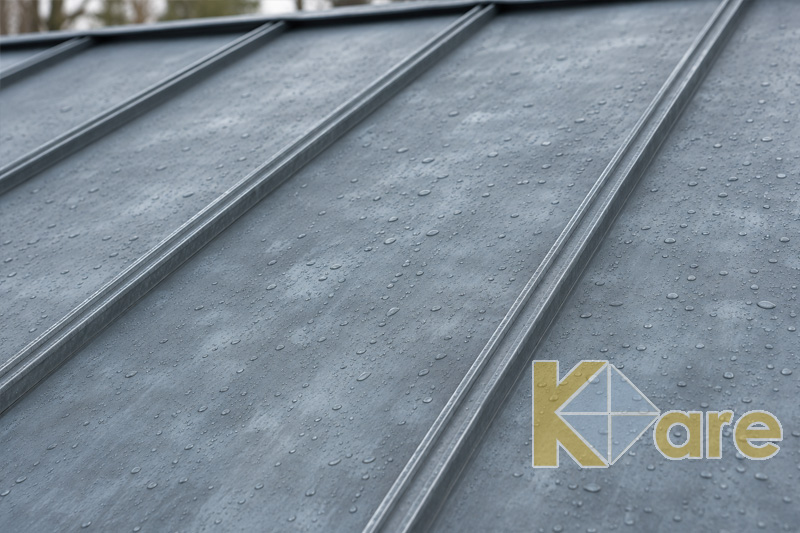
- Roofing: Zn–Cu–Ti sheet systems for standing-seam coverings and flashings.
- Facades: panels and profiled components made from suitable architectural titanium zinc.
- Rainwater systems: gutters, downpipes and connectors made from appropriate rolled products.
- Special materials: Zn–Cu compositions for specific technical tasks and studies of microstructure and properties.
- Multicomponent alloys: copper as an alloying addition in zinc casting materials covered separately in the Atlas.
The building applications refer to suitable Zn–Cu–Ti grades. They must not be attributed automatically to an arbitrary binary Zn–Cu composition.
Zinc-copper alloys and brass
| Characteristic | Zinc-copper alloys | Brass |
|---|---|---|
| Base metal | Zinc | Copper |
| Role of the second component | Copper alloys the zinc base | Zinc alloys the copper base |
| Typical appearance | Zinc-rich compositions are generally silvery-grey | Many grades have a yellow or golden colour |
| Identification | Composition and documentation | Composition and documentation |
Appearance is only a guide: coatings and oxidation change surface colour. Materials containing the same elements in different proportions can have substantially different properties.
Advantages and limitations
Copper alloying allows the properties of zinc to be adjusted for specific manufacturing and service conditions. Combined with other elements and suitable processing, it enables rolled products with the required mechanical and processing characteristics.
Limitations include creep, temperature-dependent properties and sensitivity to processing conditions. Critical applications require a specific grade and verified performance rather than reliance on the notation Zn + Cu alone.