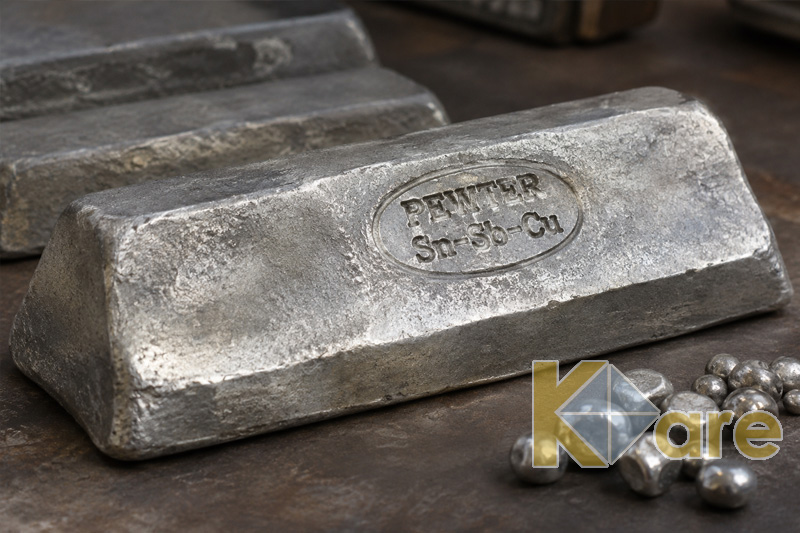
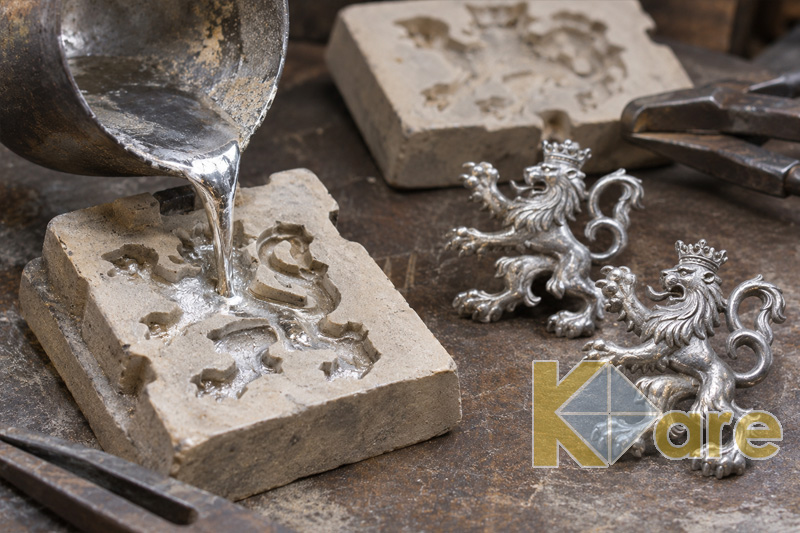
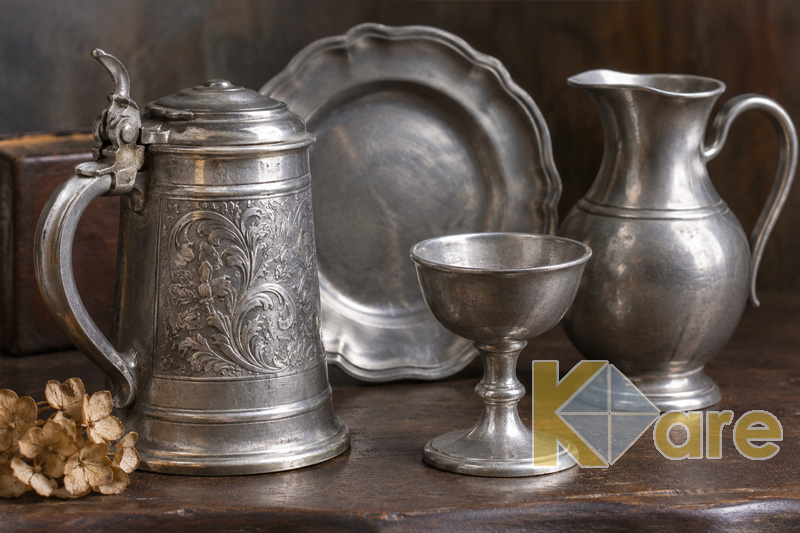
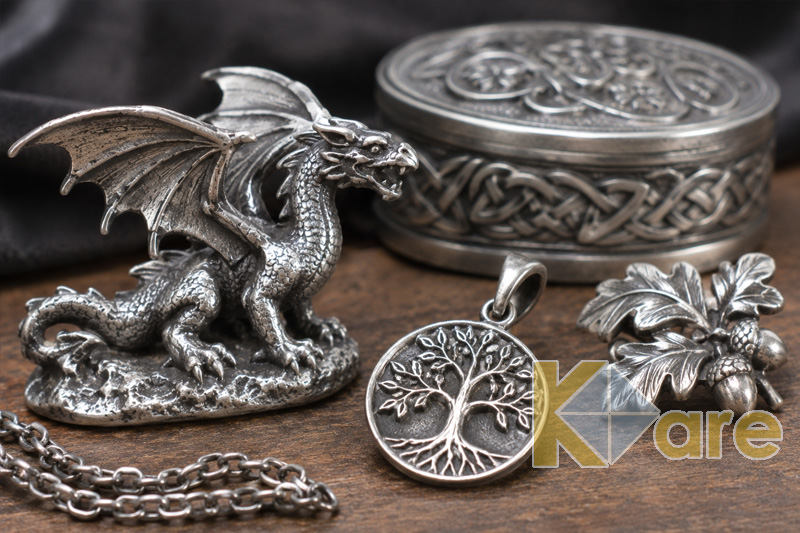
Pewter is a family of predominantly tin-based alloys used to manufacture decorative, artistic and household objects. Modern lead-free pewter generally contains tin with additions of antimony and copper. It is valued for its silvery appearance, relatively low melting temperature, good casting characteristics and ease of finishing.
What is pewter?
The term pewter historically covers various tin alloys used for tableware, jewellery, interior decoration and artistic castings. It describes a family of materials rather than one precisely defined alloy grade.
In modern lead-free compositions, tin is the principal metal, while antimony and copper increase hardness and mechanical strength. Historical pewter may contain lead, so antique pewter objects should not automatically be considered safe for food contact.
The formula Sn + Sb + Cu represents a common modern alloy system but does not include every historical or specialised pewter composition.
Chemical composition
| Element | Symbol | Role in the alloy |
|---|---|---|
| Tin | Sn | Base metal determining the colour, density and relatively low melting temperature |
| Antimony | Sb | Increases hardness and strength |
| Copper | Cu | Improves hardness and resistance to deformation |
A typical modern lead-free pewter composition may contain approximately 90–97% tin, several percent antimony and a small amount of copper. Exact proportions depend on the manufacturer's formulation and the intended application.
For food-contact products, a lead-free description alone is insufficient. The suitability of the specific material and finished article must be established.
Physical and mechanical properties
- Appearance: silvery-white to silvery-grey metal with a soft metallic lustre.
- Density: typically around 7.2–7.5 g/cm³, depending on composition.
- Melting temperature: approximately 230–300 °C for common formulations; melting may occur over a temperature range.
- Hardness: higher than that of pure tin because of alloying additions.
- Ductility: depends on antimony and copper content and the manufacturing process.
- Castability: suitable for producing small decorative castings with complex shapes.
- Corrosion resistance: relatively good under ordinary atmospheric conditions.
- Heat resistance: limited by the low melting temperature and susceptibility to deformation when heated.
These figures are indicative of the alloy family. Properties for a particular product should be obtained from its specified alloy grade.
History of pewter
Tin alloys have been used since antiquity. In medieval Europe, pewter became a common material for plates, drinking vessels, jugs and other household items. It provided a less expensive alternative to silver tableware.
Historical compositions varied by region, period and intended use. Some formulations included lead, which improved processing characteristics and reduced cost but introduced health risks.
Modern production of quality pewter predominantly uses lead-free formulations.
Main types of pewter
| Type | Characteristics | Applications |
|---|---|---|
| Modern lead-free pewter | Tin with antimony and copper, without intentionally added lead | Souvenirs, decorative objects and artistic castings |
| Historical pewter | Various tin-based compositions, sometimes containing lead | Antique tableware, household objects and collectibles |
| Special decorative formulations | Compositions tailored to particular manufacturing and finishing processes | Miniatures, jewellery and artistic components |
Commercial names and formulations may differ. The term pewter alone does not guarantee a specific chemical composition.
Casting and manufacturing
Pewter is cast in suitable metal or heat-resistant moulds. Its relatively low melting temperature facilitates the manufacture of small figurines, decorative components and souvenirs.
Production requires consideration of shrinkage, molten-metal flow, mould temperature and possible casting defects. Casting parameters are selected according to the alloy composition and component geometry.
Some pewter grades are also suitable for forming and producing objects from sheet stock.
Machining and surface finishing
Pewter objects can be ground, polished, engraved and given decorative patinated finishes. The relatively low hardness of the material makes it convenient for artistic processing.
Polishing produces a characteristic metallic shine, while patination highlights surface relief and creates an aged appearance.
Corrosion and maintenance
Pewter is reasonably stable under normal indoor conditions, although its surface may gradually become dull. Appearance can be affected by humidity, contamination, chemicals and alloy composition.
Care generally involves a soft cloth and non-abrasive products suitable for the particular item. Excessive heating, aggressive cleaning chemicals and mechanical forces that could deform the soft metal should be avoided.
Applications
- Souvenirs: commemorative objects, statuettes, medals and decorative figurines.
- Art casting: miniatures, sculptures and interior design elements.
- Jewellery: pendants, brooches and decorative fittings.
- Interior accessories: candlesticks, frames and ornamental components.
- Collectibles: historical reproductions, models and commemorative items.
- Tableware: selected modern products with verified suitability for food contact.
Comparison with other tin alloys
| Material | Base composition | Main purpose |
|---|---|---|
| Pewter | Sn + Sb + Cu | Decorative, artistic and household objects |
| Lead-free solder alloys | Sn + Cu/Ag | Soldered joints |
| Tin-based babbitt | Sn + Sb + Cu | Antifriction bearing linings |
| Tin-antimony alloys | Sn + Sb | Various technical applications |
Having the same principal chemical elements does not make pewter and tin-based babbitt interchangeable. Their compositions, microstructures and performance requirements differ.
Recycling and composition identification
Tin objects and manufacturing scrap can serve as secondary raw materials. Sorting should distinguish modern lead-free pewter from historical lead-containing alloys and other metals with a similar appearance.
Reliable composition identification requires instrumental analysis, such as X-ray fluorescence spectrometry. Appearance, weight and markings alone may not reliably establish the contents of tin, antimony, copper and lead.
Advantages and limitations
Pewter offers an attractive silvery colour, relatively low melting temperature and good possibilities for artistic casting and decorative finishing.
Its limitations include lower strength than many structural alloys, sensitivity to heating and the possible presence of lead in antique or unidentified objects. Material selection should reflect composition, intended use and safety requirements.