Tin (Sn) — Chemical Element
Tin — a soft metal with a low melting point
Tin (Sn) is a chemical element with atomic number 50, belonging to group 14 of the periodic table. It is a silvery-white metal characterized by softness, malleability, a relatively low melting point and good corrosion resistance under ordinary conditions. Its chemical symbol Sn comes from the Latin name stannum.
Tin has been known since ancient times and played an important role in the development of metallurgy. Today it is used in protective coatings, solder production, various chemical compounds and the electronics industry. Its physical properties are particularly interesting, including the characteristic phenomenon known as "tin cry" and its ability to change crystal structure at low temperatures.
Main characteristics of tin
Physical properties
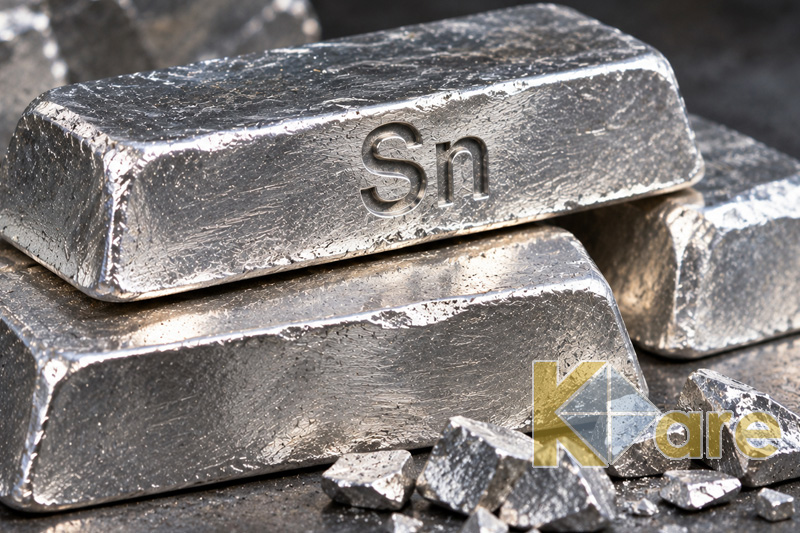
At room temperature, tin is a soft, silvery-white metal with a metallic lustre. It is easily deformed, rolled and shaped. The density of white tin is approximately 7.31 g/cm³. With a melting point of just 231.93 °C, tin can be melted at considerably lower temperatures than iron, copper or aluminium.
Tin conducts heat and electricity, although its electrical conductivity is lower than that of copper. When certain samples of pure tin are bent, a distinctive crackling sound called "tin cry" may be heard. This sound results from the movement and rearrangement of metal crystals during mechanical deformation.
Tin pest and crystal structures
Tin exists in several crystalline modifications. At ordinary temperatures, white tin (β-Sn) is stable and exhibits metallic properties. Below approximately 13.2 °C, another form, grey tin (α-Sn), becomes thermodynamically stable. It has a different crystal structure and significantly lower density.
The transformation of white tin into grey tin is accompanied by an increase in volume and deterioration of the metallic structure. This phenomenon is known as "tin pest". In practice, the transformation is usually slow and depends on temperature, metal purity and the presence of crystal nucleation sites. Prolonged exposure to low temperatures and conditions favouring the formation of grey tin are particularly unfavourable.
Chemical properties
Under ordinary conditions, tin is relatively resistant to atmospheric corrosion because a thin protective oxide film forms on its surface. When heated, it reacts more readily with oxygen, producing oxides, primarily tin dioxide (SnO₂). Tin commonly forms compounds in the +2 and +4 oxidation states.
The metal reacts with certain acids and alkalis, depending on their concentration and temperature. Its combination of chemical resistance, ability to form protective coatings and relatively low melting point makes tin useful in numerous industrial technologies.
Applications of tin
Tin plating and protective coatings
Tin is used to apply thin protective layers to steel and other metal surfaces. Tin-plated steel is widely used to manufacture tinplate packaging, including food containers. The tin coating protects the surface and improves its technological properties.
Electronics and soldering
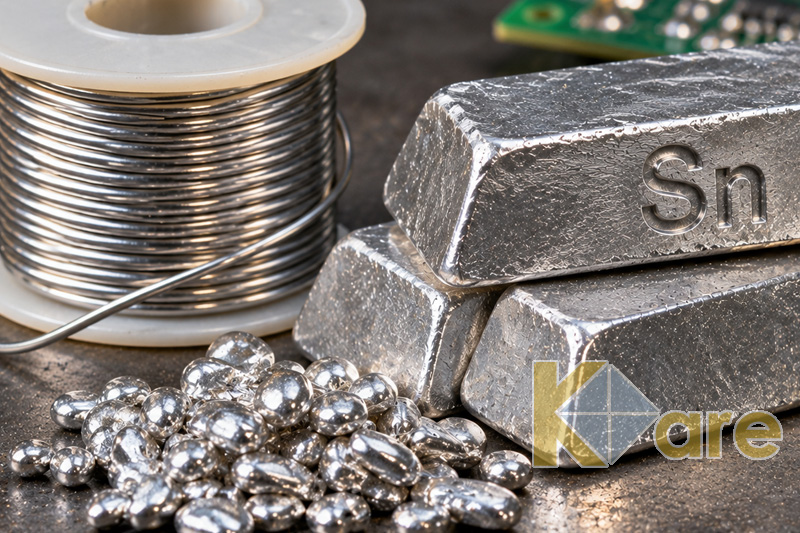
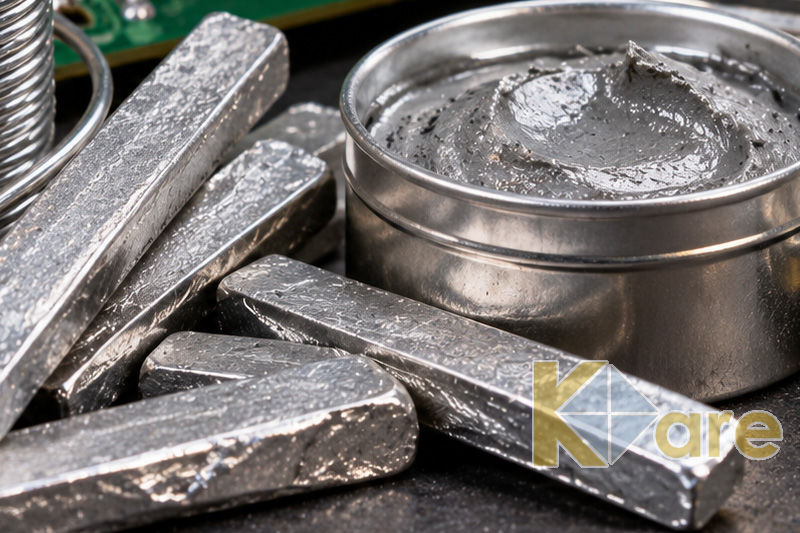
Tin is an important component of soldering materials used in electronic devices, electrical connections and metal components. Its relatively low melting point allows joints to be formed without excessively heating the base materials.
Chemical industry
Tin compounds are used in the production of specialized coatings, ceramics, glass and chemical reagents. Tin dioxide is used in functional coatings, gas sensors and other technical materials.
Metallurgy and specialized materials
Tin is used in metallurgy to modify the properties of various metallic materials. It is also used in certain bearing materials, technological coatings and specialized industrial products.
Tin production
The principal natural source of tin is the mineral cassiterite (SnO₂). Tin-bearing ores are mined and concentrated to separate the valuable mineral from unwanted rock. After preparation, the concentrate undergoes metallurgical processing in which tin compounds are reduced to metallic tin.
One traditional method of tin production is reduction smelting using carbon-containing materials. The resulting metal is purified through various refining processes. Additional purification stages are used when products require a particularly high degree of purity.
Tin in nature and recycling
Tin occurs in the Earth's crust mainly in minerals, the most important of which is cassiterite. Significant deposits are associated with various geological processes, including the formation of mineral veins and placer deposits. Historically, tin mining played an important role in the development of metallurgy and international trade.
Tin is recyclable and can repeatedly return to industrial use. It is recovered from production residues, tin-containing coatings, electronic components and other materials. Recycling reduces the need for primary raw materials and helps conserve natural resources.