Aluminium-zinc alloys are aluminium-based materials in which zinc and magnesium are the principal alloying additions. They combine low weight with high strength and are used in transport structures, mechanical engineering and sporting equipment. The properties of an individual grade depend on its composition, product form and heat treatment.
What are aluminium-zinc alloys?
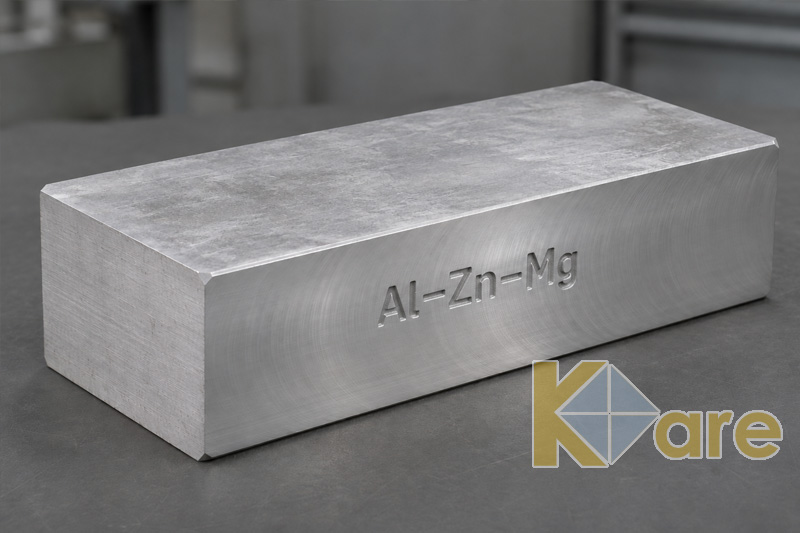
Wrought aluminium alloys with zinc as the main alloying element belong to the 7xxx series. This group includes Al–Zn–Mg alloys and Al–Zn–Mg–Cu compositions with an additional copper content.
The formula Al + Zn + Mg identifies the main components of the group rather than the exact composition of every grade. Manganese, chromium, zirconium and other elements may also be present.
These materials should be distinguished from zinc-based alloys: aluminium remains the base metal in aluminium-zinc alloys.
Chemical composition
| Element | Symbol | Role in the alloy |
|---|---|---|
| Aluminium | Al | Base metal, providing low density |
| Zinc | Zn | Works with magnesium to enable age hardening |
| Magnesium | Mg | Participates in the formation of strengthening precipitates |
| Copper | Cu | A significant alloying addition in certain Al–Zn–Mg–Cu grades |
| Manganese, chromium, zirconium | Mn, Cr, Zr | Help control the material structure in selected compositions |
EN AW-7020 contains 4.0–5.0% zinc and 1.0–1.4% magnesium. These ranges apply to this particular grade, not to the entire group.
Physical and mechanical properties
- Colour: silvery grey with a metallic lustre.
- Strength: strongly dependent on grade and delivery condition.
- Strengthening: heat treatment involving solution treatment, quenching and subsequent ageing.
- Ductility: depends on composition, temper and processing direction.
- Electrical and thermal conductivity: lower than that of pure aluminium.
- Weldability: varies between grades.
- Corrosion resistance: depends on composition, treatment and service conditions.
European grades
| Grade | Alloy system | Features | Applications |
|---|---|---|---|
| EN AW-7005 | Al–Zn–Mg | Used for strong structural products | Profiles, transport and sporting equipment |
| EN AW-7020 | Al–Zn–Mg | Composition designation AlZn4,5Mg1 | Load-bearing structures, including welded assemblies made using suitable procedures |
| EN AW-7075 | Al–Zn–Mg–Cu | Copper-containing alloy for high-strength components | Aerospace and mechanical engineering parts |
EN AW identifies wrought aluminium alloys. Chemical composition is checked against EN 573-3, while temper designations are covered by EN 515. The EN 485 series covers sheet and plate products, and EN 755 covers extruded products. The corresponding adopted LVS EN standards apply in Latvia.
Heat treatment
Solution treatment, quenching and ageing allow the strength of these alloys to be adjusted. During ageing, fine precipitates form within the structure and impede plastic deformation.
T4 and T6 identify different heat-treatment conditions. A grade should therefore be specified together with its temper: identical chemical composition does not mean identical mechanical properties.
Corrosion resistance
A protective oxide film forms on aluminium surfaces, but service conditions still need to be assessed for high-strength alloys. Susceptibility to stress corrosion cracking is an important consideration for certain compositions and tempers.
Protective coatings may be required, together with measures to prevent undesirable contact with other metals in damp environments.
Production and processing
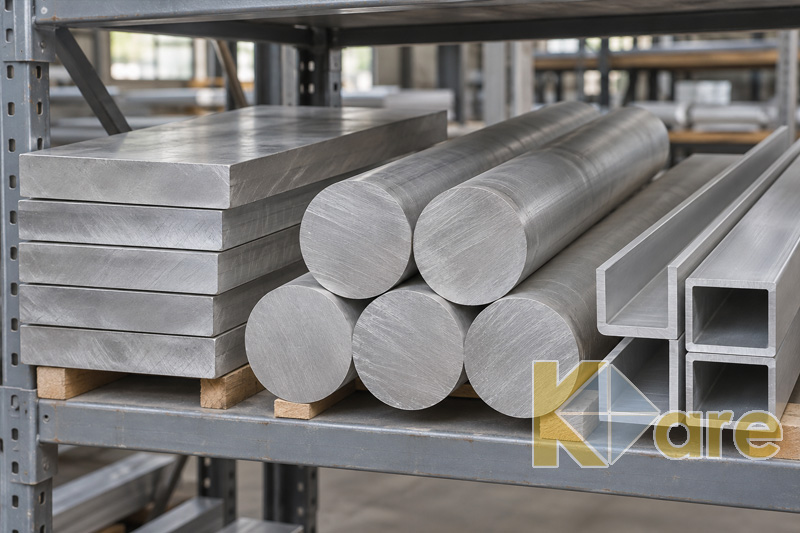
Products include sheets, plates, bars, profiles and forgings. Suitability for bending, machining and welding depends on the grade and temper.
Some Al–Zn–Mg alloys are used in welded structures. Alloy 7075 is generally not selected for conventional fusion welding. Heat introduced during joining can alter the properties of the heat-affected zone.
Applications
- Transport: load-bearing members and lightweight structures.
- Mechanical engineering: loaded parts and machined components.
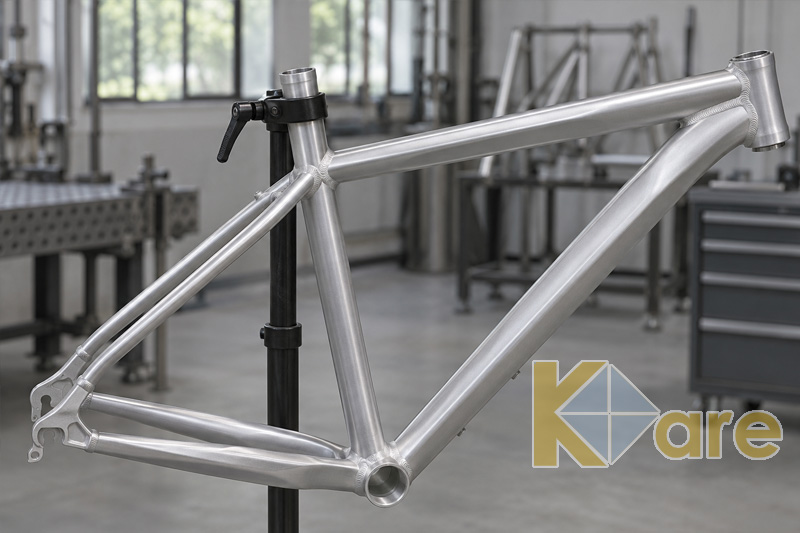
- Sporting equipment: frames and other strong, lightweight products.
- Aerospace: components made from specifically selected high-strength grades.
Comparison with other aluminium alloys
| Group | Main components | Characteristic feature |
|---|---|---|
| Al–Mg | Al + Mg | Wrought 5xxx grades are strengthened primarily by strain hardening |
| Al–Zn–Mg | Al + Zn + Mg | Can be strengthened by solution treatment, quenching and ageing |
| Al–Zn–Mg–Cu | Al + Zn + Mg + Cu | Copper-containing high-strength compositions |
Advantages and limitations
The main advantage is the ability to produce strong components with low weight. Limitations include requirements for controlled heat treatment, corrosion protection and appropriate joining methods.
Aluminium-zinc alloys in scrap
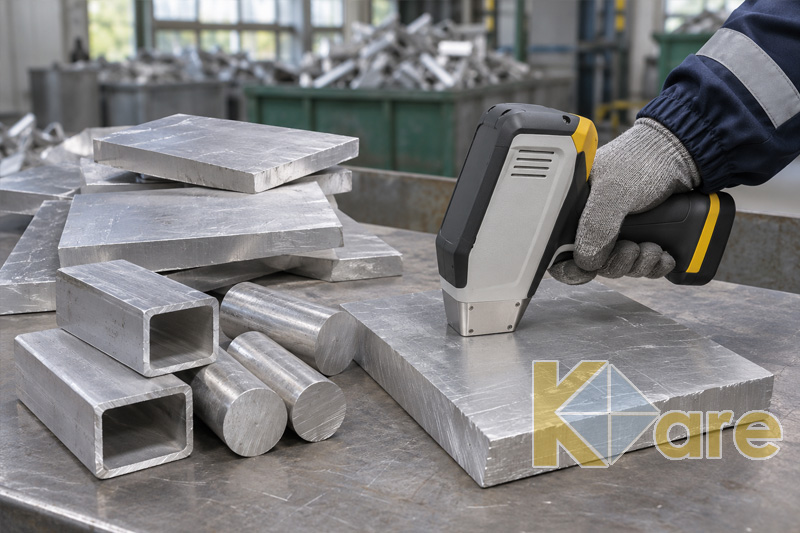
Scrap arises from stock offcuts, machining waste and dismantled components. Appearance alone cannot reliably distinguish these materials from other aluminium alloys.
Sorting and composition analysis
Sorting involves checking markings, documentation and chemical composition. The analyser must be suitable for measuring the required elements, including magnesium. Light-element measurement capabilities depend on the instrument and analytical method.
Copper-containing grades, coatings, steel fasteners and other foreign materials must also be considered.
Recycling
After sorting and preparation, scrap can be used as feedstock for aluminium alloys with a controlled composition. Keeping known grades separate helps control zinc, magnesium and copper levels during remelting.