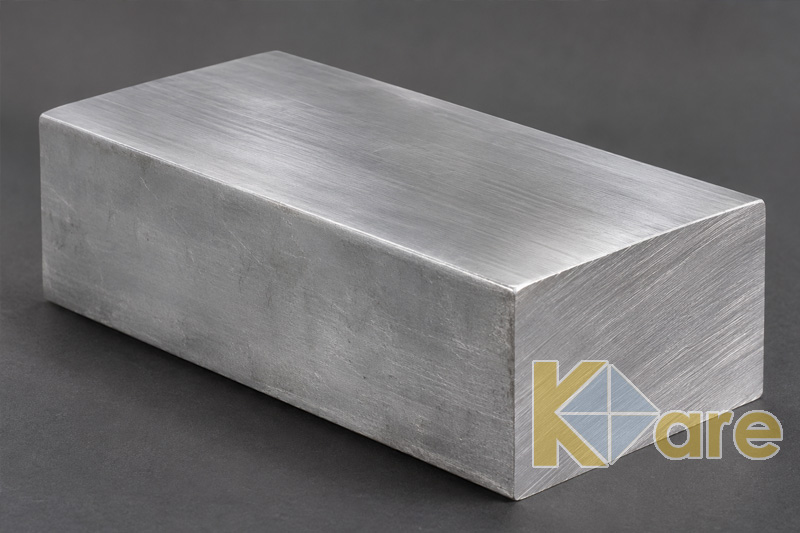
Aluminium-magnesium alloys are a group of aluminium-based materials (Al) in which magnesium (Mg) is the principal alloying element. They combine low density, good corrosion resistance and weldability. Applications include shipbuilding, transport equipment, construction and industrial equipment.
What are aluminium-magnesium alloys?
In Al–Mg alloys, aluminium is the base metal. Magnesium increases strength through solid solution strengthening, while additional strength is achieved by cold working. This family includes many wrought aluminium alloys in the 5xxx series.
Al–Mg casting alloys also exist. This page focuses primarily on common wrought grades used for sheet, plate and welded structures.
Al–Mg alloys should not be confused with magnesium alloys: the former are aluminium-based, while the latter are magnesium-based. They also differ from the heat-treatable Al–Mg–Si alloys of the 6xxx series.
Chemical composition
Magnesium content depends on the grade. For example, EN AW-5754 contains 2.6–3.6% magnesium, while EN AW-5083 contains 4.0–4.9%. Manganese, chromium and other elements may also be present within specified limits.
| Element | Symbol | Role in the alloy |
|---|---|---|
| Aluminium | Al | Forms the material base and provides low density |
| Magnesium | Mg | Principal alloying element, strengthening the aluminium solid solution |
| Manganese | Mn | Influences microstructure and mechanical properties in certain grades |
| Chromium | Cr | Used in some grades to control microstructure and recrystallisation |
The formula Al + Mg indicates the principal alloying system but does not replace the complete composition. Identification must account for all specified elements.
Physical and mechanical properties
- Density: approximately 2.65–2.70 g/cm³ for common wrought grades.
- Colour: silvery grey with a metallic lustre.
- Strength: depends on magnesium content, grade and delivery condition.
- Ductility: many grades are suitable for bending and forming in the appropriate condition.
- Weldability: generally good when the process and filler material are selected correctly.
- Corrosion resistance: high for suitable grades and tempers under the intended service conditions.
- Strengthening: common wrought 5xxx alloys rely on alloying and strain hardening rather than quenching and age hardening.
A single strength or hardness value cannot represent the entire family. Cold working increases strength but generally reduces ductility.
European grades
| Grade | Composition designation | Characteristics | Applications |
|---|---|---|---|
| EN AW-5005 | AlMg1(B) | Relatively low magnesium content and good formability | Sheet products, decorative items and cladding |
| EN AW-5754 | AlMg3 | Combination of corrosion resistance, formability and weldability | Transport components, tanks and welded products |
| EN AW-5083 | AlMg4.5Mn0.7 | Higher magnesium content; used in load-bearing welded structures | Shipbuilding, transport and industrial equipment |
EN is the European standards system. EN 573-3 defines the chemical composition of wrought aluminium alloys, EN 515 defines temper designations, and the EN 485 series specifies requirements for sheet, strip and plate. European standards adopted in Latvia may carry the designation LVS EN.
The grade must always be considered together with its delivery condition. For example, O indicates the annealed condition, while H designations refer to strain-hardened conditions, potentially with subsequent processing.
Corrosion resistance
Many Al–Mg alloys resist atmospheric corrosion and are used in marine environments. Suitability nevertheless depends on the specific grade, material condition and product requirements.
For certain higher-magnesium alloys, prolonged exposure to elevated temperatures can cause sensitisation: microstructural changes that increase susceptibility to intergranular corrosion. Heating and service conditions therefore require separate consideration.
Contact with other metals, trapped moisture and surface condition also influence structural durability.
Production and processing
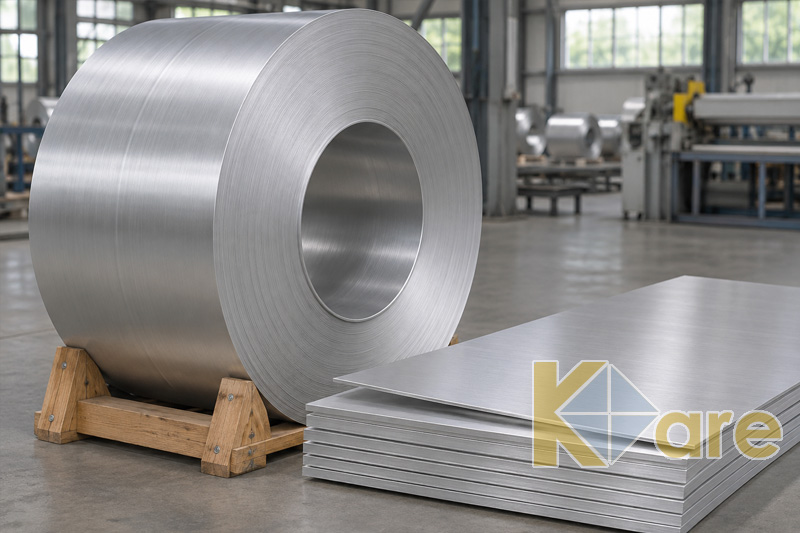
Wrought Al–Mg alloys are supplied as sheet, strip, plate, rod, profiles and other semi-finished products. Processing methods include rolling, extrusion, bending, stamping and machining.
Common 5xxx grades are not strengthened by solution heat treatment followed by quenching and ageing. Annealing can reduce strain hardening and restore ductility while also reducing strength.
Welding must account for possible softening in the heat-affected zone of strain-hardened material. Joint properties are assessed separately from those of the original sheet.
Applications
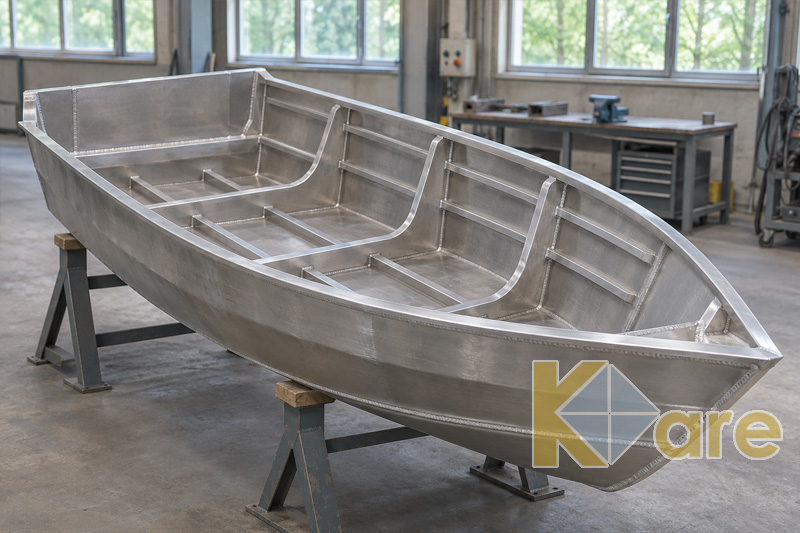
- Shipbuilding: hulls and marine structural components made from suitable grades and tempers.
- Transport: panels, body components and welded parts.
- Industrial equipment: tanks, protective covers and housing components.
- Construction: cladding and architectural products.
- Mechanical engineering: sheet metal components and structures requiring low weight and corrosion resistance.
Al–Mg, Al–Mg–Si and magnesium alloys: what is the difference?
| Characteristic | Al–Mg | Al–Mg–Si | Magnesium alloys |
|---|---|---|---|
| Base metal | Aluminium | Aluminium | Magnesium |
| Principal additions | Magnesium and additional elements depending on the grade | Magnesium and silicon | Aluminium, zinc and other elements depending on the grade |
| Common wrought aluminium alloy series | 5xxx | 6xxx | Different classification system |
| Typical strengthening | Solid solution strengthening and strain hardening | Heat treatment with age hardening | Depends on the grade |
The presence of magnesium does not make a material a magnesium alloy. The determining factor is the base metal.
Advantages and limitations
The main advantages of Al–Mg alloys are low weight, good weldability, corrosion resistance and suitability for a wide range of sheet metal structures.
Limitations include the dependence of properties on strain hardening, softening during heating and the need to account for corrosion susceptibility in certain grades and tempers. The properties of one grade cannot automatically be applied to the entire family.
Aluminium-magnesium alloys in scrap metal
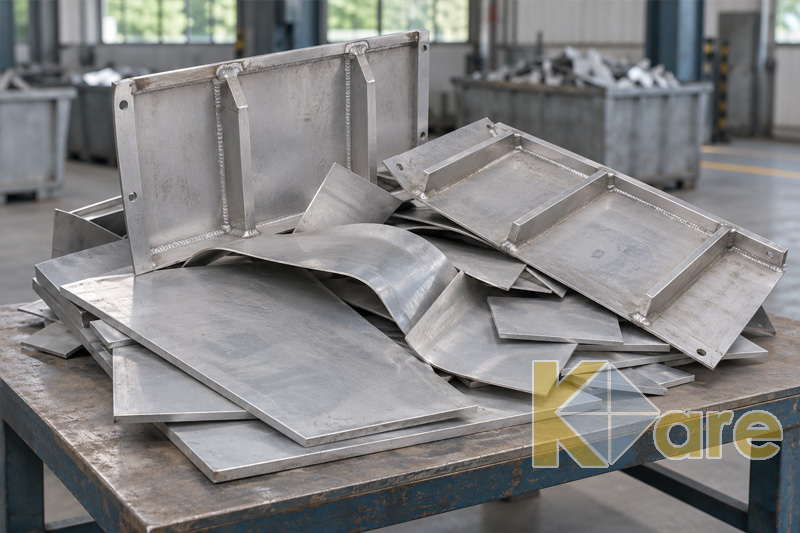
Scrap arises during the manufacture and dismantling of transport structures, marine equipment and industrial equipment. It includes sheet offcuts, plate, welded components, profiles and swarf.
During scrap acceptance, Al–Mg must be separated from commercially pure aluminium, silumin, aluminium-copper alloys and magnesium alloys. Paint, steel fasteners, oil and other inclusions influence raw material preparation.
Sorting and composition analysis
Identification uses markings, documentation and instrumental analysis. Magnesium, manganese, silicon, copper, zinc and other elements are checked.
The ability of XRF to measure light elements, particularly magnesium, depends on the analyser and measurement conditions. Optical emission spectrometry (OES) may be used for more comprehensive analysis.
Measurements are taken on a prepared surface. Chemical analysis does not establish the degree of strain hardening or delivery condition. Scrap of known grades and machining swarf should preferably be stored separately.
Recycling aluminium-magnesium alloys
After sorting and removal of foreign materials, scrap is directed to metallurgical recycling. The furnace charge is selected with regard to magnesium content and the other components.
Magnesium can oxidise and be lost during melting, so the composition of the new metal is monitored and adjusted where necessary. The previous strain-hardened condition does not survive remelting.
Separate collection helps maintain the quality of recycled aluminium and reduces the mixing of materials with incompatible compositions.