Zinc-aluminium alloys are a group of zinc-based materials in which aluminium is a major alloying element. They combine good casting characteristics, strength and the ability to produce complex components. The ZA family has an important industrial role in housings, mechanical parts and bearing applications.
What are zinc-aluminium alloys?
In the Zn–Al system, properties depend on the zinc-to-aluminium ratio, additional elements and solidification conditions. Zinc remains the base metal in the zinc casting alloys discussed here, while increasing aluminium content changes their microstructure, density and mechanical characteristics.
The notation Zn + Al identifies the main alloy system rather than the complete chemical composition. Commercial grades often also contain copper and small magnesium additions. Zinc-aluminium alloys should be distinguished from aluminium-zinc alloys, which have an aluminium base.
Chemical composition
| Element | Symbol | Role in the alloy |
|---|---|---|
| Zinc | Zn | Base metal providing the characteristic casting behaviour of zinc alloys |
| Aluminium | Al | Changes microstructure, increases strength in suitable compositions and reduces density |
| Copper | Cu | Present in many ZA grades and influences strength, hardness and wear resistance |
| Magnesium | Mg | Present in small controlled amounts to help regulate properties |
Precise limits for alloying elements and impurities are specified for each grade. Lead, cadmium and tin are closely controlled because unwanted impurities can compromise casting durability and stability.
Physical and mechanical properties
- Colour: silvery-grey, with a metallic lustre on fresh surfaces.
- Density: approximately 5.0–6.3 g/cm³ for common ZA grades; increasing aluminium content reduces density.
- Castability: complex castings can be produced using a suitable process.
- Strength and hardness: depend on grade, microstructure and casting method; many ZA grades exceed conventional Zamak alloys in these properties.
- Wear resistance: useful in selected bearing and mechanical applications.
- Machinability: drilling, milling, turning and threading are possible with parameters suited to the grade.
- Temperature performance: creep and dimensional changes must be considered during prolonged heating and loading.
Common ZA grades
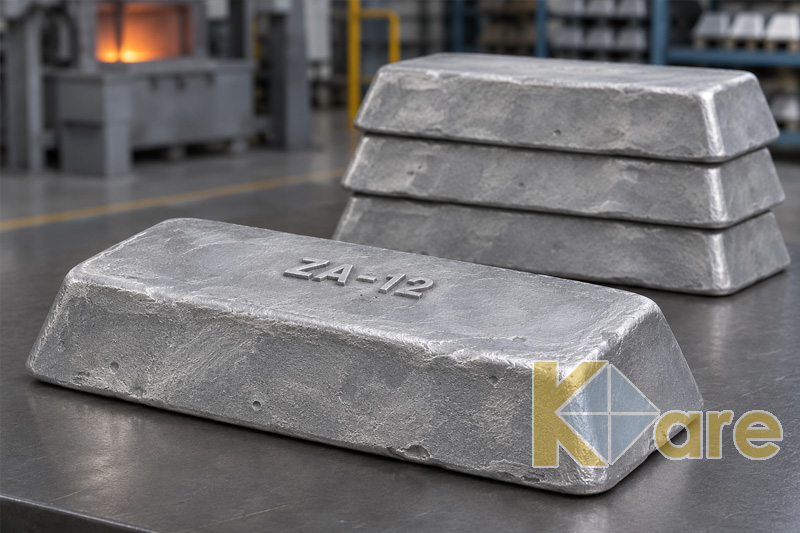
ZA-8, ZA-12 and ZA-27 are widely used designations for zinc-aluminium casting alloys. The number indicates an approximate aluminium content level rather than a complete composition specification: ZA-12, for example, typically contains about 11% Al.
| Grade | Approximate aluminium content | Approximate density | Characteristics |
|---|---|---|---|
| ZA-8 | 8–9% | 6.3 g/cm³ | Suitable for hot-chamber die casting, among other processes |
| ZA-12 | About 11% | 6.0 g/cm³ | Used for gravity casting; die casting requires a cold-chamber process |
| ZA-27 | 25–28% | 5.0 g/cm³ | Offers high strength and lower density; requires an appropriate casting process |
These designations are not themselves European standard numbers. Supplies to Latvia and other EU countries should identify the agreed material designation, applicable specification and casting requirements. Grade equivalence must be checked against composition and properties.
Production and processing
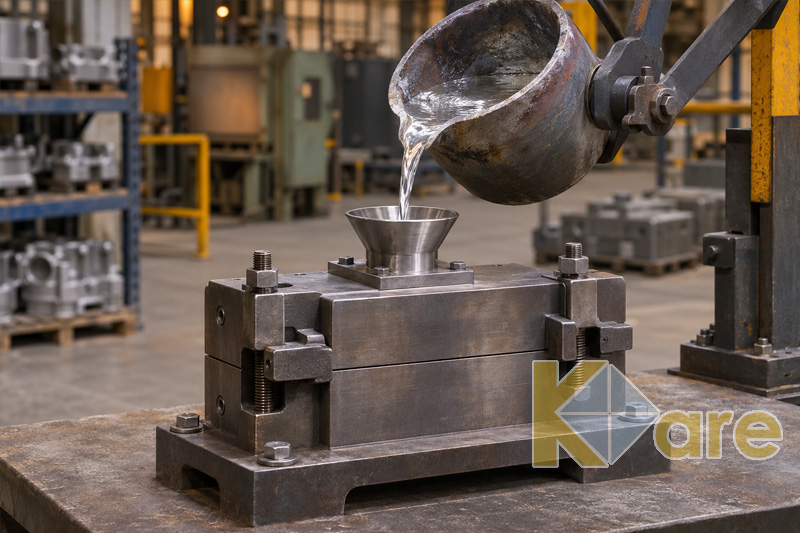
Sand casting, permanent mould casting and die casting are used according to the grade and component geometry. ZA-8 can be hot-chamber die cast, whereas ZA-12 and ZA-27 require a cold-chamber process when die cast.
Cooling rate, wall thickness and melt quality influence microstructure and properties. Subsequent operations include machining, dimensional inspection and, when required, protective or decorative finishing with surface preparation appropriate to the specific alloy.
Applications
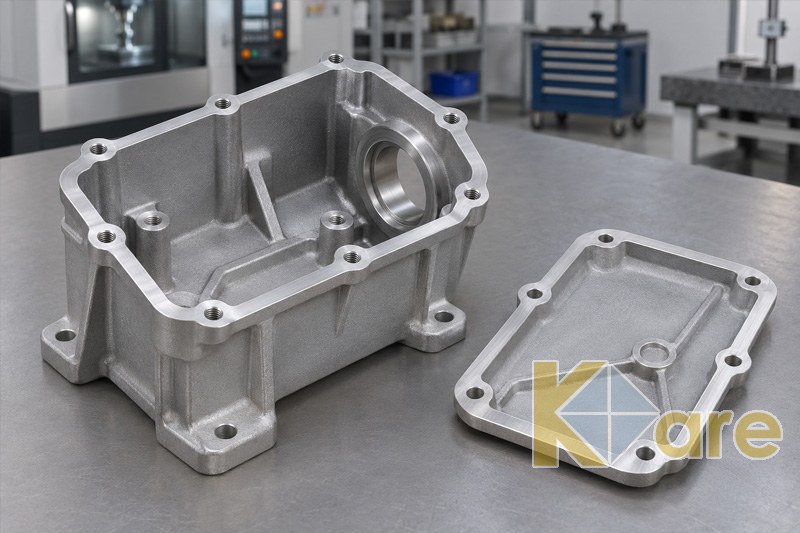
- Mechanical engineering: housings, brackets and other cast components.
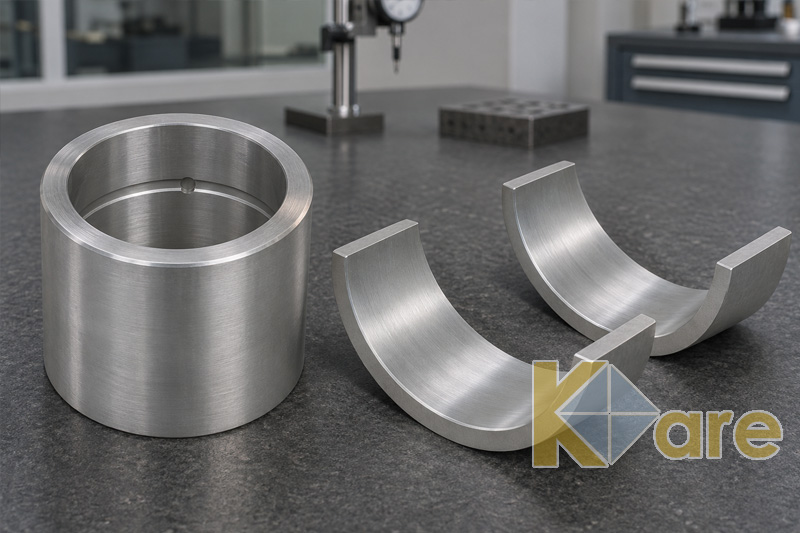
- Bearings: bushes and sliding elements under suitable loading, lubrication and temperature conditions.
- Mechanisms: selected gears and transmission parts designed for the properties of the chosen grade.
- Industrial hardware: complex fastening and connecting components.
- Tooling and prototypes: cast blanks for development work and short production runs.
Zinc-aluminium alloys and Zamak
Zamak also belongs to the zinc alloys containing aluminium. The Atlas presents the ZA family separately to highlight materials with higher aluminium contents and different processing characteristics.
| Characteristic | ZA family | Conventional Zamak grades |
|---|---|---|
| Base metal | Zinc | Zinc |
| Aluminium content | Approximately 8–28% in the grades discussed | Usually about 4% |
| Density | Generally lower and strongly dependent on Al content | Usually about 6.6 g/cm³ |
| Process selection | Grade-dependent; not all grades suit hot-chamber casting | Hot-chamber die casting is widely used |
Advantages and limitations
The group offers complex casting capability, good mechanical properties and a choice of compositions for different engineering tasks. Higher aluminium content reduces component weight compared with conventional zinc alloys at a similar volume.
Limitations include process-dependent properties, creep under sustained loading and the need to check dimensional stability. Materials for heated, impact-loaded or critical assemblies must be selected using grade-specific data and an assessment of operating conditions.