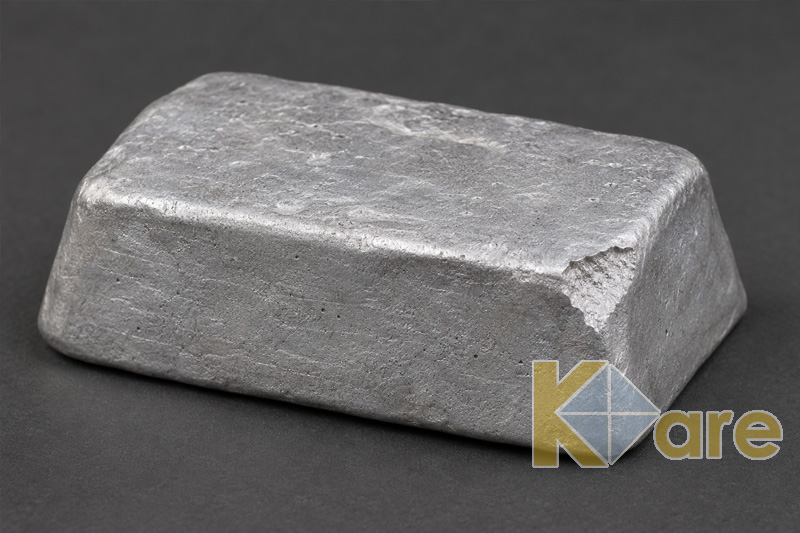
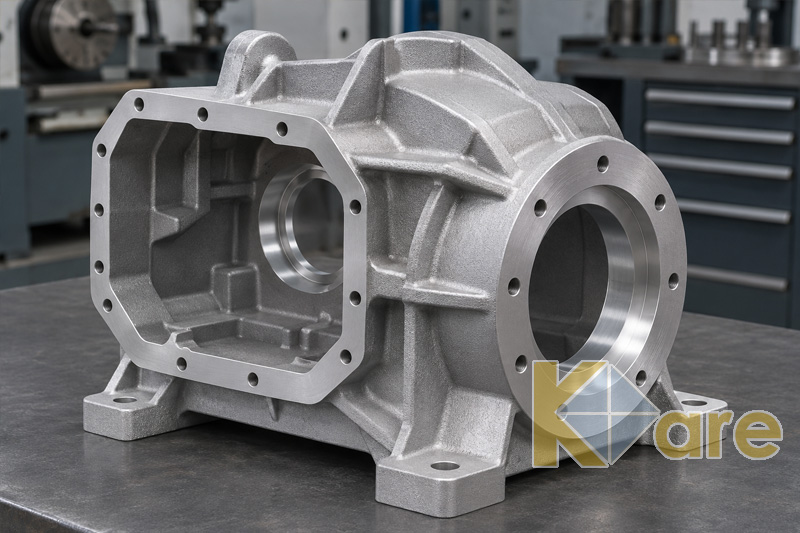
Silumin is a general name for a group of aluminium-based alloys (Al) whose principal alloying element is silicon (Si). These materials are valued for their low density and good casting properties. Silumin alloys are used to manufacture housings, automotive components, equipment parts and other complex castings.
What is silumin?
Silumin belongs to the aluminium-silicon alloy family. Aluminium forms the base of the material, while silicon improves mould filling and influences the microstructure, wear resistance and other properties of the finished casting.
The name silumin covers different grades rather than a single fixed composition. In addition to aluminium and silicon, industrial alloys may contain magnesium, copper, manganese and other elements.
English technical documentation generally uses the term aluminium-silicon alloys, while the German term is Aluminium-Silizium-Legierungen. The name silumin is also used, but the specific grade is needed to identify the material accurately.
Chemical composition of silumin
The principal components of silumin are aluminium and silicon. Silicon content varies by grade: for example, AlSi7Mg0.3 identifies an alloy with nominal silicon and magnesium contents of approximately 7% and 0.3%, respectively. This is a composition designation rather than a requirement for exact elemental contents without tolerances.
Relative to the eutectic composition of the Al–Si system, alloys are classified as hypoeutectic, near-eutectic or hypereutectic. This classification relates to the microstructure after solidification. Additional components also influence the behaviour of industrial alloys.
| Element | Symbol | Role in the alloy |
|---|---|---|
| Aluminium | Al | Forms the alloy base and provides low density |
| Silicon | Si | Improves casting properties and influences microstructure and wear resistance |
| Magnesium | Mg | Enables strengthening by heat treatment in certain grades |
| Copper | Cu | Increases strength in some grades while also influencing corrosion resistance |
| Manganese | Mn | Influences the shape of iron-containing phases and the properties of certain casting alloys |
| Iron | Fe | Its content is controlled; in certain die-casting alloys, it helps reduce interaction between the melt and the die |
Iron should not be regarded as an invariably beneficial addition: excessive content and unfavourable iron-containing phase shapes can reduce ductility. The complete composition must be assessed against the requirements of the specific grade.
Physical and mechanical properties
- Density: approximately 2.6–2.8 g/cm³ for many common grades, depending on composition.
- Colour: silvery grey, with a matt or metallic surface.
- Casting properties: allow the production of complex castings, including relatively thin-walled components.
- Strength: depends on the grade, casting method, casting quality and heat treatment.
- Ductility: varies considerably between grades and depends on microstructure and defects.
- Wear resistance: the presence of silicon particles can increase resistance to wear.
- Thermal conductivity: important for housings and heat-dissipating components; the exact value depends on the grade.
- Magnetic properties: an ordinary magnet cannot reliably distinguish silumin from other aluminium alloys.
Silumin cannot be described by a single melting point or tensile strength. Alloys generally have a melting range, while their mechanical properties depend on composition, condition and manufacturing process.
European silumin grades
European documentation identifies aluminium casting alloys using the EN AC system. The numerical grade designation is supplemented by a chemical composition designation.
| Grade | Composition designation | Characteristics | Applications |
|---|---|---|---|
| EN AC-42100 | AlSi7Mg0.3 | Aluminium-silicon alloy containing magnesium, suitable for strengthening heat treatment | Housings, brackets and structural castings |
| EN AC-43000 | AlSi10Mg(a) | Casting alloy containing silicon and magnesium | Housings, covers and equipment components |
| EN AC-44300 | AlSi12(Fe) | Alloy with a high silicon content and controlled iron content | Complex and thin-walled castings, including die-cast products |
EN is the European standards system. EN 1706 specifies requirements for the chemical composition and mechanical properties of aluminium castings. EN 1676 covers alloyed aluminium ingots for remelting. European standards adopted in Latvia may carry the designation LVS EN.
A finished casting must be distinguished from the feedstock used to produce it: the relevant designations and requirements apply to each. The casting method and delivery condition must also be checked when selecting a material.
Corrosion resistance
An oxide film forms on the surface of silumin and helps protect the aluminium base. Many aluminium-silicon alloys with low copper content offer good corrosion resistance under suitable service conditions.
However, different grades do not have identical properties. Copper content, impurities, contact with other metals and the surrounding environment can significantly influence corrosion.
Suitable coatings and paint finishes are used for surface protection and appearance. Anodising requires a separate assessment because silicon and other components can affect the colour and uniformity of the resulting layer.
Production and processing
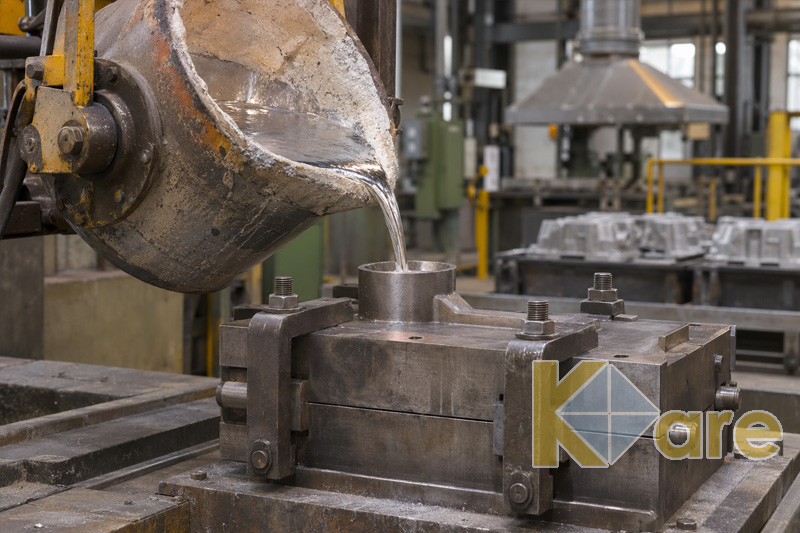
Silumin alloys are primarily used to produce castings. Depending on the grade and component design, production methods include sand casting, gravity die casting, low-pressure casting and high-pressure die casting.
Component quality depends not only on chemical composition but also on melt preparation, mould filling and cooling rate. Gas porosity, shrinkage defects and non-metallic inclusions can impair properties even when the alloy grade is correct.
Some processes include eutectic modification, for example through additions of strontium or sodium. This treatment changes the morphology of silicon in the microstructure and can improve mechanical properties. The treatment must be selected for the particular alloy and process.
Magnesium-containing grades may undergo strengthening heat treatment. However, not every casting is suitable for the same treatment cycle: certain casting processes require consideration of trapped gas and the risk of blistering during heating.
After casting, gates and runners are removed, followed by cleaning, machining and inspection. Suitability for welding or repair is assessed according to the component’s grade, condition and intended use.
Applications
- Automotive industry: housings, covers, crankcases and other cast components made from suitable grades.
- Mechanical engineering: housing components, brackets and mechanism parts.
- Electrical equipment: equipment enclosures and heat-dissipating components.
- Pumping equipment: housings and covers where the alloy is suitable for the operating medium.
- Household appliances: cast bases, supports and mechanism components.
- Instrument manufacturing: housings and complex castings requiring subsequent machining.
Silumin, duralumin and commercially pure aluminium: what is the difference?
These materials share an aluminium base but differ in their principal alloying elements and typical manufacturing methods. The everyday term aluminium does not identify a specific composition.
| Characteristic | Silumin | Duralumin | Commercially pure aluminium |
|---|---|---|---|
| Principal composition | Al + Si, with additional elements depending on the grade | Al + Cu + Mg, with additional elements depending on the grade | Al with limited impurity content |
| Typical characteristic | Good casting properties | High strength after appropriate processing | High ductility and conductivity |
| Typical products | Housings and other complex castings | Sheet, plate, rod, profiles and forgings | Sheet, strip, wire and other products |
| Heat treatment | Possible for certain grades and castings | A principal strengthening method for many grades | Not strengthened by the age-hardening mechanism characteristic of heat-treatable alloys |
| Identification in scrap | By composition, markings and documentation | By composition, markings and documentation | By analysis and documentation |
Not every silvery cast component is made of silumin. Zinc and magnesium alloys can have a similar appearance. Product shape helps with preliminary sorting but does not confirm composition.
Advantages and limitations
The main advantages of silumin are low weight, good casting properties and suitability for producing complex components with subsequent machining. The variety of grades allows materials to be selected for different requirements.
Limitations include the dependence of properties on casting quality, possible porosity and variations in ductility. The belief that all silumin is necessarily brittle and weak is incorrect: the result depends on composition, microstructure and processing.
Silicon particles can increase cutting tool wear. Critical components require defect inspection and compliance with manufacturing, processing and service requirements.
Silumin in scrap metal
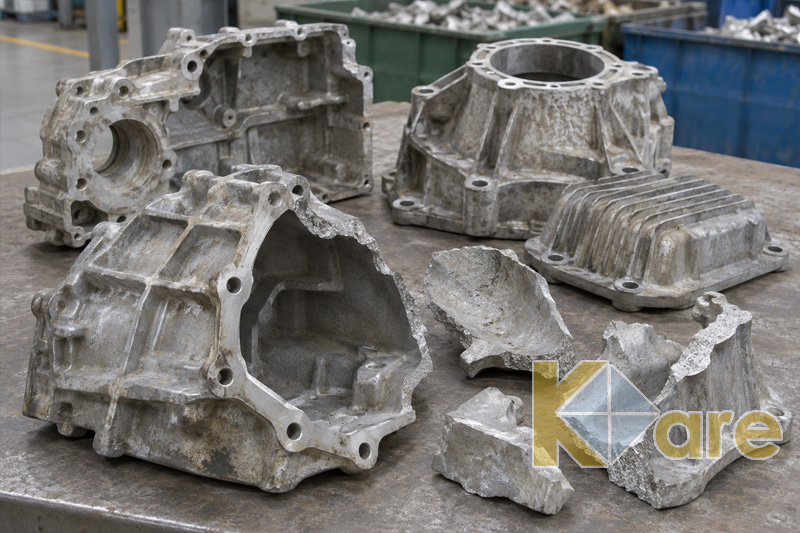
Silumin scrap arises from dismantling vehicles, machinery, electrical equipment and household appliances, as well as from foundry production. It may include housings, covers, crankcases, gates and runners, rejected castings and machining swarf.
During scrap acceptance, aluminium-silicon alloys must be separated from commercially pure aluminium, wrought aluminium alloys, zinc alloys and magnesium materials. Copper, iron and other components must also be considered.
Steel inserts, fasteners, bearings, paint, oil and non-metallic parts affect scrap preparation and assessment. A silumin housing may contain a significant quantity of foreign materials.
Sorting and composition analysis
Sorting includes checking the contents of silicon, copper, magnesium, iron, zinc and other elements. Casting markings and accompanying documentation are used where available.
Suitable analysers are used for instrumental composition identification. The capabilities of X-ray fluorescence analysis (XRF) for measuring light elements, including silicon and magnesium, depend on the instrument and operating conditions. Optical emission spectrometry (OES) may be used for more comprehensive analysis.
Measurements are taken on a suitable prepared surface: coatings, contamination and foreign inclusions can distort the results. Composition analysis is separate from assessing porosity, mechanical properties and heat treatment condition.
Scrap of known grades should preferably be stored separately. It is particularly important to avoid uncontrolled mixing of materials with different copper contents or other components restricted in the intended new alloy.
Recycling silumin
Silumin scrap is a valuable secondary aluminium raw material. After sorting, removal of foreign materials and preparation, it is directed to remelting according to the facility’s process.
The furnace charge is selected with regard to silicon, copper, magnesium, iron and other element contents. Scrap can be used to produce new casting alloys if its composition and quality meet the requirements.
Remelting does not automatically remove all impurities. Producing the required material involves composition control, melt preparation and, where necessary, adjustment of the furnace charge.
Separate collection and proper sorting help maintain the quality of recycled metal and reduce the mixing of incompatible aluminium scrap streams.