Silicon (Si) — Properties and Uses
Silicon — an element for electronics and modern materials
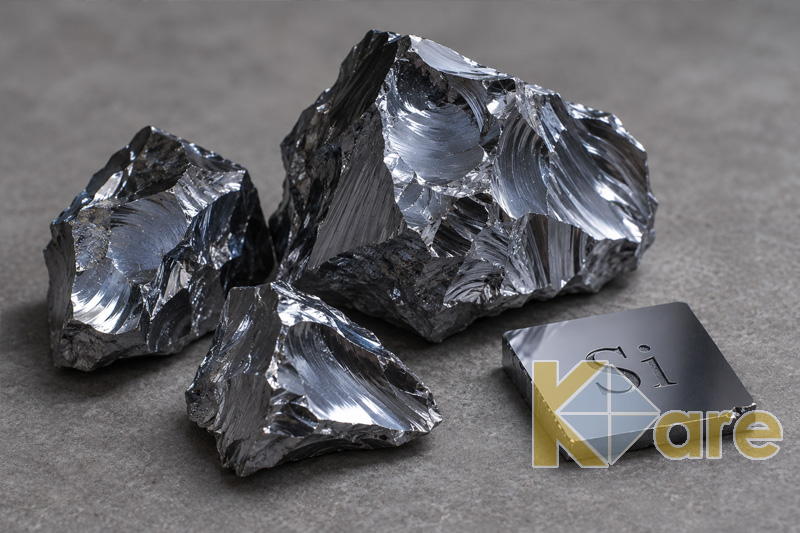
Silicon (Si) is a chemical element with atomic number 14, belonging to group 14 of the periodic table. It is a metalloid that combines some properties of metals and nonmetals. Crystalline silicon is dark grey with a metallic lustre, hard and brittle, and has semiconductor properties.
Silicon plays an important role in microelectronics, solar energy and metallurgy. Its compounds occur in numerous natural minerals and provide the basis for producing glass, ceramics and other industrial materials.
Key characteristics of silicon
Physical properties
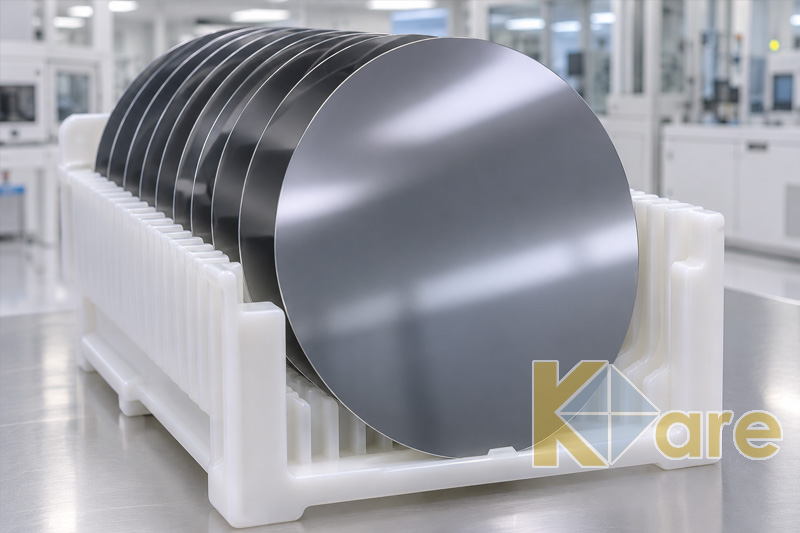
Crystalline silicon has a diamond-type crystal structure. Unlike ductile metals, it is brittle and may cleave under mechanical loading. For electronic devices, grown crystals are sliced into thin wafers, whose surfaces are carefully processed and polished.
Silicon is a semiconductor: its electrical conductivity depends on temperature, illumination and impurity content. Introducing controlled amounts of boron, phosphorus and other dopants produces regions with different electrical properties, enabling the manufacture of semiconductor devices.
Chemical properties
A thin layer of silicon dioxide forms on the surface of silicon and limits further oxidation under ordinary conditions. Silicon reacts with oxygen when heated; under suitable conditions it also forms compounds with carbon, nitrogen and other elements.
Silicon forms oxides, silicates, carbide and other compounds. Its chemical resistance depends on the environment and temperature. The properties of the pure element differ substantially from those of its compounds.
Silicon in nature and its production
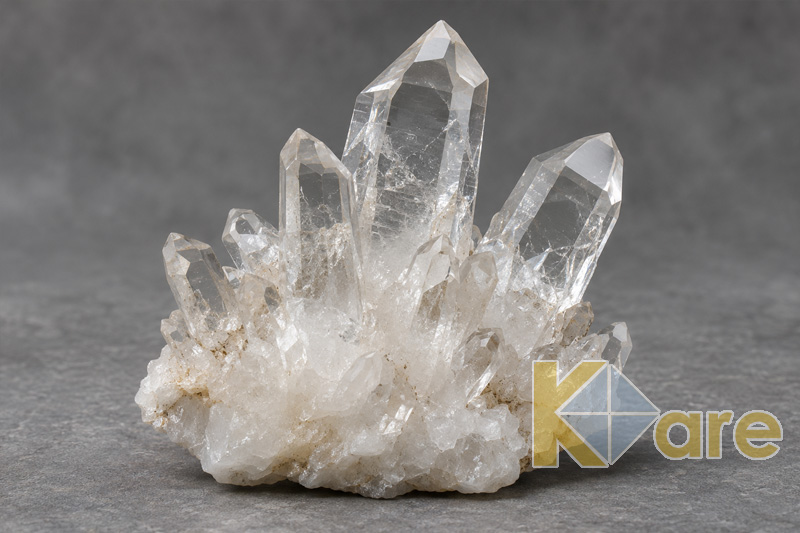
Silicon is one of the most abundant elements in the Earth's crust. In nature, it occurs mainly in compounds, including quartz, feldspars, micas and other silicate minerals. Quartz is silicon dioxide (SiO2), not pure silicon.
Metallurgical-grade silicon is produced by reducing silica with carbon in electric furnaces. Material for electronics and photovoltaic cells undergoes additional purification. Single crystals are grown using methods such as the Czochralski process or the crucible-free float-zone process and are subsequently sliced into wafers.
Where silicon is used
Microelectronics
High-purity silicon provides the basis for integrated circuits, transistors, diodes, sensors and other semiconductor devices.
Solar energy
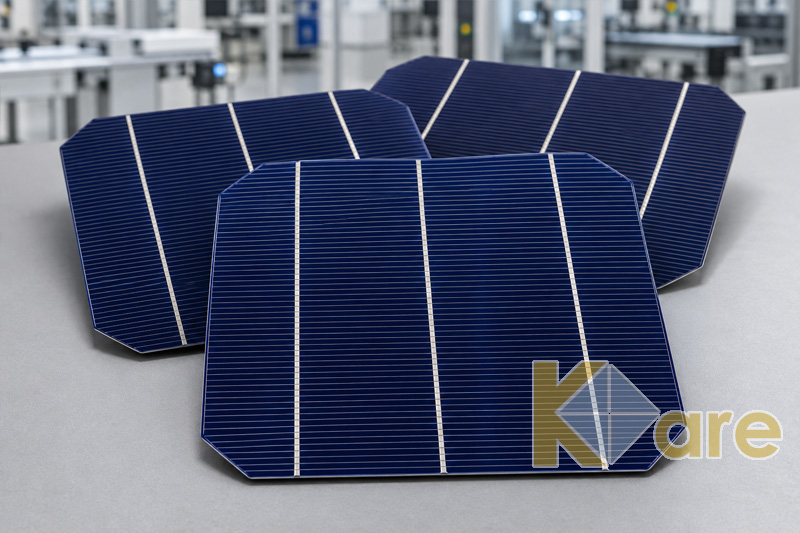
Silicon photovoltaic cells convert light into electrical energy. Monocrystalline, multicrystalline and other silicon technologies are used.
Metallurgy
Silicon is used in aluminium alloys, steels and cast irons. In steelmaking, it also acts as a deoxidiser, often added in the form of ferrosilicon.
Compound production
Metallurgical-grade silicon is a feedstock for organosilicon compounds and silicone materials. Silicon carbide and silicon nitride are used in technical ceramics and other specialised materials.
Silicon in alloys
In aluminium–silicon casting alloys, including silumins, silicon improves melt fluidity and helps produce castings with complex shapes. Mechanical properties depend on the silicon content, other elements, microstructure and alloy processing.
In electrical steels, silicon increases electrical resistivity, helping reduce eddy-current losses. In cast iron, it promotes graphitisation and influences the material's microstructure. Its specific effect depends on composition and production conditions.
Silicon, silica and silicone: what is the difference?
Silicon (Si) is a chemical element. Silica, or silicon dioxide (SiO2), is its compound with oxygen and occurs, for example, as quartz. Glass and silicate ceramics are manufactured using silicon compounds but are not made from pure silicon.
Silicones are a separate family of organosilicon polymers used to produce sealants, elastomers and other materials. Silicon carbide (SiC) is also a compound rather than the pure element: it has high hardness and is used in abrasives, ceramics and power electronics.