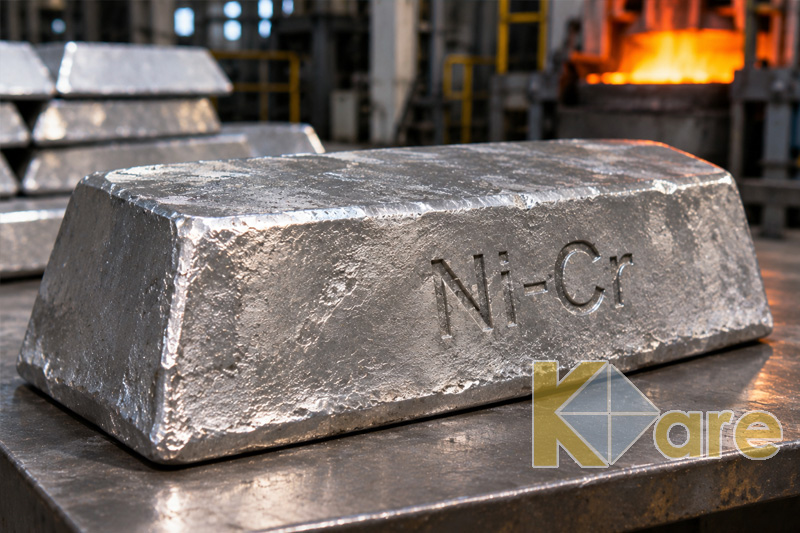
Nichrome refers to a family of heat-resistant electrical alloys based on nickel (Ni) and chromium (Cr). These materials combine high electrical resistivity, oxidation resistance and the ability to operate for extended periods at elevated temperatures.
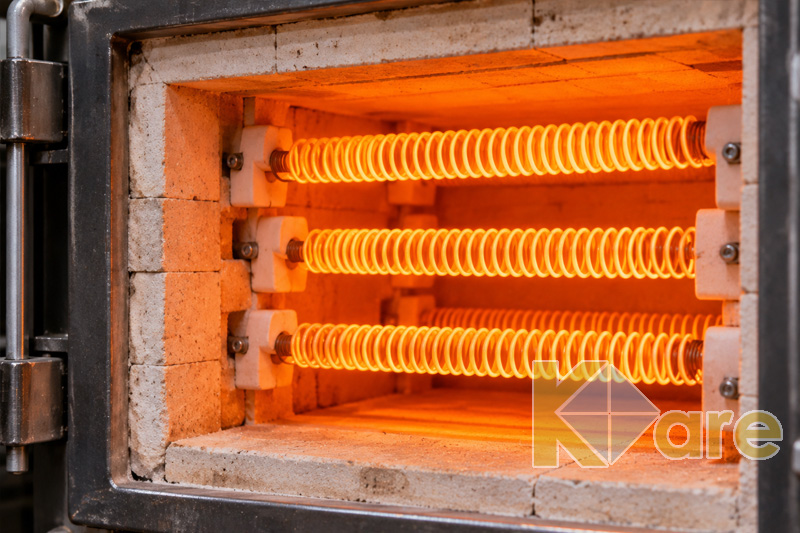
Nichrome is widely used for heating wires, coils, ribbons and elements in industrial electric furnaces. Its performance depends on chemical composition, product diameter or thickness, operating temperature and cooling conditions.
Chemical composition and nichrome grades
Classic nichrome is primarily composed of nickel and chromium. Nickel supports the stability of the metallic matrix, while chromium promotes the formation of a protective oxide film on the heating element. Certain commercial grades also contain iron and other constituents.
| Alloy type | Approximate composition | Characteristics |
|---|---|---|
| NiCr 80/20 | About 80% Ni, 20% Cr | Classic high-resistance heating alloy |
| NiCr 60/15 | About 60% Ni, 15% Cr, balance mainly Fe | Nickel-chromium-iron heating alloy |
| Other NiCr compositions | Ni/Cr ratio varies by grade | Adjustment of resistivity, oxidation resistance and processability |
The designations 80/20 and 60/15 indicate approximate proportions of principal elements rather than complete material specifications. Purchasing and recycling decisions should rely on certificates and verified chemical analysis.
Physical and electrical properties
Nichrome is valued for its combination of high electrical resistivity and oxidation resistance. When current passes through a nichrome wire or ribbon, electrical energy is converted into heat.
- Density: approximately 8.2–8.5 g/cm³, depending on grade.
- Electrical resistivity: approximately 1.09 μΩ·m at room temperature for NiCr 80/20.
- Operating temperature: some NiCr 80/20 grades can operate at temperatures approaching 1200°C under suitable conditions.
- Oxidation resistance: supported by the formation of a protective chromium oxide layer.
- Mechanical properties: depend on supplied condition, deformation history and temperature.
- Magnetic behaviour: composition-dependent; many high-nickel heating alloys are effectively non-magnetic at room temperature.
These values are indicative. The permissible element temperature also depends on wire diameter, coil arrangement, atmosphere and heat dissipation.
Production and processing
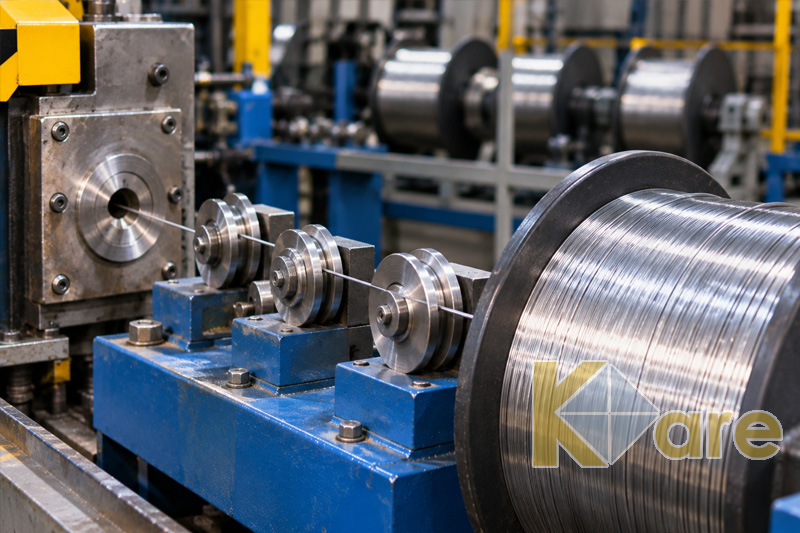
Nichrome is manufactured by melting the constituent metals while controlling composition and impurities. The resulting stock is subjected to hot or cold working, rolling, wire drawing and, where required, heat treatment.
Common commercial forms include wire, ribbon, strip and rod. Wire is used in straight or coiled heating elements, while ribbon is suitable for designs requiring a larger heat-transfer surface.
Heating-element design requires calculations of resistance, electrical power, surface loading and thermal expansion. Incorrect installation or inadequate heat dissipation may cause local overheating and premature failure.
Industrial applications
- Electric furnaces: heating coils and ribbons for heat-treatment equipment.
- Domestic appliances: resistance heating elements in suitable appliance designs.
- Laboratory equipment: heating assemblies for drying ovens and research apparatus.
- Process machinery: heaters for packaging, heat-sealing and other industrial systems.
- Electrical engineering: specialised resistive components.
The appropriate nichrome grade is selected according to operating atmosphere, temperature, expected service life and equipment design. Not all NiCr alloys are interchangeable.
European standards and requirements
EN 60182 addresses test methods and general requirements for resistance materials used in electric heating. Manufacturer specifications are also important when selecting a particular alloy grade and determining its permissible operating temperature.
Supply and use within the European Union must consider applicable REACH and CLP requirements, occupational safety rules and standards governing finished electrical equipment. Product conformity depends on the intended application rather than wire composition alone.
Heating, welding, grinding and recycling nickel- and chromium-containing materials may generate dust or fumes requiring exposure controls. Metallic chromium in an alloy should not be equated with hexavalent chromium compounds, but potential process-generated substances require separate risk assessment.
Recycling and secondary use
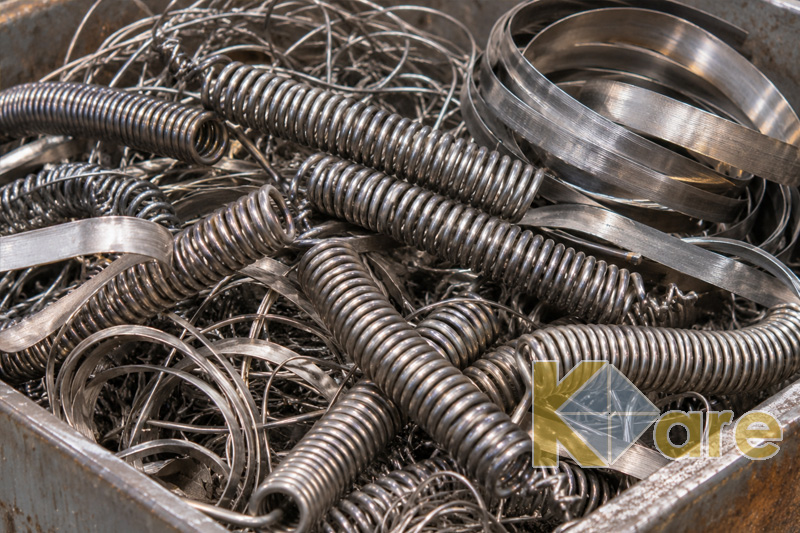
Nichrome is of interest to secondary metallurgy because of its nickel and chromium content. Recyclable materials include wire offcuts, ribbon remnants, manufacturing scrap and spent heating elements.
Before recycling, scrap is sorted by composition and separated from ceramic insulators, fasteners and other materials. Distinguishing nickel-chromium alloys from iron-chromium-aluminium heating alloys is particularly important because their compositions and metallurgical values differ significantly.
Identification methods include documentation, marking and instrumental analysis such as X-ray fluorescence (XRF). Clean, compositionally consistent scrap provides more predictable remelting results.
Advantages and limitations
Advantages: high electrical resistivity, good oxidation resistance, stable operation at elevated temperatures, availability as fine wire and ribbon, and the recycling value of nickel-containing material.
Limitations: relatively high nickel cost, finite service life under overheating or thermal cycling, dependence on operating atmosphere and the need for careful heating-element design.
Nichrome Ni–Cr remains a major material for electric resistance heating. Reliable performance depends on grade selection, load calculations, operating conditions and material quality control.