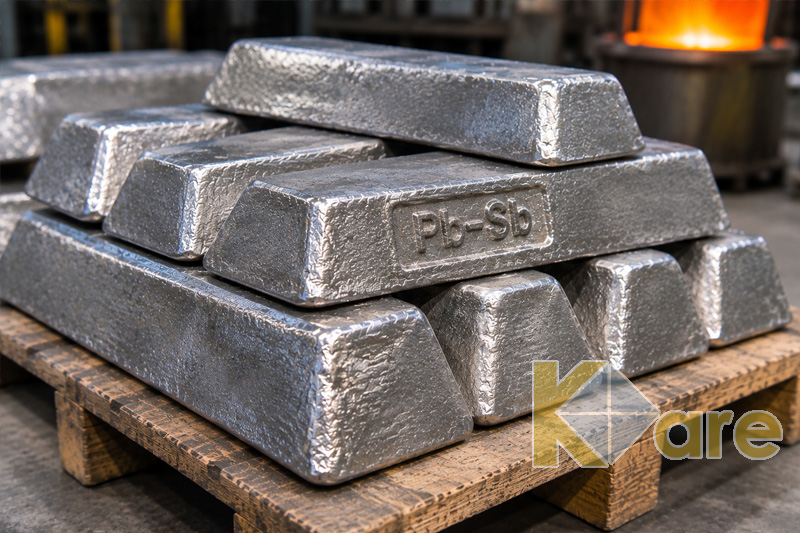
Lead-antimony alloys are metallic materials based on lead (Pb) alloyed with antimony (Sb). Adding antimony increases hardness, strength and resistance to deformation compared with commercially pure lead. These alloys are used where high density, castability and improved mechanical stability are required.
In European industry, lead-antimony alloys have historically been used in battery grids, technical castings and specialised components. Modern material selection depends on the intended application, operating conditions and restrictions governing the use of lead.
Chemical composition and microstructure
Lead is the principal constituent, while antimony acts as the alloying element. Its concentration may range from minor additions to several percent or more in specialised casting compositions. There is no single universal Pb–Sb ratio: the appropriate composition depends on the required properties and manufacturing process.
| Constituent | Symbol | Function |
|---|---|---|
| Lead | Pb | Base metal providing high density and a relatively low melting temperature |
| Antimony | Sb | Improves hardness, strength and dimensional stability of cast components |
| Additional elements | Grade-dependent | May be introduced to modify microstructure and processing behaviour |
Microstructure depends on antimony concentration and cooling conditions. During solidification, a lead-rich matrix and antimony-enriched structural constituents may develop. Increasing Sb content generally raises hardness, but excessive alloying can reduce ductility and increase brittleness.
Physical and mechanical properties
Lead-antimony alloys retain the high density associated with lead while offering improved mechanical stability. Their actual properties depend strongly on chemical composition, casting structure and service temperature.
- Density: high; generally decreases somewhat as the antimony proportion increases.
- Melting behaviour: composition-dependent; melting may occur over a temperature range rather than at a single point.
- Hardness: higher than that of unalloyed lead.
- Strength: increased by antimony additions, although still limited compared with many structural metals.
- Ductility: generally decreases as antimony content rises.
- Castability: suitable for manufacturing shaped components when the composition and casting conditions are properly selected.
- Corrosion behaviour: depends on the environment, alloy composition and operating conditions.
Engineering specifications should be based on verified data for the particular alloy grade. Hardness, strength and melting characteristics cannot be reliably determined from the general designation Pb + Sb alone.
Production and processing
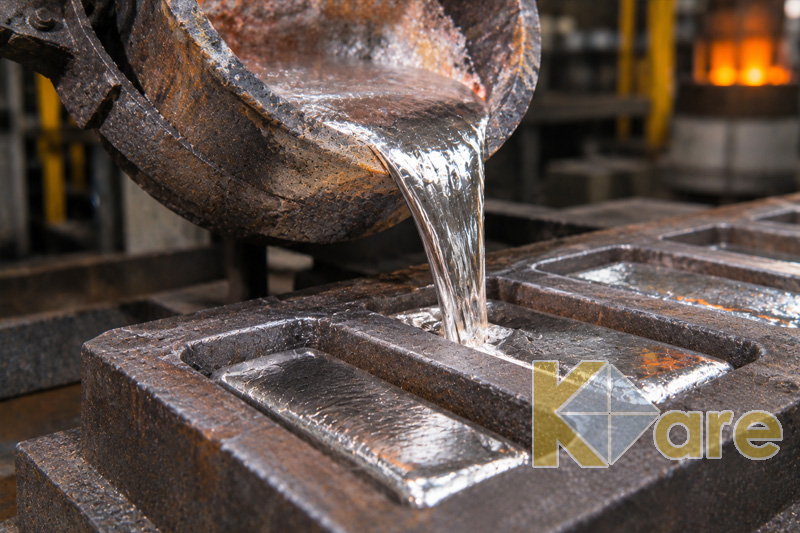
Lead-antimony alloys are produced by controlled alloying of lead with antimony, followed by casting or other suitable manufacturing operations. Composition control, melt cleanliness, processing temperature and cooling rate influence the quality and consistency of the finished material.
During casting, shrinkage, elemental segregation and possible defects must be considered. Machining may be performed where appropriate, but suitable precautions are essential to prevent exposure to lead-containing dust and contamination of the workplace.
Industrial applications
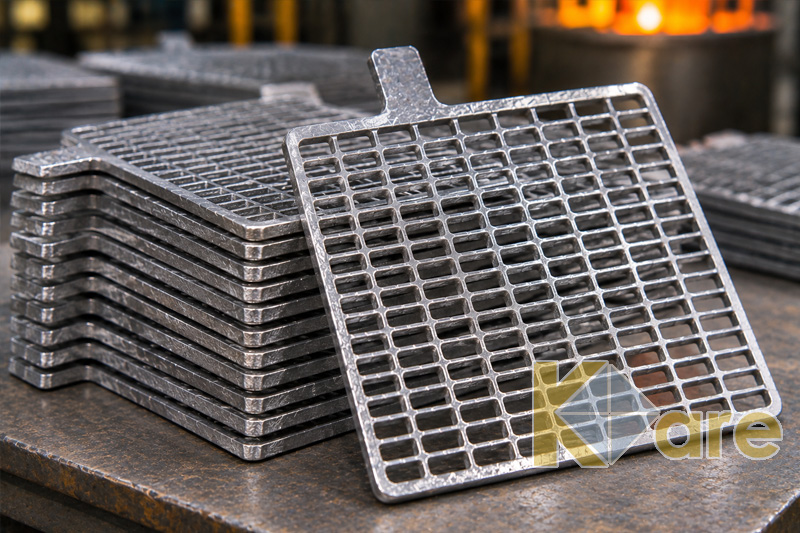
- Lead-acid batteries: selected compositions are used for electrode grids and other metallic components.
- Technical castings: specialised components requiring high density and improved hardness.
- Electrical equipment: certain components and connecting elements where permitted by the relevant product requirements.
- Specialised industrial products: parts for which the properties of lead are improved through antimony alloying.
Modern battery technologies also employ lead-calcium and other alloy systems. Lead-antimony alloys should therefore not be regarded as the standard material for every type of lead-acid battery.
European regulations and technical requirements
Within the European Union, the use of lead-containing materials is subject to chemical safety, occupational health, waste management and product-specific requirements. Relevant regulatory frameworks include REACH, CLP and applicable sector-specific restrictions.
For batteries and battery waste, Regulation (EU) 2023/1542 concerning batteries and waste batteries is particularly relevant. Applicable EN and EN ISO technical standards must be selected according to the specific product and its intended application, rather than the general Pb + Sb designation.
Lead is toxic. Melting, machining, storage and recycling operations require appropriate ventilation, occupational exposure controls, protective equipment and environmental safeguards.
Recycling and secondary metallurgy
Lead-antimony alloys can be recovered and reprocessed through secondary metallurgy. Lead-acid batteries and industrial products containing alloyed lead are important sources of recyclable material.
Recycling involves material identification, chemical analysis, separation of feedstock and controlled metallurgical recovery. Depending on the process and desired output, antimony may be retained in the recovered alloy or separated during refining.
Lead-bearing waste must be handled by appropriately authorised facilities in accordance with applicable European requirements for hazardous waste and environmental protection.
Advantages and limitations
Advantages: increased hardness compared with pure lead, useful casting characteristics, high density and suitability for metallurgical recycling.
Limitations: lead toxicity, relatively low mechanical strength, potential brittleness at higher antimony concentrations and regulatory restrictions on certain applications.
Lead-antimony alloys remain an important family of specialised industrial materials. Their responsible use requires appropriate grade selection, verified material properties and compliance with current European technical, health and environmental requirements.