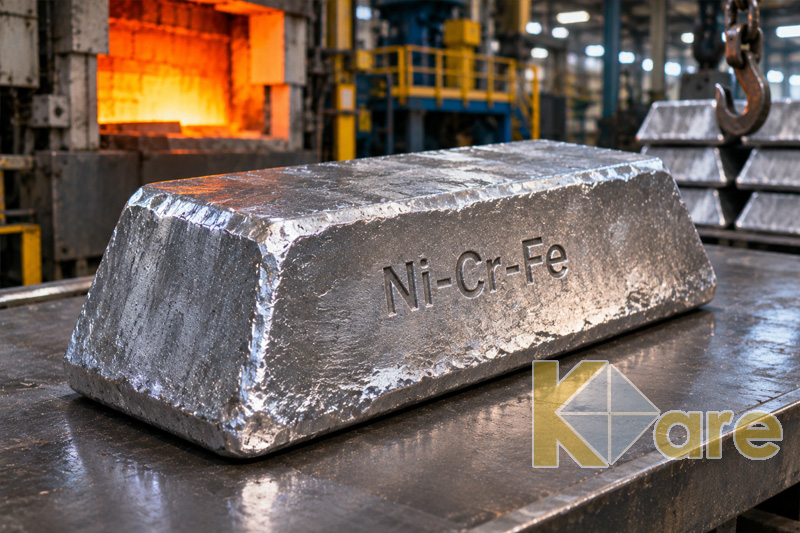
Inconel is a family of nickel-based heat-resistant and corrosion-resistant alloys developed for high-temperature service and aggressive environments. Nickel (Ni), chromium (Cr) and iron (Fe) are major constituents of several grades, while others also contain significant amounts of molybdenum, niobium, aluminium and titanium.
Inconel alloys are used in power generation, aircraft engines, chemical processing equipment and high-temperature systems. They are valued for oxidation resistance, retention of mechanical properties at elevated temperatures and resistance to various forms of corrosion.
Chemical composition and major grades
Inconel is not a single chemical composition but a family of alloys. The proportions of alloying elements determine the strength, heat resistance, corrosion behaviour and processing characteristics of each grade.
| Grade | Typical composition | Key characteristics |
|---|---|---|
| Inconel 600 | Ni ≥ 72%, Cr 14–17%, Fe 6–10% | Oxidation and corrosion resistance; nickel-chromium-iron base |
| Inconel 601 | Ni 58–63%, Cr 21–25%, Fe mainly balance, Al 1.0–1.7% | Excellent resistance to high-temperature oxidation |
| Inconel 625 | Ni ≥ 58%, Cr 20–23%, Mo 8–10%, Nb + Ta 3.15–4.15% | Corrosion resistance and strength enhanced by Mo and Nb |
| Inconel 718 | Ni 50–55%, Cr 17–21%, Fe mainly balance, Nb + Ta 4.75–5.50% | High-strength precipitation-hardenable alloy |
The figures represent approximate ranges from commonly used specifications. Only principal elements are listed, not the full set of alloying additions and impurity limits. Accurate grade identification requires material certification and chemical analysis.
Microstructure and physical properties
Most Inconel alloys have an austenitic nickel-based matrix with a face-centred cubic crystal structure. Chromium promotes the formation of a protective oxide layer, while additional alloying elements improve strength and corrosion resistance.
Inconel 718 and certain other grades gain strength through the precipitation of strengthening phases during controlled heat treatment. Their properties therefore depend strongly on the supplied and heat-treated condition.
- Density: approximately 8.2–8.5 g/cm³, depending on grade.
- Melting range: roughly 1260–1420°C across common grades.
- Heat resistance: strong oxidation resistance, with permissible service temperature dependent on grade, load and environment.
- Corrosion resistance: resistance to many aggressive media, depending on composition and service conditions.
- Strength: ranges from annealed alloy properties to the high strength of precipitation-hardened grades.
- Magnetic behaviour: many grades are effectively non-magnetic in the annealed condition, although behaviour varies with composition and processing.
A high melting temperature does not imply an equally high continuous service temperature. Design must consider creep, oxidation, thermal fatigue and mechanical loading.
Production and processing
Inconel alloys are produced by melting carefully controlled raw materials. For critical components, vacuum induction melting and additional remelting processes may be used to improve cleanliness and chemical homogeneity.
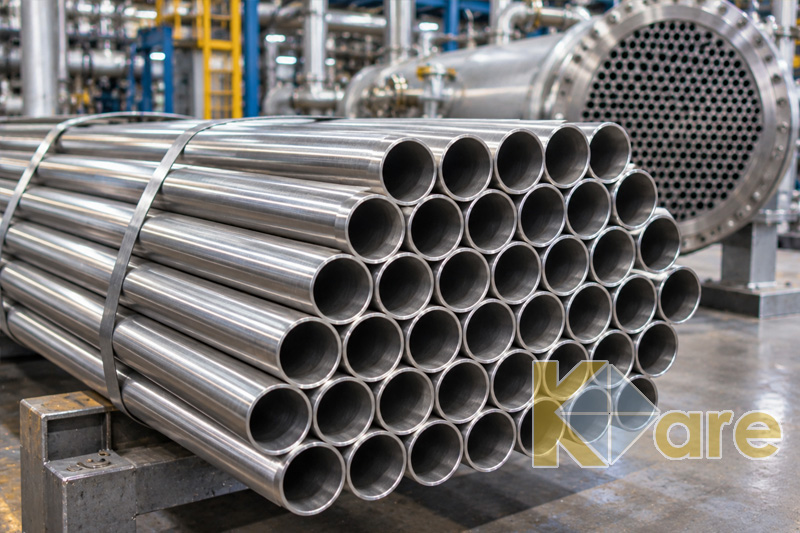
Common product forms include sheet, plate, bar, tube, wire, forgings and specialised stock. Manufacturing processes include hot and cold working, machining, welding and heat treatment.
Machining can be demanding because of high strength, work hardening and relatively low thermal conductivity compared with ordinary structural steels. Precipitation-hardening grades require carefully controlled heat-treatment schedules.
Some grades, particularly Inconel 625 and 718, are also used in additive manufacturing. The properties of printed parts depend on process parameters, microstructure and subsequent treatment.
Industrial applications
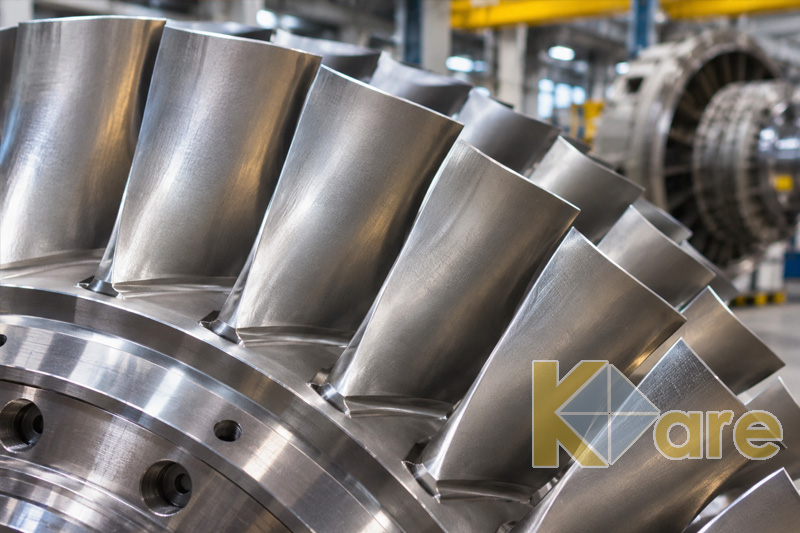
- Aerospace: gas-turbine engine components, fasteners and highly stressed parts.
- Power generation: turbine, heat-exchanger and high-temperature equipment components.
- Chemical processing: reactors, piping and equipment exposed to aggressive process environments.
- Oil and gas: corrosion-resistant components for demanding operating conditions.
- Thermal equipment: furnace parts, fixtures and structures exposed to elevated temperatures.
- Additive manufacturing: complex metal components made from suitable alloy powders.
Inconel grades are not automatically interchangeable. For example, grades 600 and 601 are frequently selected for high-temperature oxidation resistance, 625 for corrosion resistance and 718 for high strength after precipitation-hardening heat treatment.
European standards and requirements
In Europe, material selection depends on product form and intended service. Relevant specifications may include EN 10095 for heat-resisting steels and nickel alloys, together with specialised product and application standards.
Equipment operating under pressure may be subject to the Pressure Equipment Directive 2014/68/EU (PED). Conformity assessment must consider design, material properties, service conditions and applicable harmonised standards or other permitted assessment routes.
Supply within the EU must take account of applicable REACH and CLP requirements according to material, product form and processing activities. Traceability, material certificates and quality control are important for critical components.
Recycling and secondary use
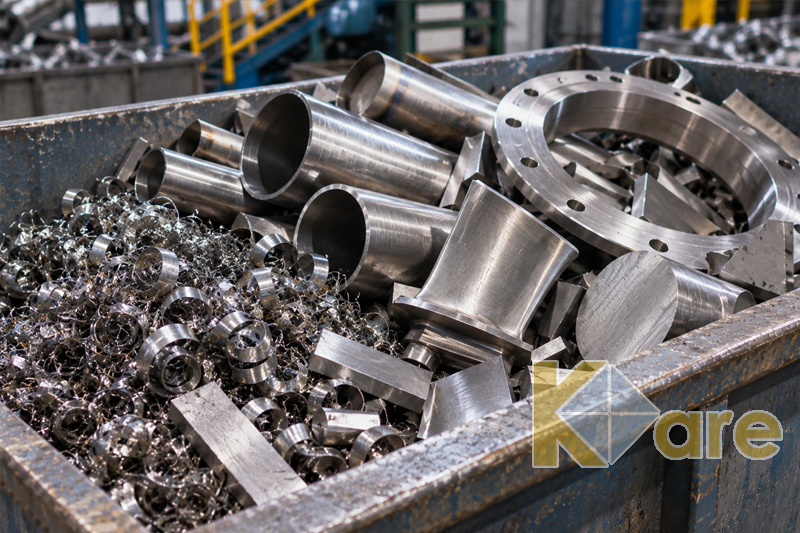
Inconel scrap is valuable because of its high nickel content and alloying additions. Secondary material arises from machining, component manufacturing and dismantling industrial equipment.
Common categories include sheet and tube offcuts, bars, forgings, manufacturing remnants and metal turnings. Scrap should be sorted by grade because nickel, chromium, iron, molybdenum and niobium contents significantly affect its value and reuse potential.
Identification methods include certificates, markings and instrumental testing such as X-ray fluorescence (XRF). Additional analytical techniques may be required for elements that XRF cannot reliably quantify.
Clean, homogeneous and properly segregated scrap can be returned to metallurgical production. Contamination with oils, coatings and foreign metals makes recycling more difficult.
Advantages and limitations
Advantages: high-temperature capability, oxidation resistance, strong corrosion resistance in appropriately selected grades, retention of strength at elevated temperatures and the recycling value of nickel-rich material.
Limitations: high alloying-element costs, challenging machining, strict welding and heat-treatment requirements, and significant differences in temperature and corrosion performance between grades.
Inconel occupies an important position among specialised nickel-based alloys. Reliable performance depends on correct grade selection, verified composition and compliance with manufacturing and service requirements.