Iron (Fe) — Chemical Element
Iron — the foundation of modern ferrous metallurgy
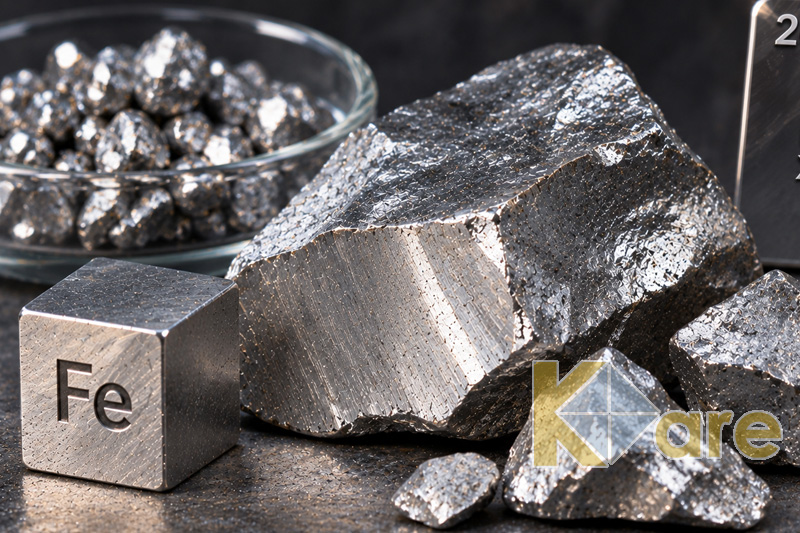
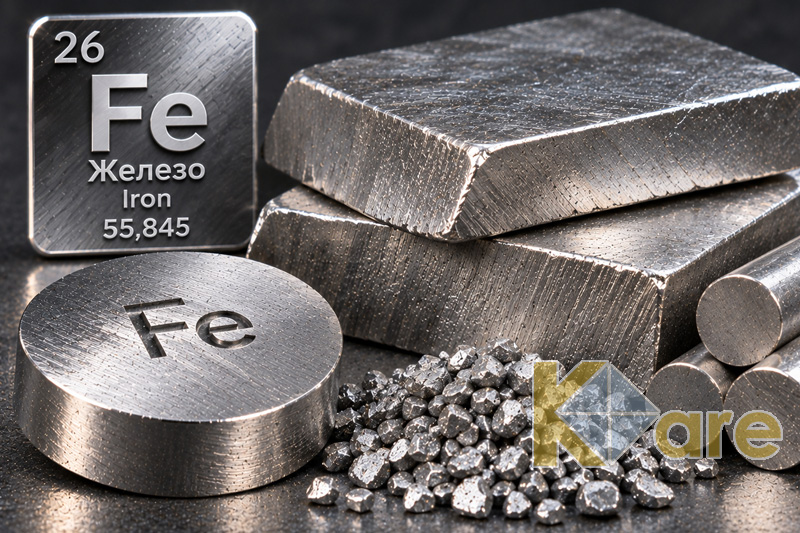
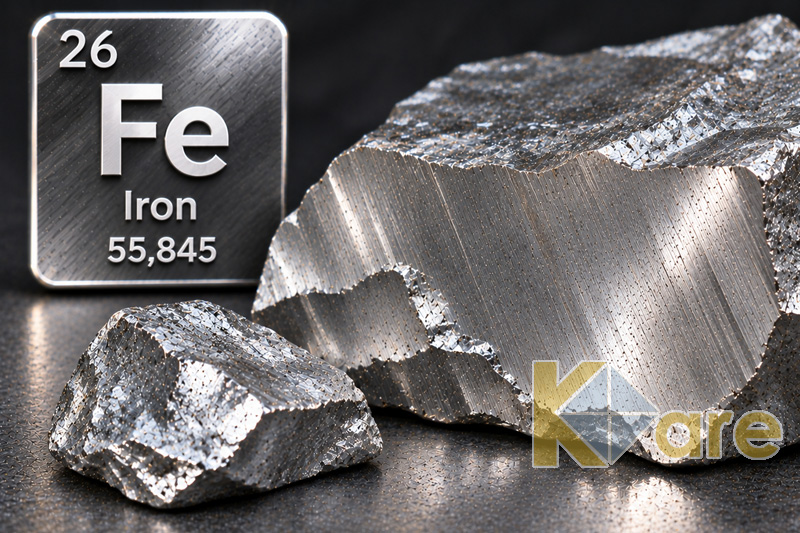
Iron (Fe) is a chemical element with atomic number 26, belonging to group 8 of the periodic table. It is a silvery-grey metal with good thermal conductivity and pronounced magnetic properties. Its chemical symbol Fe comes from the Latin name ferrum. Iron is one of the most important metals in human history and the foundation of modern ferrous metallurgy.
In everyday language, metal structures, tools and various manufactured products are often described simply as iron. However, most of these objects are not made of pure iron but of steel or cast iron — materials whose principal component is iron. Pure iron also has industrial applications, particularly in electrical engineering, magnetic materials and specialized technological processes.
Main characteristics of iron
Physical properties of iron
Pure iron is a silvery-grey metal with a characteristic metallic lustre. Its density at room temperature is approximately 7.87 g/cm³. Iron is ductile, can be forged and rolled, and has a relatively high melting point of about 1538 °C. Its mechanical properties depend significantly on purity, temperature and internal structure.
Iron conducts heat and electricity well, although its electrical conductivity is lower than that of copper and aluminium. As temperature changes, the metal can transform between different crystalline modifications. These transformations are highly important in metallurgy, heat treatment and the development of the properties of iron-containing materials.
Magnetic properties of iron
One of iron's best-known characteristics is ferromagnetism. Below approximately 770 °C, the ordinary α-phase of iron can become strongly magnetized in an external magnetic field. This temperature is known as the Curie point. Above it, iron loses its ferromagnetic properties and becomes paramagnetic.
The magnetic properties of iron are used in electromagnets, electrical equipment cores, magnetic circuits and specialized devices. For these applications, material purity, structure and the ability to magnetize and demagnetize efficiently are particularly important.
Chemical properties and corrosion
Iron is a chemically reactive metal. In moist air, it gradually oxidizes, forming corrosion products commonly known as rust. Rust consists of a mixture of hydrated iron oxides and oxyhydroxides. Unlike the protective oxide films formed on certain other metals, ordinary rust does not reliably protect the surface against further deterioration.
When heated, iron reacts readily with oxygen, forming various oxides. It also reacts with dilute non-oxidizing acids, releasing hydrogen. Painting, metallic coatings, specialized protective materials and electrochemical methods are used to protect iron products against corrosion.
Applications of iron
Ferrous metallurgy
Iron is the main component of steel and cast iron. These materials are widely used in construction, mechanical engineering, transportation, energy production and industrial equipment. The production of iron-based materials forms the foundation of the global ferrous metals industry.
Electrical engineering and magnetic materials
High-purity iron and specialized iron-containing materials are used to manufacture magnetic circuits, electromagnet cores and other electrical equipment. Their properties enable efficient control of magnetic fields.
Powder metallurgy
Iron powders are used to manufacture components through pressing and sintering. This technology makes it possible to produce parts with specific shapes and structures while minimizing material waste.
Chemical industry
Iron and its compounds are used in various chemical processes and in the production of pigments, reagents, catalysts and water treatment materials. Metallic iron is also used as a reducing agent in certain industrial processes.
What is the difference between iron, steel and cast iron?
Iron is the chemical element Fe. Steel and cast iron are iron-based alloys containing carbon and, depending on their intended use, other elements. Carbon content, additional components and material structure largely determine their mechanical and technological properties.
Steel generally contains less than approximately 2.1% carbon and offers extensive possibilities for processing, forming and heat treatment. Cast iron usually contains more than 2.1% carbon and is characterized by good casting properties. The boundary between these material groups depends on established metallurgical classifications and compositional characteristics.
Pure iron is generally softer and more ductile than most structural steels. For this reason, steel or cast iron is more commonly used for load-bearing structures, tools and machinery components than chemically pure iron. All these materials share iron as their principal metallic component.
Iron in nature and iron ores
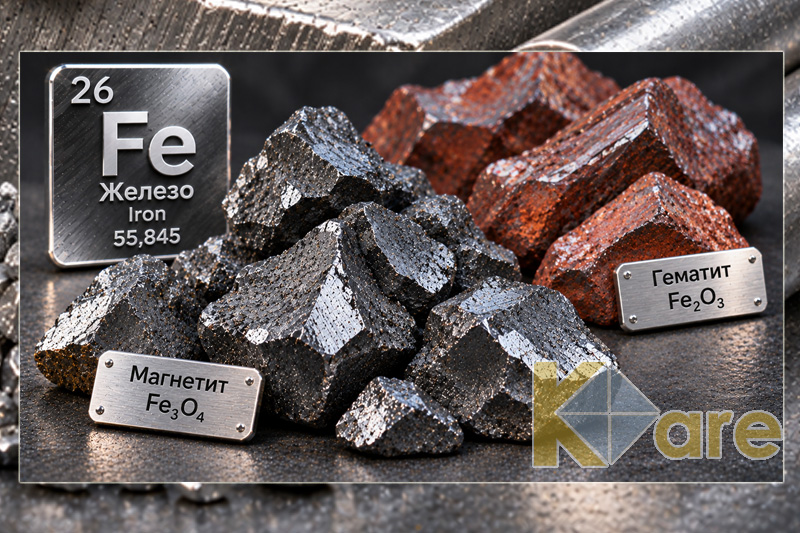
Iron is one of the most abundant elements in the Earth's crust. In nature, it occurs mainly in minerals, the most important of which include hematite (Fe₂O₃), magnetite (Fe₃O₄), goethite and siderite (FeCO₃). Iron ores are the principal raw materials for the metallurgical industry.
Native metallic iron is rare on the Earth's surface. Meteoric iron is of particular interest and usually contains nickel and other elements. Iron also plays an essential role in living organisms: it is a component of haemoglobin and participates in oxygen transport.
Iron production
The main industrial route to iron production involves reducing iron oxides from iron ore. The traditional blast furnace process uses iron ore materials, coke and fluxes. At high temperatures, iron oxides are reduced, while the resulting molten metal absorbs carbon and forms pig iron.
To produce steel, pig iron undergoes further processing to reduce carbon content and remove unwanted impurities. Direct reduced iron technologies also exist, producing sponge iron without conventional blast furnace smelting. Particularly pure iron is manufactured using additional refining methods.
Iron and recycling
Iron-containing materials are among the most widely recycled metallic resources. Steel and cast iron scrap are used to produce new metal, particularly in electric arc furnaces. Thanks to their magnetic properties, many iron-containing waste materials can be efficiently separated from other substances.
Recycling returns iron to industrial use, reduces the need for iron ore extraction and conserves primary resources. However, it is important to distinguish the chemical element iron from the actual materials entering recycling facilities: most of them are different grades of steel and cast iron.