Lead-based babbitt (Pb + Sb + Sn) — composition, properties and applications
Lead-based babbitt (Pb + Sb + Sn): composition and properties
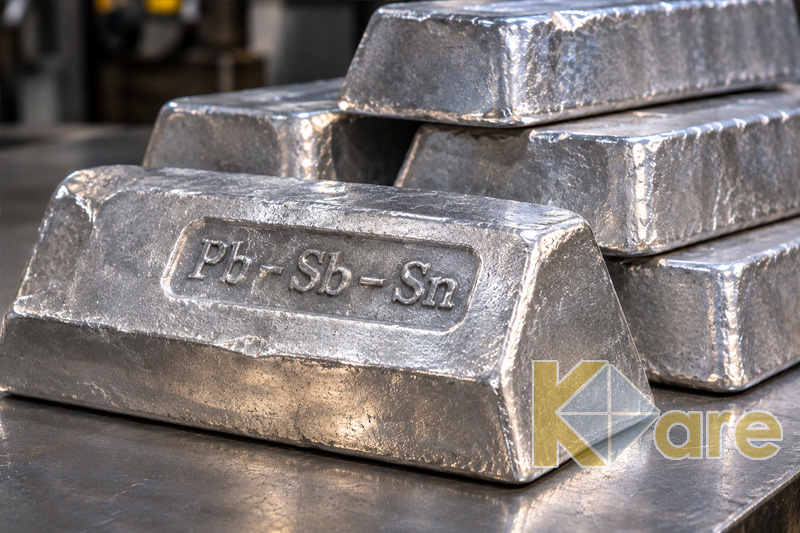
Lead-based babbitt is an antifriction bearing alloy based on lead (Pb), with antimony (Sb) and tin (Sn) as important alloying elements. It belongs to the white-metal family and is used to produce the working surfaces of plain bearings, primarily in lubricated applications.
Lead forms a relatively soft metallic matrix, antimony promotes harder structural constituents, and tin influences microstructure and processing behaviour. Exact proportions depend on the alloy grade and intended application. The notation Pb + Sb + Sn therefore describes an alloy family rather than one fixed chemical composition.
Babbitt alloys combine a soft matrix with harder phases. This structure provides conformability to the shaft surface, the ability to embed small contaminant particles and favourable behaviour under lubricated sliding conditions. Lead-based babbitts generally have lower load-bearing and temperature capabilities than tin-based babbitts.
Microstructure and technical characteristics
The performance of lead-based babbitt depends on chemical composition, microstructure, casting quality and bearing operating conditions.
- Antifriction behaviour — helps reduce seizure risk when adequate lubrication is maintained.
- Conformability — allows the bearing lining to adapt to the shaft surface.
- Embeddability — the soft matrix can accommodate small hard contaminant particles.
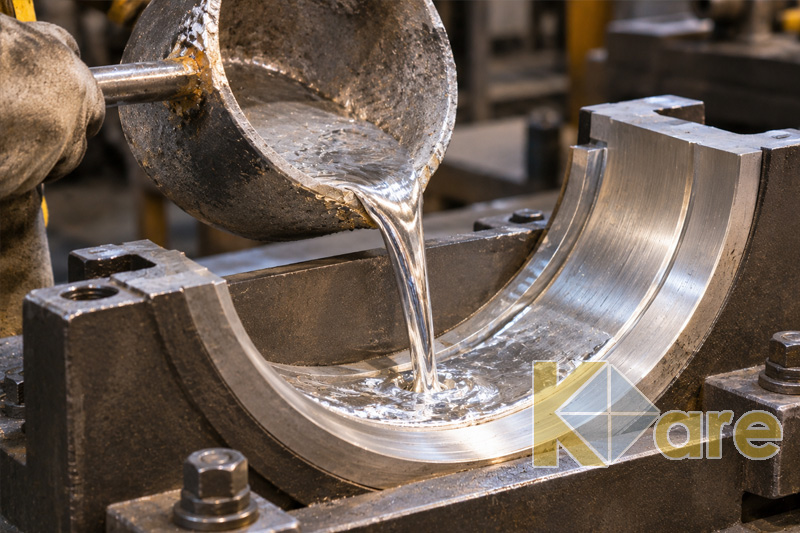
- Castability — enables the production of an antifriction lining bonded to a metal backing.
- Limited load capacity — requires careful consideration of load, temperature and sliding speed.
Melting temperatures and mechanical properties vary by grade. Engineering selection should rely on material specifications, bearing calculations and equipment manufacturer recommendations.
Manufacturing and applications of lead-based babbitt
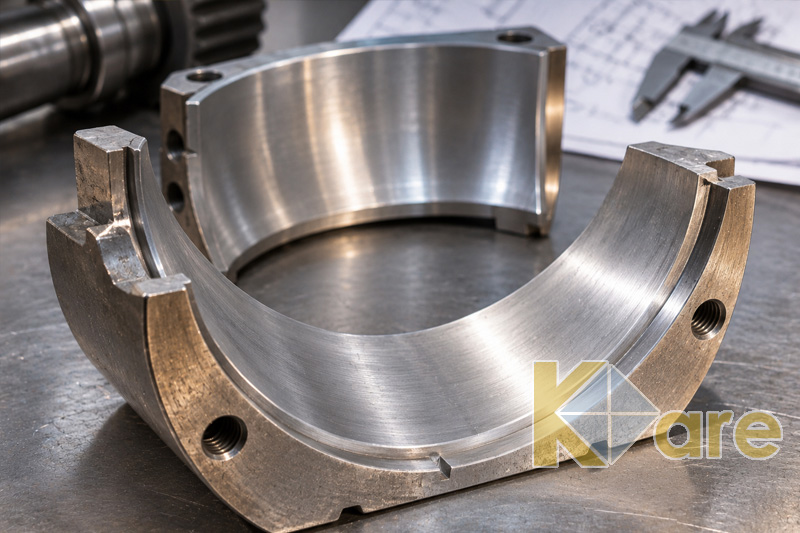
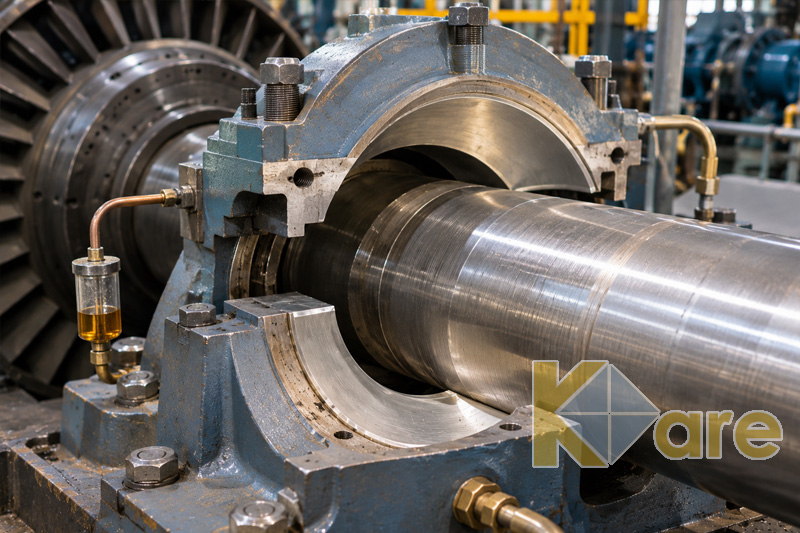
The main application is in industrial plain bearings. A babbitt lining is cast or bonded onto a suitable steel, cast-iron or other metallic backing, which carries most of the structural load.
Lead-based babbitt has historically been used, and remains relevant in selected designs, for bearings in pumps, electric motors, gearboxes and other rotating machinery where lead-containing materials are permitted.
Bearing production and refurbishment require careful backing preparation, casting temperature control, sound bonding, low porosity and accurate geometry. Poor processing may result in lining separation or premature bearing failure.
The European standard EN ISO 4381 covers cast copper and lead alloys for multilayer plain bearings, including applicable bearing-metal compositions. Compliance of a particular grade must be verified against its official specification.
Lead-based babbitt in modern industry
The choice between lead-based babbitt, tin-based babbitt and other bearing materials depends on loading, operating temperature, rotational speed, lubrication and service-life requirements.
Lead is toxic. Within the European Union, its handling and use are subject to applicable REACH provisions and occupational safety legislation. Melting, casting and machining operations require appropriate exposure controls and industrial hygiene measures.
Kare Pluss presents lead-based babbitt in the Alloy Atlas as a technical material for antifriction linings and plain bearings. Its properties should always be assessed with reference to the specific grade, structure and operating conditions.