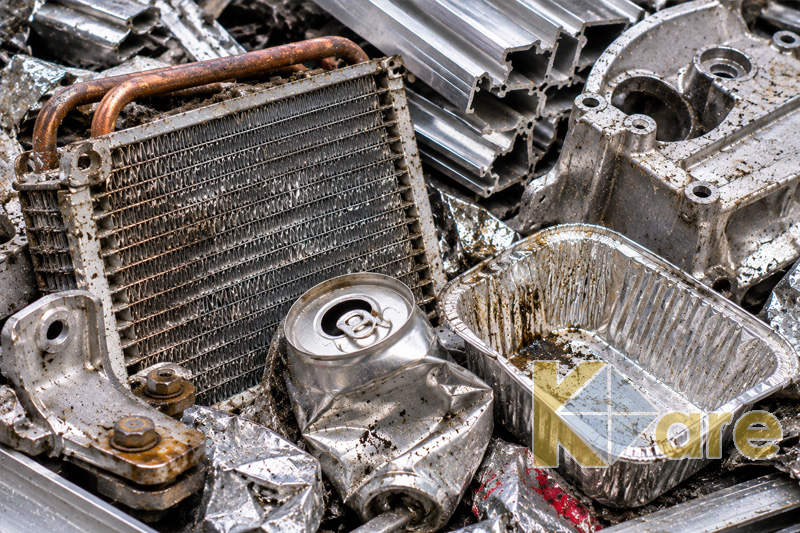
Mixed and contaminated aluminium scrap is a heterogeneous secondary raw material containing different aluminium alloys, products with metallic and non-metallic inclusions, protective coatings and contamination accumulated during service.
Unlike homogeneous sorted aluminium scrap, these materials require additional identification, separation and preparation before metallurgical recycling. Their industrial value depends on chemical composition, aluminium alloy content, the nature of contaminants and actual metal recovery.
Main types of mixed aluminium scrap
| Scrap type | Composition | Characteristics |
|---|---|---|
| Mixed wrought aluminium scrap | Profiles, sheets, tubes | Different alloy grades |
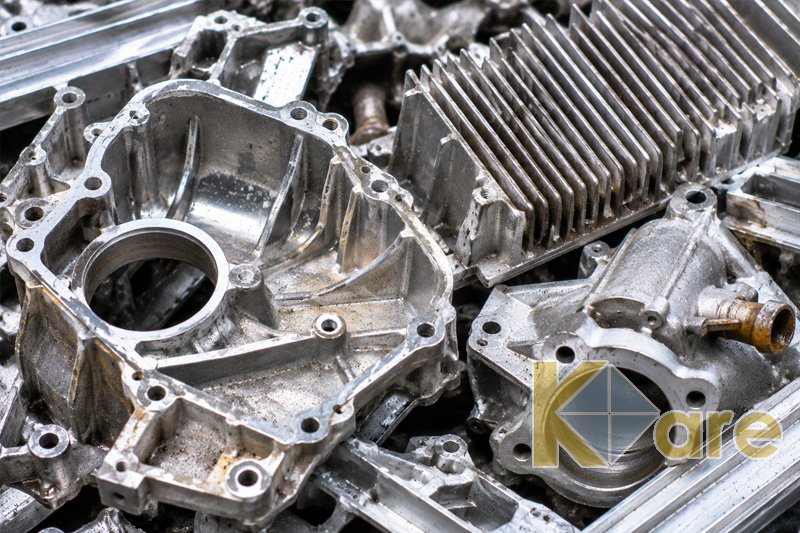
| Mixed cast aluminium scrap | Housings, castings, machine parts | Variable silicon and copper content |
| Combined aluminium scrap | Cast and wrought products | Heterogeneous chemical composition |
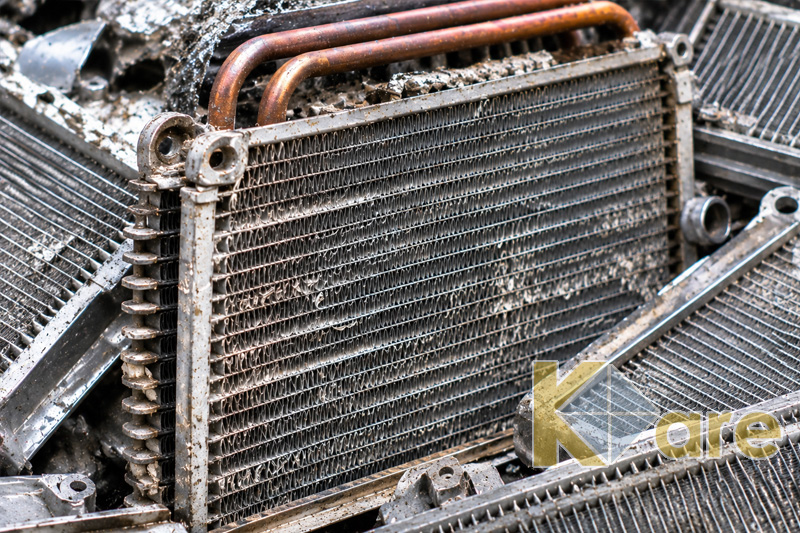
| Radiators and heat exchangers | Aluminium, copper, steel, plastics | Component separation required |
| Aluminium structures | Profiles, fasteners, seals | Steel and polymer inclusions |
| Contaminated industrial components | Aluminium alloys, oils, coatings | Additional preparation required |
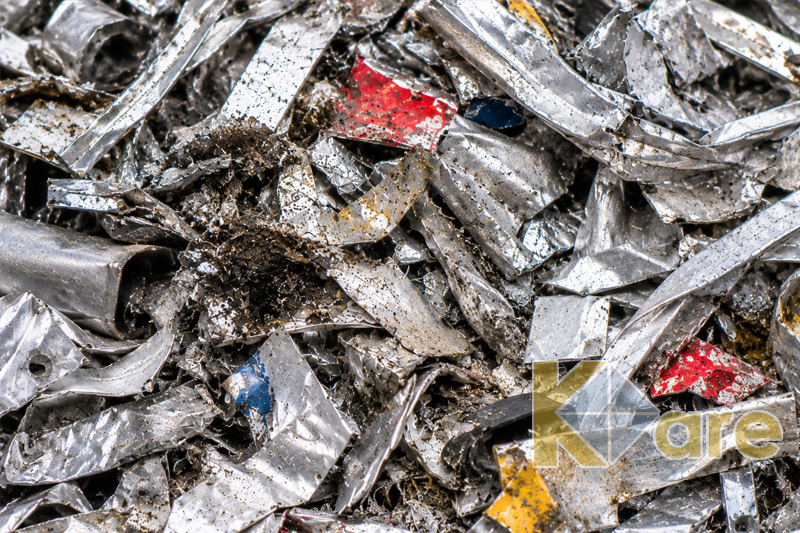
| Shredded aluminium scrap | Fragments of various products | Instrumental sorting required |
Chemical composition of mixed aluminium scrap
Mixed consignments may contain several series of wrought aluminium alloys and different casting alloys. During combined remelting, alloying elements enter the common melt and influence the properties of the recovered metal.
| Alloy group | Main elements | Typical products |
|---|---|---|
| EN AW-1xxx | Al | Sheets, conductors, foil |
| EN AW-2xxx | Al–Cu | High-strength components |
| EN AW-3xxx | Al–Mn | Sheets, packaging, heat exchangers |
| EN AW-5xxx | Al–Mg | Sheet-metal structures |
| EN AW-6xxx | Al–Mg–Si | Profiles, tubes, structures |
| EN AW-7xxx | Al–Zn–Mg | High-strength structural components |
| EN AC | Al–Si, Al–Si–Cu and others | Cast housings and automotive components |
Iron, copper, zinc, magnesium and silicon content is particularly important. Excessive concentrations of individual elements may restrict the use of secondary metal for producing specific alloy grades.
Aluminium radiators and combined products
Radiators, condensers and heat exchangers form a distinct category of complex aluminium scrap. Their construction may include aluminium tubes and fins, copper pipes, steel fasteners and plastic tanks.
- Automotive cooling radiators.
- Automotive air-conditioning condensers.
- Copper-aluminium heat exchangers.
- Aluminium heating radiators.
- Industrial heat exchangers.
- Electronic equipment heat sinks.
Copper-aluminium heat exchangers must be distinguished from entirely aluminium products. Copper is a valuable secondary raw material in its own right, but uncontrolled copper additions to an aluminium melt alter the chemical composition of the alloy.
Contamination and foreign inclusions
Contamination of aluminium scrap is determined by the presence of components that do not belong to the target metallic fraction. Contaminants may be metallic, organic or mineral in origin.
| Contamination type | Examples | Effect on recycling |
|---|---|---|
| Ferrous metals | Bolts, screws, steel inserts | Increased iron content |
| Other non-ferrous metals | Copper, brass, zinc components | Changes in melt composition |
| Polymer materials | Plastics, rubber, seals | Reduced metallic fraction |
| Organic coatings | Paint, lacquer, adhesives | Specialised preparation required |
| Service fluids | Oils, coolants | Additional safety requirements |
| Mineral contamination | Sand, dust, soil | Increased non-metallic residues |
| Moisture | Water, condensation | Reduced useful mass and melting hazards |
Moisture, foreign metals and non-metallic materials should be assessed separately. Surface oxidation also affects metallurgical yield, although aluminium oxide chemically contains aluminium.
European standards and classification
Mixed aluminium scrap classification is based on material origin, alloy composition, preparation method and foreign material content.
| Standard | Scope |
|---|---|
| EN 13920 | Series of aluminium scrap classification standards |
| EN 13920-1 | General requirements, sampling and tests |
| EN 573-3 | Chemical composition of wrought aluminium alloys |
| EN 1706 | Chemical composition and mechanical properties of aluminium castings |
| EN 1676 | Aluminium alloy ingots for remelting |
Specific permissible levels of contamination, moisture and chemical composition are determined by the scrap category, applicable specification and agreed delivery conditions.
Calculation of contamination and useful aluminium mass
The mass fraction of foreign components is calculated as the ratio of their combined mass to the initial consignment mass:
where mc is the combined mass of foreign components, including moisture if counted as contamination, and m0 is the initial consignment mass.
The estimated mass of the target aluminium fraction is calculated as follows:
For example, a consignment weighing 1000 kg with 12% contamination contains an estimated 880 kg of aluminium material. This represents the mass of aluminium alloys rather than chemically pure aluminium.
The weighted average concentration of an alloying element in a mixture of aluminium alloys is calculated using the following formula:
where mi is the mass of an individual alloy and Ci is the concentration of the relevant element in percent. The formula assumes no losses or additional inputs of that element.
Actual metallurgical yield relative to the initial consignment mass is calculated as follows:
If 820 kg of metal is recovered from an initial 1000 kg consignment, the actual yield is 82%. The difference between the estimated aluminium fraction and recovered metal results from preparation and melting losses.
Sorting and industrial recycling
Preparation of mixed aluminium scrap involves sequential separation of materials according to their physical properties and chemical composition.
| Method | Purpose |
|---|---|
| Visual sorting | Separation according to product origin and construction |
| Magnetic separation | Removal of ferromagnetic steel components |
| Eddy current separation | Separation of electrically conductive non-ferrous metals |
| Density separation | Separation of materials with different densities |
| XRF analysis | Determination of various alloying elements |
| OES and LIBS | Identification and sorting of aluminium alloys |
| Industrial cleaning | Removal of coatings and service contamination |
Selection of an analytical method must consider its sensitivity to light elements, surface condition and required composition measurement accuracy. Wet scrap and components containing residual liquids require specialised safe preparation before melting.
Mixed and contaminated aluminium scrap is an important secondary resource. Effective sorting, chemical composition control and removal of foreign components improve metallurgical yield and expand the potential applications of secondary aluminium alloys.