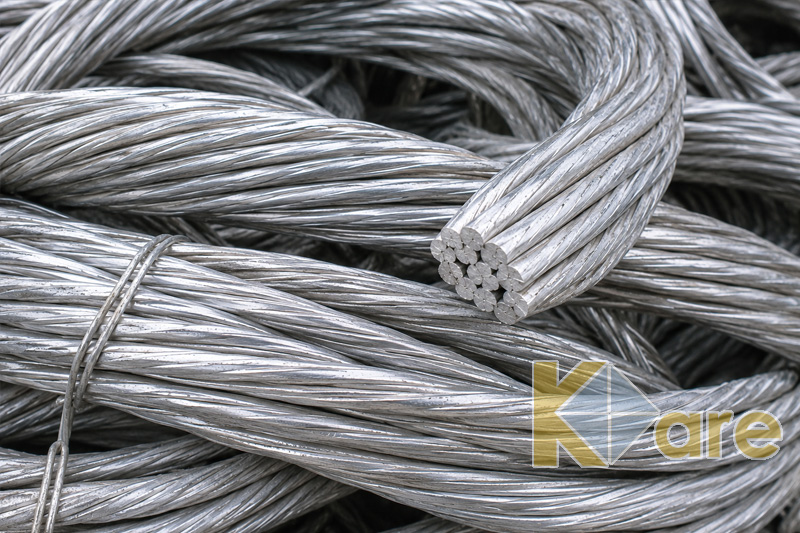
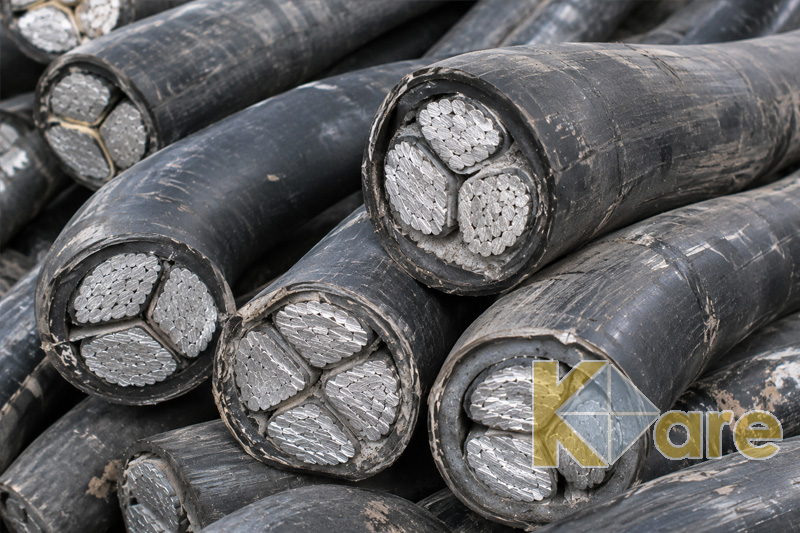
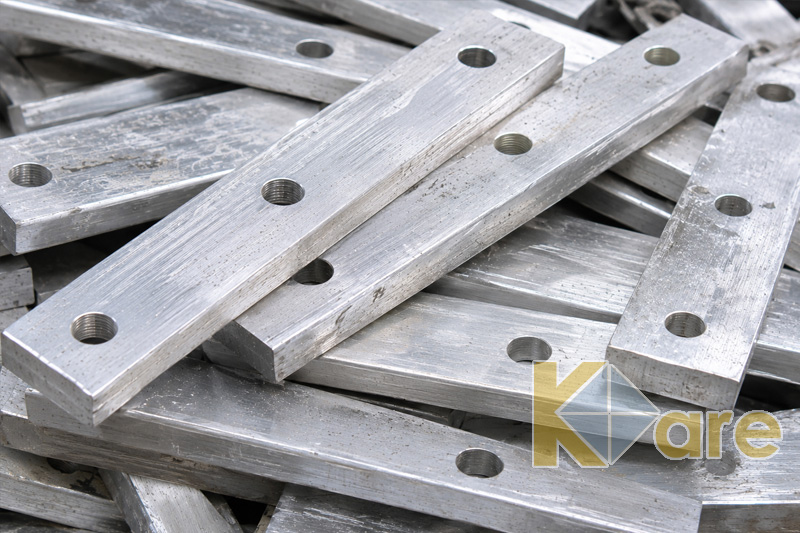
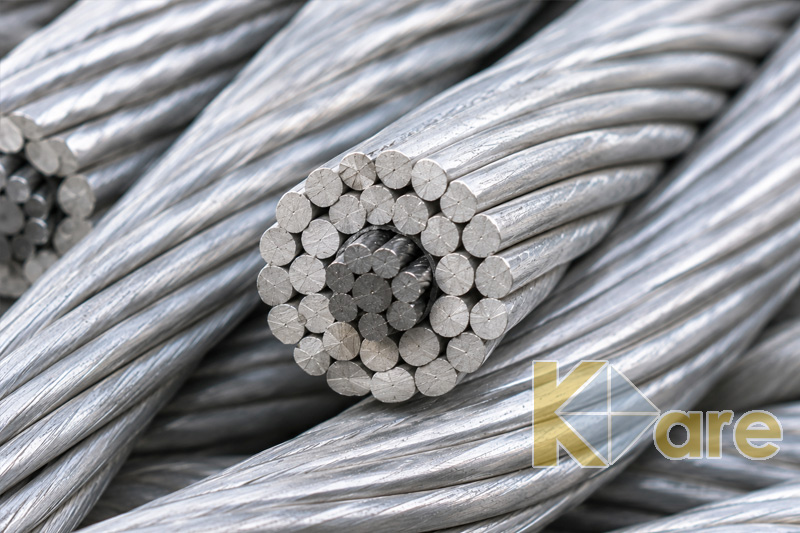
Electrical aluminium scrap consists of discarded conductors, cable cores, busbars and other aluminium or aluminium alloy products originally intended for electrical power transmission. Major sources include overhead power lines, switchgear, transformers, power cables and industrial electrical equipment.
Electrical-grade aluminium offers higher electrical conductivity than many structural and casting alloys. Its low density makes it particularly useful in the power industry, where conductor weight must be reduced while maintaining the required electrical performance.
Main types of electrical aluminium scrap
| Scrap type | Source | Characteristics |
|---|---|---|
| Aluminium wire | Overhead power lines | High electrical conductivity |
| Stranded conductors | Overhead lines and power installations | Helically stranded aluminium wires |
| Cable cores | Power cables | Possible polymer insulation residues |
| Busbars | Switchgear and distribution systems | Solid rectangular conductors |
| Steel-reinforced aluminium conductors | Overhead power lines | Steel core |
| Aluminium windings | Transformers and electrical apparatus | Possible enamel and paper coverings |
Clean aluminium conductors of known composition, free from steel cores, copper connections and insulation residues, provide particularly homogeneous feedstock for metallurgical recycling.
Classification of overhead line conductors
Several common international designations are used to describe bare stranded electrical conductors. These identify conductor construction and material rather than independent scrap metal grades.
| Designation | Construction | Recycling considerations |
|---|---|---|
| AAC | All-aluminium conductor | No steel core |
| AAAC | All-aluminium alloy conductor | Alloying elements must be considered |
| ACSR | Aluminium conductor steel reinforced | Separation of aluminium and steel required |
| ACAR | Aluminium conductor alloy reinforced | Combination of aluminium materials with different compositions |
AAC conductors are commonly used where high conductivity is important. The Al–Mg–Si alloys used in AAAC conductors provide a combination of mechanical strength and electrical performance. The steel core of an ACSR conductor carries a substantial proportion of the mechanical load and increases the overall weight.
Electrical aluminium grades
Electrical conductors are manufactured from commercially pure aluminium and specialised wrought aluminium alloys. Higher alloying element content generally reduces electrical conductivity but can improve mechanical properties.
| Grade or class | Composition or group | Typical application |
|---|---|---|
| 1350 | Al at least 99.5% | Electrical wires and cable cores |
| EN AW-1050A | Al at least 99.5% | Busbars, strips and conductive components |
| EN AW-6101 | Al–Mg–Si | Electrical busbars |
| 6201 | Al–Mg–Si | High-strength conductors |
| AL1 | Hard-drawn aluminium wire | Overhead lines |
| AL2–AL7 | Aluminium alloy wire classes | Overhead lines with higher mechanical strength requirements |
AL1 and AL2–AL7 identify wire material classes in the European standards system. They should not automatically be equated with individual aluminium grades solely on the basis of conductor appearance.
Electrical conductivity and physical properties
Electrical conductivity depends on chemical composition, temperature and material condition. The IACS scale provides a common basis for comparison, with the standard conductivity of annealed copper at 20 °C corresponding to 100%.
| Material | Density, g/cm³ | Conductivity, MS/m | IACS, % |
|---|---|---|---|
| Electrical-grade aluminium | 2.70 | 35.4 | 61 |
| 6201-T81 alloy | 2.70 | 30.7 | 53 |
| Annealed copper | 8.96 | 58.0 | 100 |
These figures are approximate reference values at 20 °C. They do not establish permissible limits for every material grade or delivery condition.
Electrical resistance of a conductor
R is electrical resistance in ohms; ρe is electrical resistivity in Ω·mm²/m; L is conductor length in metres; S is metallic cross-sectional area in mm².
Using an aluminium resistivity of 0.0283 Ω·mm²/m, a homogeneous conductor measuring 100 m in length with a cross-sectional area of 50 mm² has a resistance of approximately 0.0566 Ω.
Calculation of aluminium mass and content
Cross-sectional area of a round wire
d is the diameter of the metallic wire in millimetres. For stranded conductors, the cross-sectional areas of the individual wires must be added together, excluding the gaps between them.
Theoretical mass of an aluminium conductor
Mass is expressed in kilograms, cross-sectional area in mm² and length in metres. The coefficient is based on an aluminium density of 2700 kg/m³.
For example, the theoretical mass of an aluminium conductor with a cross-sectional area of 50 mm² and a length of 1000 m is 135 kg. For helically stranded conductors, the actual lengths of the component wires must be considered.
Mass fraction of the aluminium portion of a cable
If a cable scrap batch weighs 250 kg and the separated aluminium cores weigh 150 kg, the aluminium portion represents 60% of the total mass. This figure describes the recoverable conductor material rather than the chemical purity of aluminium.
European standards and identification
- EN 50182 — construction and characteristics of bare stranded overhead line conductors.
- EN 60889 — hard-drawn aluminium wire for overhead lines.
- EN 50183 — Al–Mg–Si alloy wires for overhead lines.
- EN 50189 — zinc-coated steel wires for overhead lines.
- IEC 60228 — conductors of insulated cables, nominal cross-sectional areas and electrical resistance.
- EN 573 — chemical composition and designations of wrought aluminium and aluminium alloys.
Electrical product standards help establish the original purpose and characteristics of conductors. They do not replace the sorting and acceptance requirements applicable to individual scrap batches.
Sorting and recycling electrical aluminium scrap
Preparation of electrical scrap for recycling requires consideration of conductor construction, alloy composition and the presence of foreign materials.
- Separation of bare aluminium conductors from insulated cable scrap.
- Separate classification of steel-reinforced aluminium conductors.
- Removal of copper terminals, steel fasteners and connecting components.
- Separate sorting of commercially pure aluminium and alloyed conductors.
- Mechanical removal of polymer insulation and other coverings.
- Verification of material composition and actual metallic material mass.
Magnetic testing helps detect ferromagnetic steel cores. Laboratory and spectrometric methods are used to identify aluminium alloy grades. Electrical conductivity measurements may provide an additional method of preliminary sorting.
Separate collection of electrical aluminium reduces contamination of secondary metal with iron, copper and other impurities, preserves the value of high-conductivity materials and improves the efficiency of metallurgical recycling.