Aluminium cans, foil and packaging constitute a distinct category of secondary aluminium raw materials. Owing to its low weight, ductility, corrosion resistance and barrier properties, aluminium is widely used in packaging for beverages, food, pharmaceuticals and cosmetics.
Aluminium packaging scrap is characterised by thin metallic sections, organic coatings and possible combinations of aluminium with polymers and paper.
Main types of aluminium packaging
| Packaging type | Origin | Characteristics |
|---|---|---|
| Beverage cans | Beer and carbonated drinks | Thin-walled bodies and lids |
| Aluminium foil | Household and industrial packaging | Low thickness and high specific surface area |
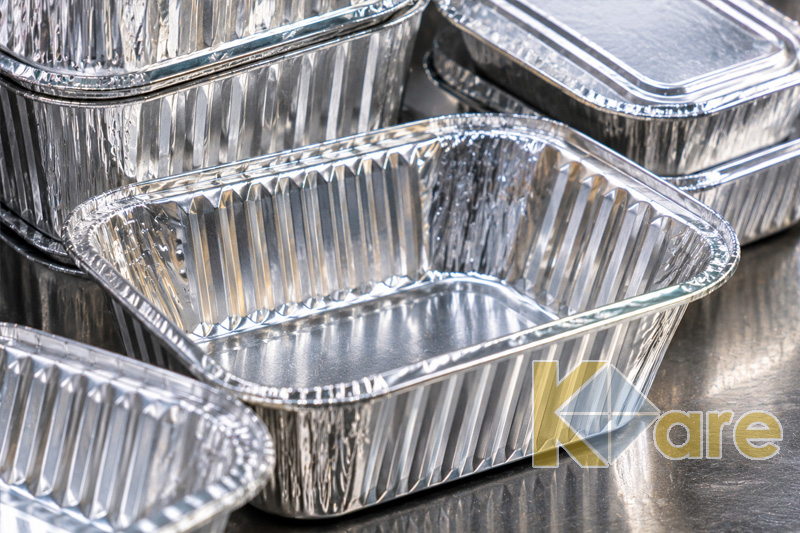
| Food containers | Trays and baking containers | Stamped thin-sheet products |
| Aluminium tubes | Cosmetics and pharmaceutical industries | Possible product residues |
| Aerosol cans | Household chemicals and cosmetics | Require specialised preparation |
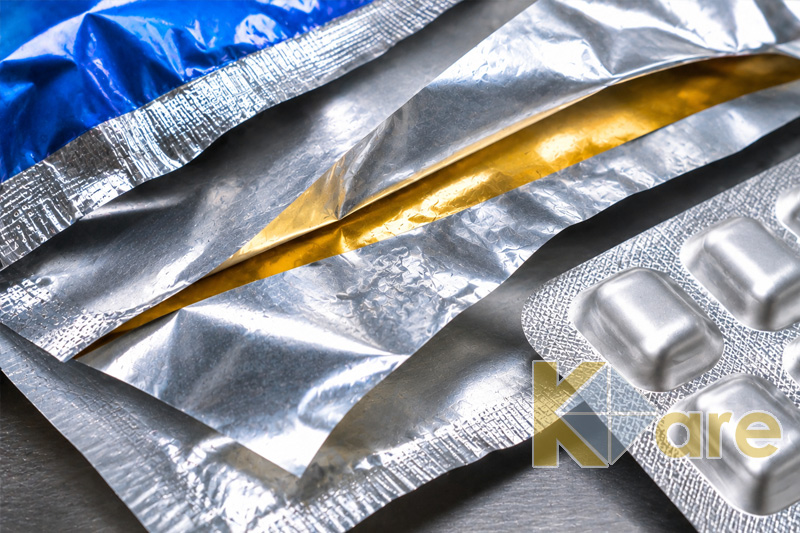
| Multilayer packaging | Pouches, blisters and laminates | Combinations of aluminium, paper and polymers |
Chemical composition and aluminium alloy grades
Packaging products are predominantly manufactured from wrought aluminium alloys. Different parts of the same beverage can may use different alloys because the body and lid have different strength and ductility requirements.
| Alloy grade | Alloying system | Typical application |
|---|---|---|
| EN AW-3004 | Al–Mn–Mg | Beverage can bodies |
| EN AW-3104 | Al–Mn–Mg | Thin-walled can bodies |
| EN AW-5182 | Al–Mg–Mn | Can ends and opening tabs |
| EN AW-5052 | Al–Mg–Cr | Selected packaging components |
| EN AW-1050A | Al | Foil and ductile packaging products |
| EN AW-8011A | Al–Fe–Si | Packaging foil |
| EN AW-8079 | Al–Fe–Si | Thin foil and flexible packaging |
The listed grades are representative examples. Actual packaging composition depends on the manufacturer, production technology and intended application.
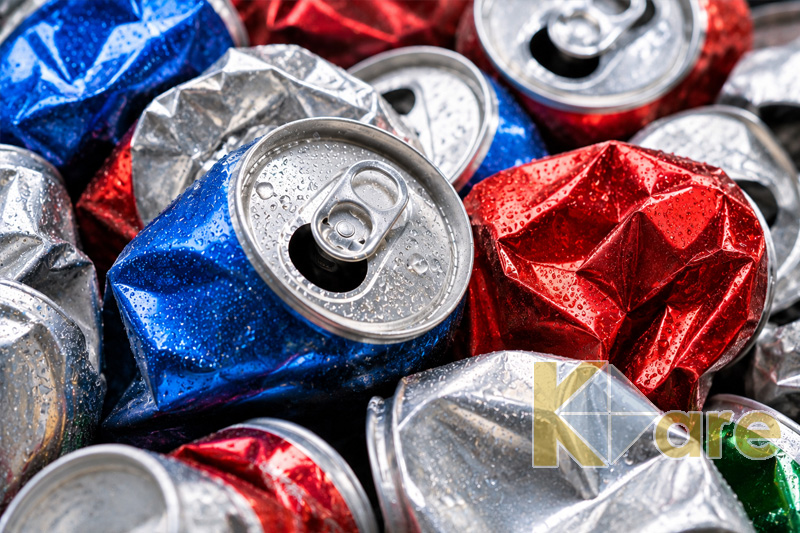
Used aluminium beverage cans — UBC
In international recycling terminology, UBC (Used Beverage Cans) denotes used beverage cans. This is a common aluminium scrap category suitable for industrial recycling into secondary alloys.
Can bodies are generally manufactured by drawing and wall ironing. Can ends are produced from stronger aluminium-magnesium alloys. The outer surface carries decorative coatings, while the inner surface is protected by a specialised lacquer.
- Low weight of individual items.
- Relatively uniform composition of sorted consignments.
- Presence of organic protective coatings.
- Suitability for compaction into transport bales.
- Potential for closed-loop recycling with appropriate composition control.
Aluminium foil and multilayer packaging
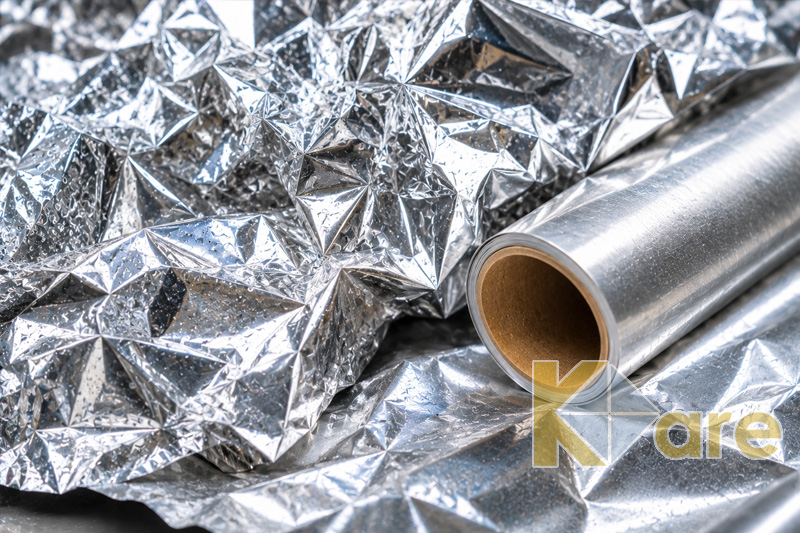
Aluminium foil is a thin rolled product, generally up to 0.2 mm thick. Its barrier properties protect products against light, moisture, oxygen and external odours.
Unlaminated metallic foil must be distinguished from laminated materials and metallised polymer films. Metallised films may contain only an extremely thin aluminium layer and are not equivalent to conventional aluminium foil.
| Material | Structure | Recycling characteristics |
|---|---|---|
| Clean foil | Aluminium | Increased susceptibility to oxidation |
| Lacquered foil | Aluminium and lacquer | Organic coating must be considered |
| Laminated foil | Aluminium and polymer | Requires specialised recycling |
| Composite packaging | Paper, aluminium and polymer | Component separation is required |
| Metallised film | Polymer with a thin metallic layer | Low aluminium mass fraction |
European standards and classification
Technical classification of aluminium packaging scrap considers material origin, chemical composition, metal thickness, coatings and foreign components.
| Standard | Scope |
|---|---|
| EN 13920-1 | General requirements for aluminium scrap |
| EN 13920-10 | Used aluminium beverage cans |
| EN 13920-14 | Aluminium packaging scrap |
| EN 573-3 | Chemical composition of wrought aluminium alloys |
| EN 546 | Technical requirements for aluminium foil |
Requirements for cleanliness, moisture, coatings and permissible contaminants are determined by the applicable specifications and agreed delivery conditions.
Calculation of aluminium content and metal recovery
The mass fraction of aluminium material in packaging is calculated as the ratio of the metallic component mass to the total product mass:
where mAl is the mass of aluminium or aluminium alloy and m0 is the total packaging mass.
The theoretical mass of uncoated aluminium foil can be calculated from its area, thickness and material density:
where ρ is material density in kg/m³, S is area in m² and δ is thickness in metres. For approximate calculations, aluminium density is taken as 2700 kg/m³.
For example, one square metre of aluminium foil with a thickness of 20 μm has a calculated mass of approximately 54 g, excluding coatings.
Metallurgical yield relative to the initial consignment mass is calculated as follows:
Actual recovery depends on metallic content, contamination, oxidation and the recycling technology employed.
Sorting and industrial recycling
Used beverage cans, clean foil and multilayer packaging should be collected separately. Before metallurgical recycling, the raw materials undergo sorting, removal of foreign components and appropriate industrial preparation.
Organic coatings can be removed in specialised thermal treatment equipment. Compaction increases the transport density of cans but does not eliminate contamination or alter the chemical composition of the metal.
Aerosol cans containing residual pressure or product require separate handling and must not be introduced directly into a conventional metallurgical charge.
Aluminium packaging is a valuable secondary resource. Recycling efficiency depends on sorting quality, the proportion of metallic aluminium and the ability to return recovered metal to the production cycle.