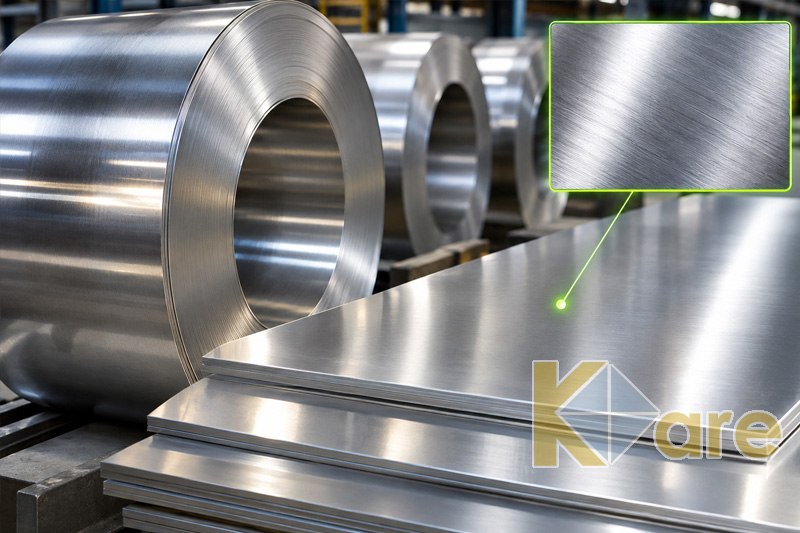
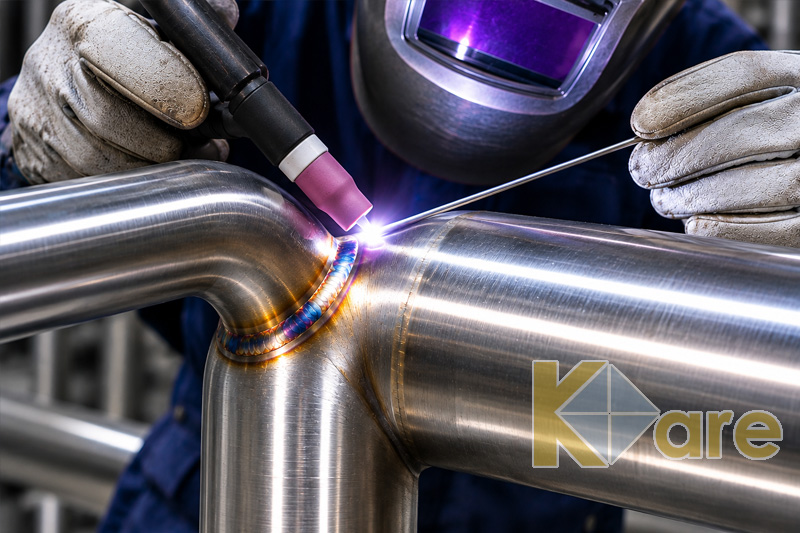
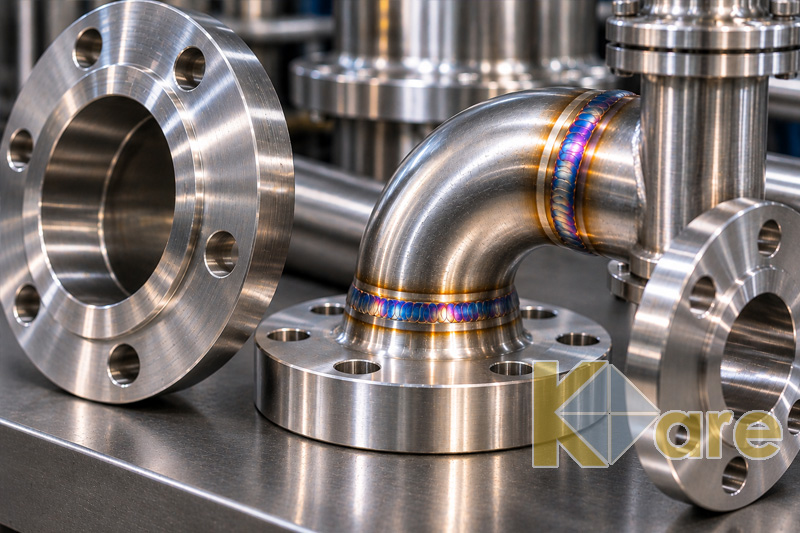
Stainless steel is a family of iron-based alloys containing at least 10.5% chromium and no more than 1.2% carbon. Chromium forms a thin protective oxide film on the surface, significantly increasing the metal's resistance to corrosion.
Depending on the grade, stainless steel may also contain nickel, molybdenum, manganese, nitrogen and other elements. It is widely used in industry, construction, food-processing equipment, medicine and household products.
Chemical composition of stainless steel
Chemical composition varies by grade. The table below lists common European grades under EN 10088 and typical ranges for the main alloying elements.
| EN grade | EN number | Chromium (Cr) | Nickel (Ni) | Molybdenum (Mo) |
|---|---|---|---|---|
| X5CrNi18-10 | 1.4301 | 17.5–19.5% | 8–10.5% | Not specified |
| X5CrNiMo17-12-2 | 1.4401 | 16.5–18.5% | 10–13% | 2–2.5% |
| X6Cr17 | 1.4016 | 16–18% | Not specified | Not specified |
Iron is the principal component of all these grades. Exact permitted element ranges are defined by the applicable edition of the European EN 10088 standard.
Main properties
- Corrosion resistance: provided by a protective chromium oxide film; depends on the environment and steel grade.
- Density: typically around 7.7–8.0 g/cm³.
- Strength: determined by chemical composition, structure and processing.
- Temperature resistance: varies with grade and service conditions.
- Magnetic properties: annealed austenitic steels are generally non-magnetic or weakly magnetic; ferritic and martensitic steels are magnetic.
- Recycling: the material can be remelted repeatedly while retaining valuable alloying elements.
Types of stainless steel
Austenitic stainless steel offers high ductility and good corrosion resistance. Examples include EN 1.4301 and EN 1.4401.
Ferritic stainless steel is primarily chromium-alloyed and has magnetic properties. EN 1.4016 is a common example.
Martensitic stainless steel can be hardened by quenching and is used for knives, tools and machine components.
Duplex stainless steel combines austenitic and ferritic structures, providing high strength and resistance to certain forms of corrosion.
Precipitation-hardening stainless steel develops increased strength through specialized heat treatment.
Applications
- Food industry: tanks, piping and processing equipment.
- Construction: facades, railings, fasteners and architectural elements.
- Chemical industry: vessels and equipment for corrosive environments.
- Medicine: surgical instruments and medical equipment.
- Mechanical engineering: pumps, valves, fasteners and machinery components.
- Household products: cookware, sinks and kitchen appliances.
Stainless steel and scrap recycling
Stainless steel is a valuable secondary raw material because it contains chromium and, in some grades, nickel and molybdenum. During scrap sorting, different steel grades and families should be separated because chemical composition affects the possibilities for material reuse.
Stainless steel scrap categories
The Kare Pluss price list includes separate purchasing categories for stainless steel scrap. These categories are used to sort secondary raw materials and are not independent steel grades under European EN standards.
| Category | Description |
|---|---|
| Stainless steel 8Ni | A commercial category of nickel-bearing stainless steel scrap, approximately associated with a nickel content of around 8%. The actual composition is determined by analysis. |
| Stainless steel 10Ni | A commercial category of nickel-bearing stainless steel scrap, approximately associated with a nickel content of around 10%. The precise grade and composition require verification. |
| Stainless steel (turnings) | Metal turnings produced during machining of stainless steel. Chemical composition, cleanliness and the absence of contaminants are important for recycling. |
The labels 8Ni and 10Ni should not automatically be equated with specific EN grades. Scrap acceptance and sorting take into account the results of material analysis and the requirements of the relevant purchasing category.
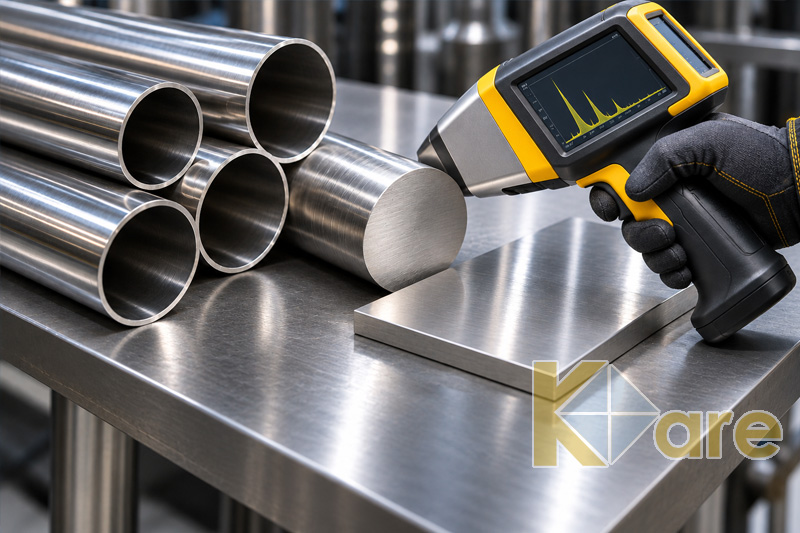
Nickel as a separate metal is considered independently of stainless steel. A magnet test cannot reliably establish a steel grade or its nickel content. Accurate identification requires chemical composition analysis, including spectrometric methods.