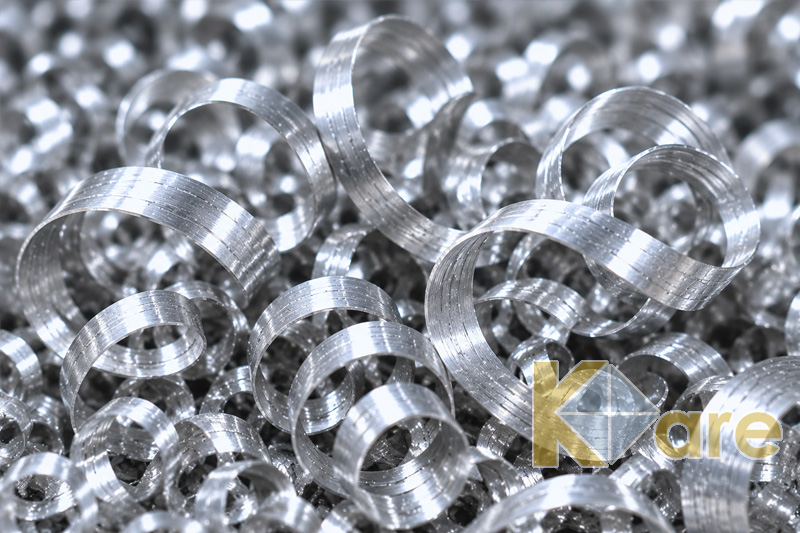
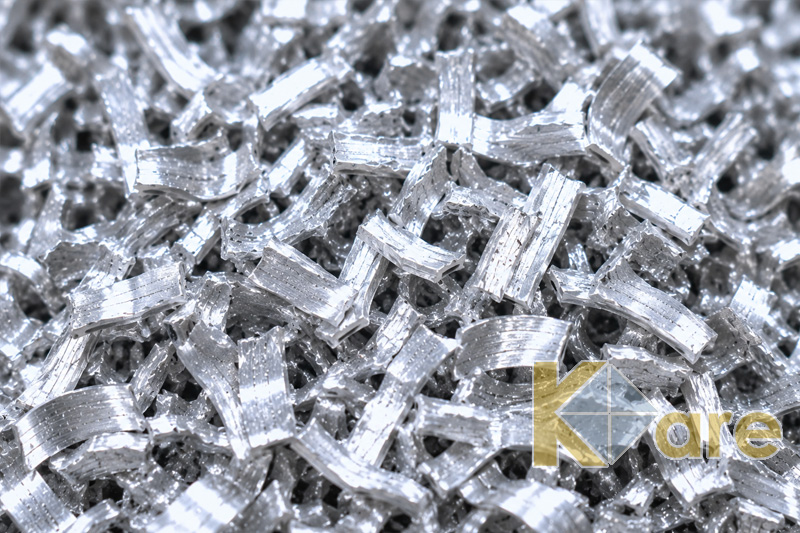
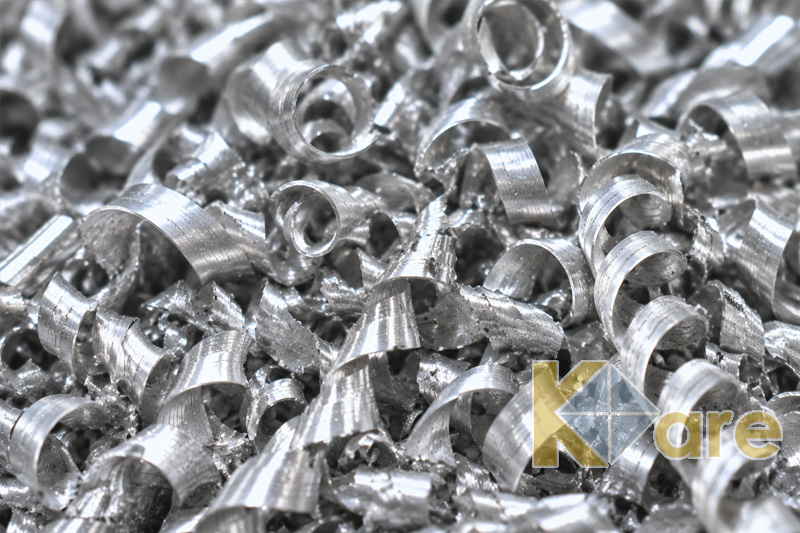
Aluminium swarf is a secondary metallic raw material generated during the machining of aluminium and its alloys. Its principal sources include turning, milling, drilling and other metalworking operations. Unlike solid aluminium scrap, swarf has a high specific surface area, is more susceptible to oxidation and frequently contains residual cutting oils and metalworking fluids.
Main types of aluminium swarf
The shape, dimensions and condition of swarf depend on alloy composition, machining method, cutting tool geometry and machining parameters. These characteristics influence storage, transportation and metallurgical recycling.
| Type | Origin | Characteristics |
|---|---|---|
| Turnings | Lathe machining | Spiral, ribbon-shaped or broken chips |
| Milling chips | Surface milling | Short particles of various shapes |
| Drilling swarf | Hole drilling | Twisted or segmented chips |
| Sawing chips | Cutting profiles and billets | Fine metallic particles |
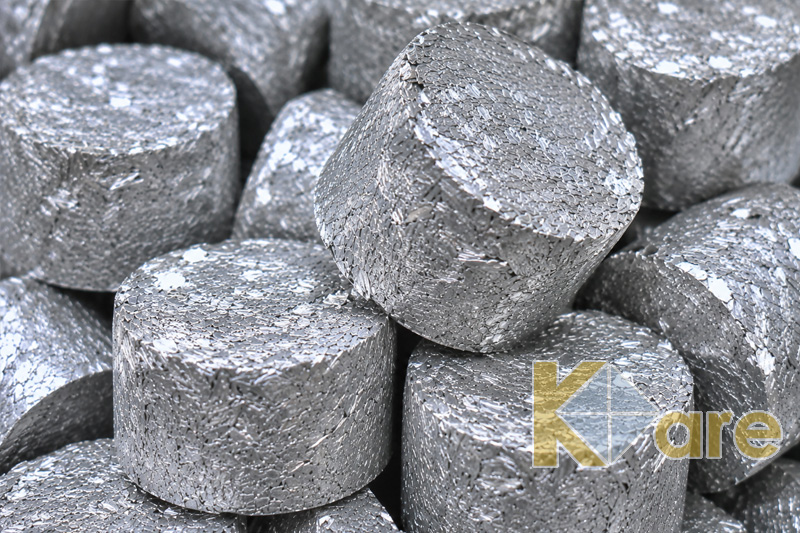
| Briquetted swarf | Compaction of loose chips | Increased bulk density |
| Mixed swarf | Machining different alloys | Non-uniform chemical composition |
Classification by chemical composition
Separating swarf from wrought and casting alloys is important for producing high-quality secondary aluminium. Visually similar chips may differ considerably in their silicon, copper, magnesium, zinc and other alloying element contents.
| Alloy group | Example grades | Sources of swarf |
|---|---|---|
| Al, 1xxx series | EN AW-1050A, 1070A | Commercially pure aluminium, electrical components |
| Al–Cu, 2xxx series | EN AW-2017A, 2024 | High-strength components and blanks |
| Al–Mn, 3xxx series | EN AW-3003 | Sheet products |
| Al–Mg, 5xxx series | EN AW-5754, 5083 | Housings and welded structures |
| Al–Mg–Si, 6xxx series | EN AW-6060, 6063, 6082 | Extrusions and structural components |
| Al–Zn–Mg, 7xxx series | EN AW-7075 | Highly stressed components |
| Al–Si casting alloys | EN AC-42100, 46000 | Engine and housing castings |
Separate collection of swarf with known composition facilitates furnace charge preparation and reduces the need to adjust the chemical composition of the melt.
European standards and raw material requirements
European aluminium scrap classification is based on the EN 13920 series of standards. Separate categories for turnings take account of alloy uniformity and material origin.
| Standard | Scope |
|---|---|
| EN 13920-1 | General requirements, sampling and testing of aluminium scrap |
| EN 13920-12 | Turnings consisting of one alloy |
| EN 13920-13 | Turnings consisting of two or more alloys |
| EN 573-3 | Chemical composition of wrought aluminium alloys |
| EN 1706 | Chemical composition and mechanical properties of aluminium castings |
Specific limits for moisture, contamination and foreign materials are determined by the applicable specification and agreed delivery conditions.
Contamination and quality of aluminium swarf
Residual machining fluids increase the weight of a consignment without increasing its metal content. Quality assessment must also consider oxides, ferrous inclusions and non-metallic contaminants.
| Contaminant | Effect on recycling |
|---|---|
| Oils and cutting fluids | Additional preparation and gas generation during heating |
| Water and moisture | Increased hazards on contact with molten metal |
| Steel chips | Iron contamination of the melt |
| Aluminium oxides | Reduced metallic recovery |
| Plastics and abrasives | Additional waste and charge contamination |
Calculation of metal content and metallurgical yield
The mass fraction of residual process fluids can be determined from the difference in sample mass before and after controlled fluid removal:
where m0 is the initial sample mass and m1 is the mass after fluid removal. The sample preparation method must avoid significant changes in the mass of the metallic fraction.
The estimated mass of the metallic fraction is calculated as follows:
where mf is the mass of fluids and mc is the mass of other non-metallic contaminants, including separately accounted oxides.
Metallurgical yield is expressed as the ratio of recovered metal mass to the initial mass of the processed consignment:
For example, processing 1000 kg of swarf and recovering 850 kg of metal gives a yield of 85%. This is an illustrative calculation; actual recovery depends on feedstock quality and recycling technology.
Briquetting aluminium swarf
Briquetting is the compaction of loose machining chips under pressure. It reduces material volume, facilitates transportation and, with suitable technology, removes part of the residual process fluids.
- Increased bulk density of the raw material.
- Reduced transportation and storage costs.
- Reduced losses of fine particles during handling.
- Improved conditions for charging metallurgical equipment.
- Potential recovery of some machining fluids.
Briquetting does not change the chemical composition of the alloy and does not guarantee complete removal of moisture or oils. Briquette quality depends on the original feedstock and equipment used.
Sorting, storage and recycling
Aluminium swarf should be collected separately by alloy grade or compatible alloy groups. Magnetic separation is used to remove ferromagnetic inclusions, while suitable spectrometric analysis methods can establish chemical composition.
Storage arrangements should protect the material from precipitation, foreign contaminants and ignition sources. Fine aluminium particles require particular fire safety precautions because of the risk of combustible dust formation.
Aluminium swarf is a valuable secondary raw material whose quality is determined by chemical composition, cleanliness, moisture content and surface condition. Appropriate sorting and industrial preparation improve recycling efficiency and reduce metal losses.