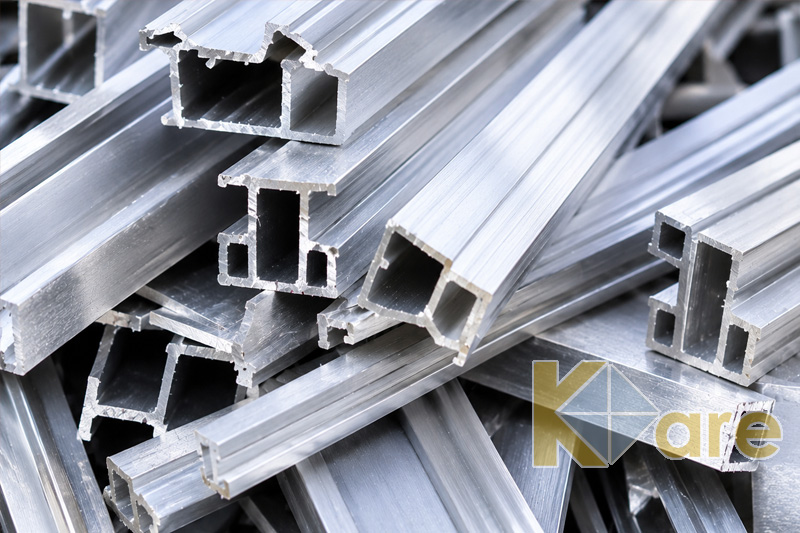
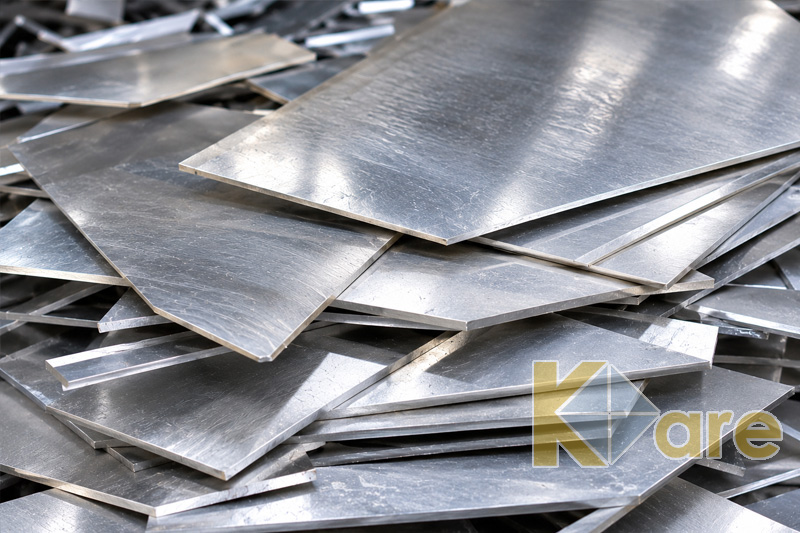
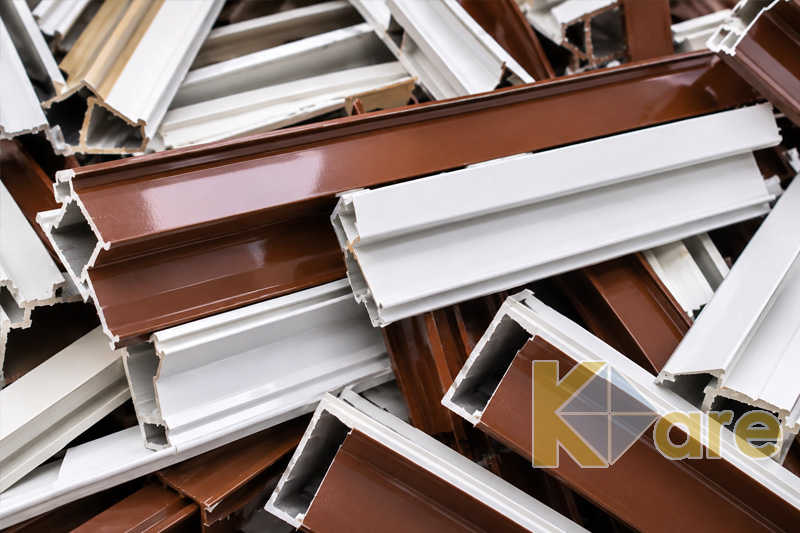
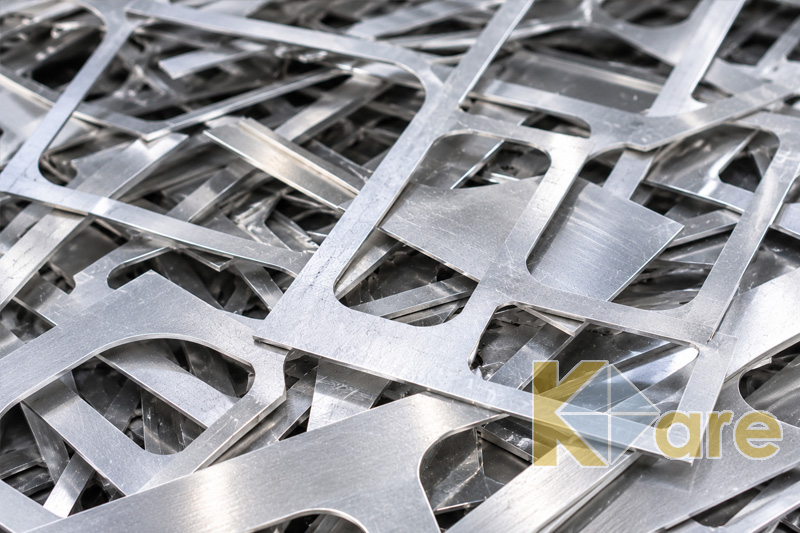
Aluminium profile and sheet scrap are common forms of secondary aluminium raw materials generated during metal product manufacturing, construction, dismantling and the machining of semi-finished products.
This group consists primarily of wrought aluminium alloys intended for manufacturing products through extrusion, rolling and bending.
Main types of aluminium scrap
| Scrap type | Origin | Characteristics |
|---|---|---|
| Aluminium profiles | Window and door systems, façades, frameworks | Predominantly 6xxx series alloys |
| Aluminium sheets | Cladding, panels, metal products | Various wrought alloys |
| Aluminium strips and coils | Rolling and stamping operations | Composition depends on the intended application |
| Production offcuts | Sheet cutting and profile trimming | Often of a known alloy grade |
| Dismantled structures | Construction and industry | May contain fasteners, coatings and seals |
Manufacturing scrap of known composition is generally easier to sort than scrap from structures that have been in service for extended periods.
Aluminium profiles
Profiles are manufactured by extrusion, a process in which a metal billet is forced through a shaping die. This enables the production of complex cross-sections, including hollow and multi-chamber structures.
Al–Mg–Si alloys are widely used for architectural and construction profiles. They offer good processability, corrosion resistance and suitability for decorative surface treatments.
- EN AW-6060: a common alloy for architectural and decorative profiles.
- EN AW-6063: used for windows, doors and other extruded structures.
- EN AW-6082: used in structures requiring higher mechanical strength.
When sorting window and door profiles, steel screws, hinges, rubber seals, plastic thermal breaks and other non-aluminium components must be taken into account.
Aluminium sheets and rolled products
Sheets, strips and coils are manufactured primarily by rolling. Their chemical composition and mechanical properties depend on the alloy grade, thickness and material condition.
| Series | Principal composition | Typical applications |
|---|---|---|
| 1xxx | Al, at least 99% | Technical sheets, cladding |
| 3xxx | Al + Mn | Panels, cladding materials |
| 5xxx | Al + Mg | Transport and marine structures |
| 6xxx | Al + Mg + Si | Profiles and structural products |
Common sheet materials include EN AW-1050A, EN AW-3003, EN AW-5754 and EN AW-5083. Similar external appearance does not necessarily indicate identical chemical composition.
Uncoated, painted and anodised aluminium
Surface condition is an important criterion when sorting aluminium scrap.
| Surface | Characteristics |
|---|---|
| Uncoated | Metallic surface with a natural oxide film |
| Anodised | Artificially formed protective oxide layer |
| Painted | Paint, lacquer or powder coating |
| Laminated | Polymer film or other decorative material |
Anodising does not change the underlying chemical composition of the alloy. However, surface coatings are considered when selecting recycling technologies. Organic coatings may increase losses and waste generation during metallurgical processing.
European standards and classification
Different European standards are used for the designation of wrought aluminium alloys and the classification of secondary raw materials.
| Standard | Scope |
|---|---|
| EN 573 | Chemical composition and designation of wrought aluminium alloys |
| EN 485 | Requirements for aluminium sheets, strips and plates |
| EN 755 | Requirements for extruded rods, bars, tubes and profiles |
| EN 13920-4 | Scrap consisting of one wrought alloy |
| EN 13920-5 | Scrap consisting of two or more wrought alloys of the same series |
| EN 13920-6 | Scrap consisting of two or more wrought alloys |
Finished product standards help identify the original material, whereas the EN 13920 series is intended for aluminium scrap classification. The appropriate category depends on the composition and condition of the batch.
Purity requirements and sorting
The quality of secondary raw materials depends on alloy uniformity, the amount of foreign materials and surface condition.
- Separation of aluminium profiles from cast aluminium scrap.
- Separate storage of materials with known alloy grades.
- Removal of steel fasteners and other metallic contaminants.
- Separation of rubber, plastics, glass and thermal insulation inserts.
- Consideration of paint and polymer coatings.
- Control of contamination, moisture and residual technical fluids.
Manufacturer documentation and instrumental analysis are used to determine chemical composition. Alloy identification must take into account the capabilities of the selected analytical method, particularly when measuring magnesium and silicon content.
Recycling aluminium profile and sheet scrap
After sorting, secondary raw materials are cleaned, prepared for melting and sent for metallurgical processing. Depending on the composition and purity of the batch, the recovered metal may be used to manufacture new wrought or casting alloys.
- Manufacture of new aluminium profiles.
- Production of rolled sheets and strips.
- Production of secondary aluminium alloys.
- Manufacture of construction and industrial products.
Separate sorting of aluminium profile and sheet scrap enables better control of the chemical composition of secondary metal, reduces contamination and helps preserve the value of aluminium raw materials.