Vanadium (V) — Properties and Uses
Vanadium — an element for strong steels and energy storage
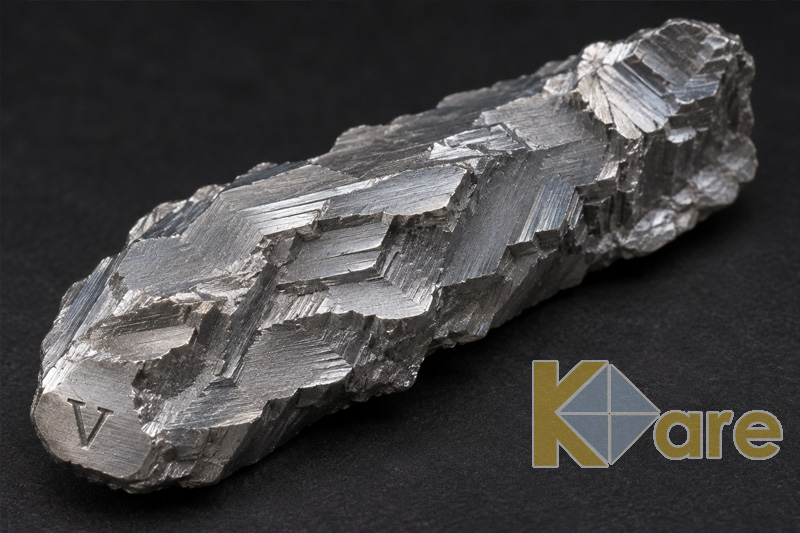
Vanadium (V) is a chemical element with atomic number 23, belonging to group 5 of the periodic table. It is a silvery-grey transition metal with a high melting point. In its pure form it is ductile, and its mechanical properties depend strongly on impurity content.
Vanadium's principal industrial role is in alloying steels and other alloys. Its compounds are also used in catalysts and vanadium flow batteries, which exploit the element's ability to move between different oxidation states.
Key characteristics of vanadium
Physical properties
Vanadium has a metallic lustre and conducts electricity and heat. Its density is lower than that of iron but higher than that of titanium. Its high melting point makes it of interest for specialised metallic materials, although operating conditions depend on more than melting point alone.
High-purity vanadium can be worked by metal-forming processes. Oxygen, nitrogen, carbon and other impurities can substantially increase hardness and reduce ductility. The properties of commercial metal and a high-purity specimen may therefore differ considerably.
Chemical properties
Under ordinary conditions in air, a thin oxide film forms on the surface of vanadium. When heated, it reacts more readily with oxygen and, under suitable conditions, with nitrogen and carbon. Corrosion resistance depends on the environment, temperature and surface condition.
Vanadium exhibits several oxidation states, including +2, +3, +4 and +5. Its solutions may be violet, green, blue or yellow, depending on the chemical species and conditions. These colours belong to vanadium compounds and ions, not to the metallic element.
Vanadium in nature and its production
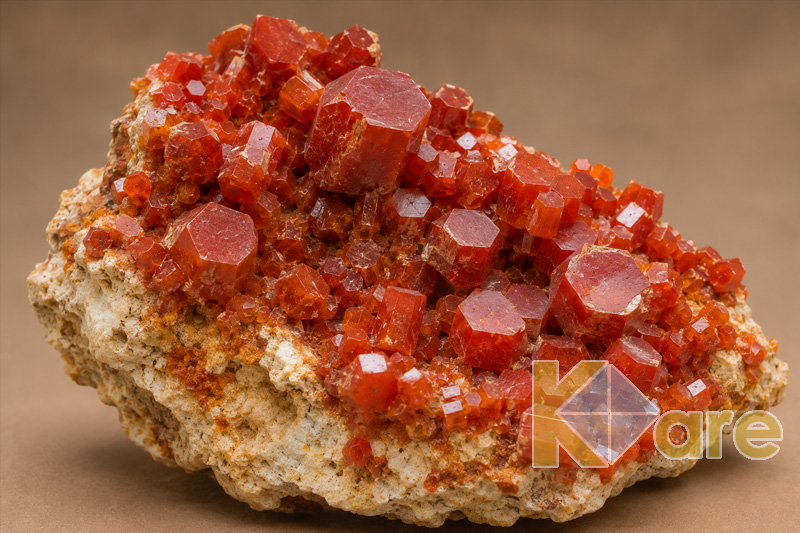
Vanadium occurs mainly in compounds in nature. Vanadium-bearing titanomagnetite ores are industrially important. Minerals such as vanadinite and carnotite are also known, but the presence of vanadium in a mineral does not mean that it is the principal commercial feedstock.
Vanadium is extracted from various ores and intermediate products of ore processing. Chemical separation yields products such as vanadium(V) oxide (V2O5). Ferrovanadium is produced for metallurgy, while vanadium metal is obtained by reducing its compounds and subsequently purifying the metal.
Where vanadium is used
Structural steels
Microalloying high-strength steels for structures, reinforcing bars, pipes and machine components. Small vanadium additions help control the material's microstructure and strength.
Tool materials
Tool and high-speed steels, in which vanadium contributes to hard carbide formation and, with appropriate processing, improves wear resistance.
Energy storage
Vanadium redox flow batteries use solutions of vanadium compounds to store energy. This is an application of electrolytes rather than bulk metallic vanadium.
Chemical industry
Vanadium-containing catalysts, including those based on vanadium(V) compounds, are used in sulfuric acid production and other chemical oxidation processes.
Vanadium in steels and titanium alloys
In steels, vanadium forms carbides and carbonitrides which, under appropriate processing conditions, contribute to precipitation strengthening and grain-size control. The result depends on carbon and nitrogen content, other elements and thermomechanical processing.
In tool steels, hard vanadium carbides improve wear resistance. The properties of the finished tool nevertheless depend on the complete steel composition, microstructure and heat treatment.
In titanium alloys, vanadium acts as a beta-phase stabiliser. A well-known example is Ti-6Al-4V, containing approximately 6% aluminium and 4% vanadium by mass. This material is used in aerospace, engineering and other demanding products.
Vanadium in flow batteries
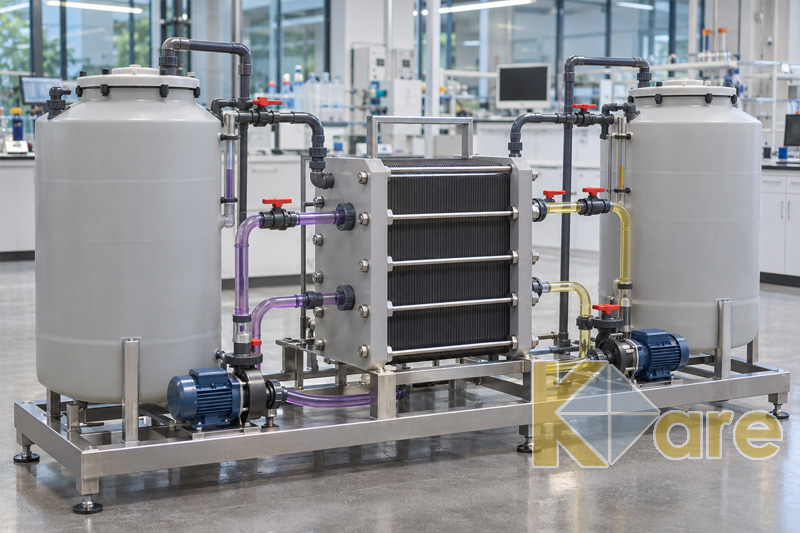
In an all-vanadium flow battery, the active species in both electrolytes contain vanadium in different oxidation states. The electrolytes are stored in separate tanks and pumped through an electrochemical stack, where charging and discharging reactions occur.
This design allows energy capacity and system power to be selected largely independently: stored energy is related to electrolyte volume and concentration, while power depends on the electrochemical stack. These batteries are used for stationary energy storage.
Vanadium and its compounds: what is the difference?
Metallic vanadium is an elemental substance consisting of V atoms. Ferrovanadium is an iron–vanadium alloy used in metallurgy. Vanadium(V) oxide (V2O5), vanadium carbide and solutions of vanadium salts are different materials with their own properties and uses.
Red or orange vanadinite crystals are not pure vanadium either: vanadinite is a complex lead-containing mineral. When describing specimens, it is important to distinguish the chemical element from its minerals, compounds and alloys.