Manganese (Mn) — Properties and Uses
Manganese — a metal that improves the properties of steel
Manganese (Mn) is a chemical element with atomic number 25, belonging to group 7 of the periodic table. It is a hard, brittle, silvery-grey metal. Its greatest industrial importance is as a constituent of steels and other alloys.
Manganese helps control the properties of metallic materials, while its compounds are used in primary and rechargeable batteries, glassmaking and ceramics. Its applications depend on whether it is used in metallic form or as part of a chemical compound.
Key characteristics of manganese
Physical properties
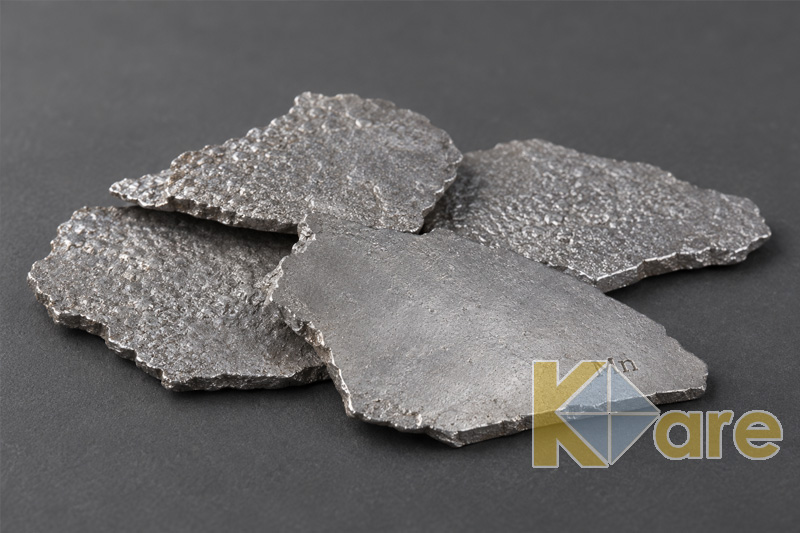
Manganese has a metallic lustre, although its surface gradually becomes dull in air through oxidation. Under normal conditions, the metal is hard and brittle, so it is rarely used on its own to manufacture structural components.
Manganese has several crystalline forms that are stable over different temperature ranges. The properties of the pure metal differ considerably from those of the steels and aluminium alloys in which it is an alloying element.
Chemical properties
Manganese forms compounds with various oxidation states, including the common states +2, +4 and +7. This diversity explains its role in oxidation–reduction processes and the range of properties found in its compounds.
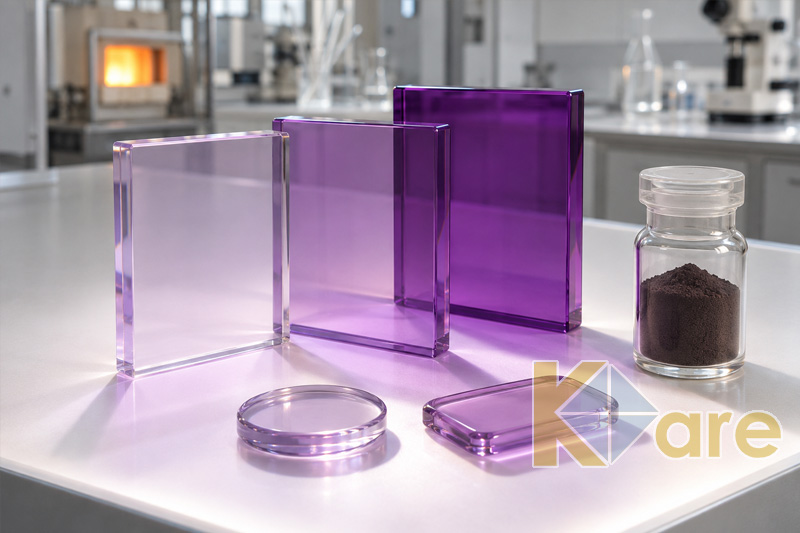
Manganese dioxide, MnO₂, is a dark solid, while potassium permanganate, KMnO₄, produces characteristically purple solutions. These compound colours should not be attributed to the metal itself: metallic manganese is silvery-grey.
Manganese in nature and its production
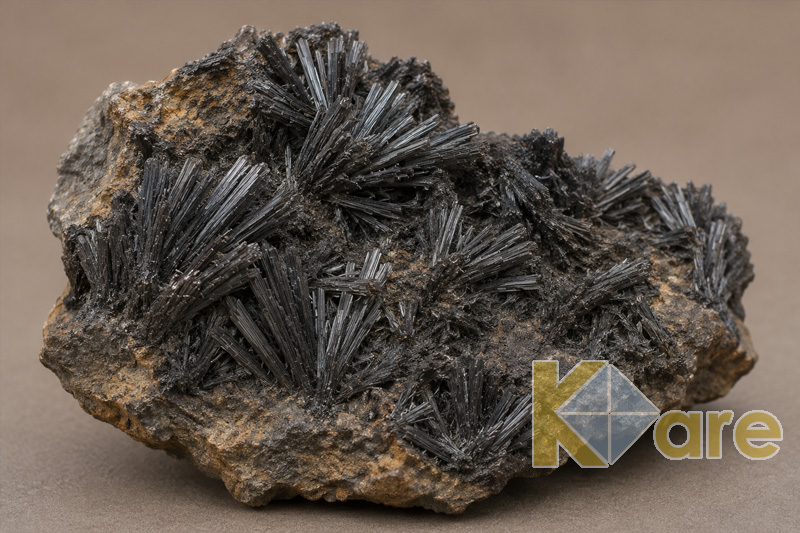
In nature, manganese occurs mainly in compounds. One important ore mineral is pyrolusite, which consists predominantly of manganese dioxide. Other manganese-bearing minerals include pink rhodochrosite and rhodonite.
For metallurgical use, ores are processed into ferromanganese and silicomanganese, alloys used to introduce manganese into steel. High-purity manganese metal can be produced electrolytically. Ore, ferroalloy and pure metal are different materials.
Where manganese is used
Steel production
Manganese is used for deoxidation, binding sulphur and controlling steel structure and mechanical properties. The outcome depends on the material composition and processing.
Aluminium alloys
Manganese is a constituent of aluminium-manganese alloys and certain other aluminium alloys used for sheet products, packaging and heat exchanger components.
Primary and rechargeable batteries
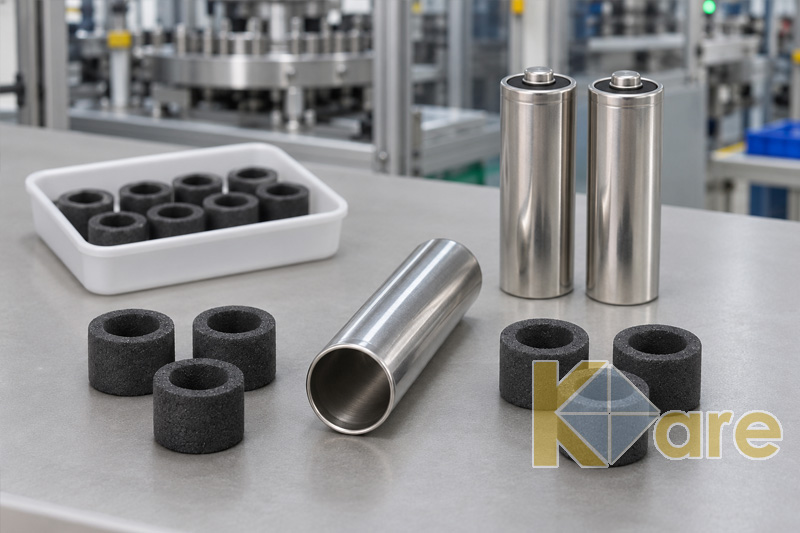
Manganese dioxide is used in zinc-carbon and alkaline batteries. Manganese is also a constituent of cathode materials in some lithium-ion batteries.
Glass and ceramics
Manganese compounds are used to colour glass, glazes and ceramic materials and, under suitable conditions, to compensate for unwanted tints in glass.
Manganese and its alloys
In steels, manganese influences hardenability, strength and microstructure development. High-manganese austenitic steels are known for their ability to work-harden under impact loading, making them useful for wear-resistant crusher and mining equipment components.
In aluminium-manganese alloys, manganese helps increase strength while retaining good formability. However, the presence of Mn in a composition designation does not make different materials interchangeable: their properties depend on the complete alloying system and supplied condition.