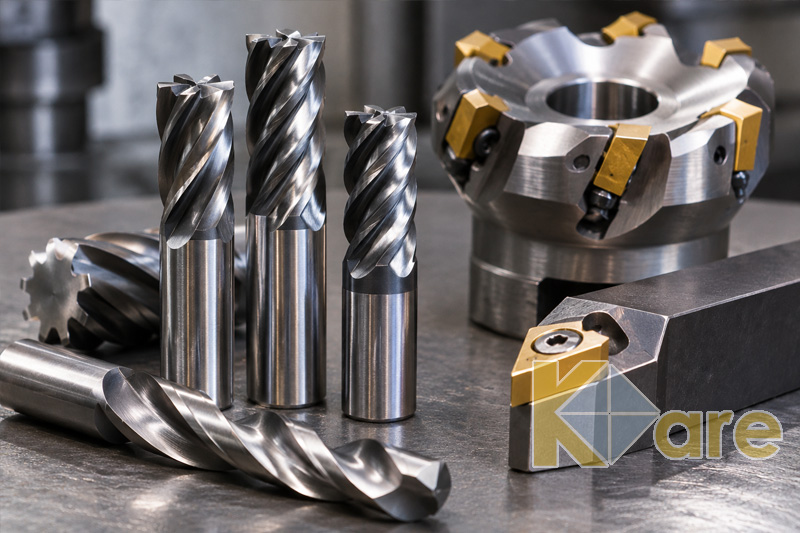
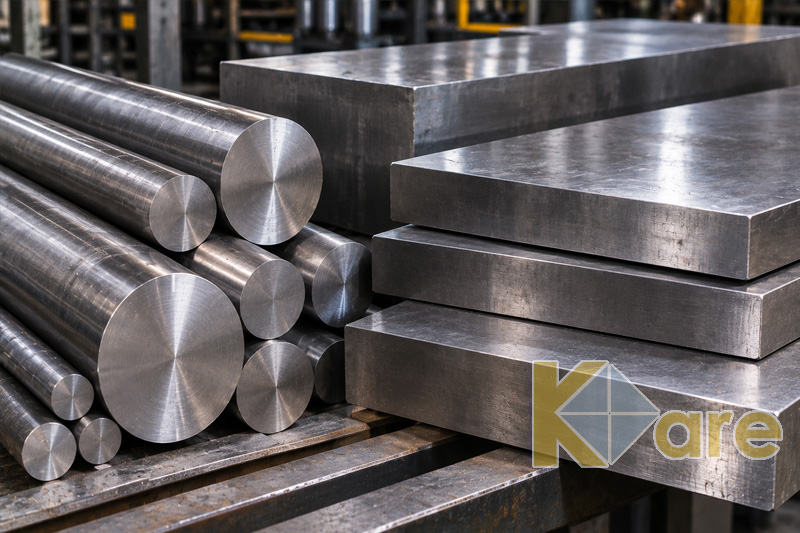
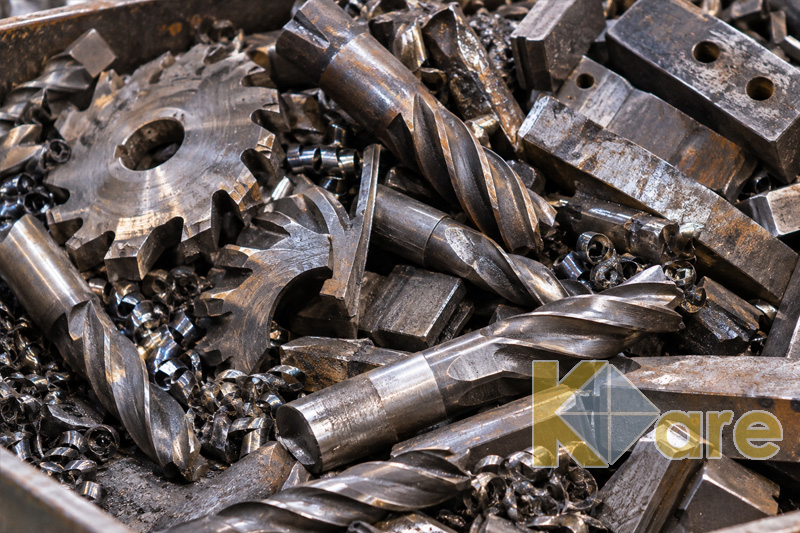
Tool steel is a group of carbon and alloy steels used to manufacture cutting, measuring, stamping and other tools. Its base components are iron (Fe) and carbon (C). Depending on the grade, tool steel may also contain chromium (Cr), tungsten (W), vanadium (V), molybdenum (Mo) and other alloying elements.
Tool steels are valued for their high hardness, wear resistance and ability to retain working properties after appropriate heat treatment. Their actual performance depends on chemical composition, microstructure, quenching and tempering conditions.
Chemical composition of tool steel
Tool steel compositions vary considerably. Carbon makes high hardness possible, while alloying elements improve hardenability, wear resistance and structural stability under working loads.
- Fe — iron: the base metal of the alloy.
- C — carbon: influences hardness, strength and carbide formation.
- Cr — chromium: improves hardenability and wear resistance.
- W — tungsten: forms hard carbides and increases resistance to wear.
- V — vanadium: promotes grain refinement and the formation of wear-resistant carbides.
- Mo — molybdenum: used in certain grades to improve hardenability and performance at elevated temperatures.
The Fe + C + Cr/W/V designation in the Alloy Atlas is indicative: chromium, tungsten and vanadium are not necessarily all present in every tool steel grade.
Main properties
- High hardness: generally achieved through quenching and tempering.
- Wear resistance: enables tools to withstand friction and contact stresses.
- Strength and toughness: selected according to the intended application.
- Hardenability: alloy grades can achieve the required properties in larger sections.
- Heat resistance: varies by grade; conventional tool steels should not be confused with high-speed steels.
- Magnetic properties: most tool steels are ferromagnetic.
Types and European EN grades
The European steel designation system uses EN 10027 together with the relevant standards for tool steels. The following are representative industrial grades.
| EN grade | Type | Typical applications |
|---|---|---|
| C105U (1.1545) | Carbon tool steel | Hand cutting and measuring tools |
| 90MnCrV8 (1.2842) | Alloy cold-work tool steel | Knives, punches, measuring tools |
| X153CrMoV12 (1.2379) | High-chromium cold-work tool steel | Dies, punches, industrial knives |
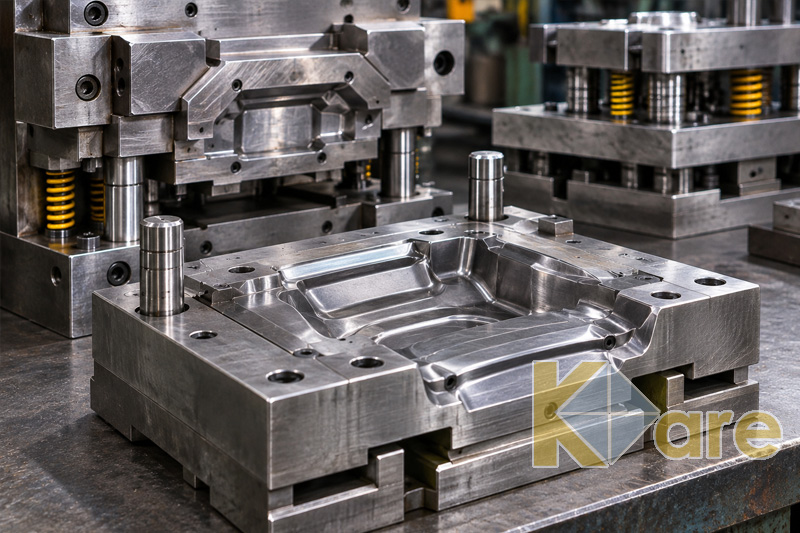
| X40CrMoV5-1 (1.2344) | Hot-work tool steel | Moulds, hot-working dies, casting tools |
These grades differ in their carbon and alloying element contents and are not interchangeable. High-speed steels form a separate group and are covered on their own Alloy Atlas page.
Applications of tool steel
- Cutting knives, blades, cutting tools and hand tools.
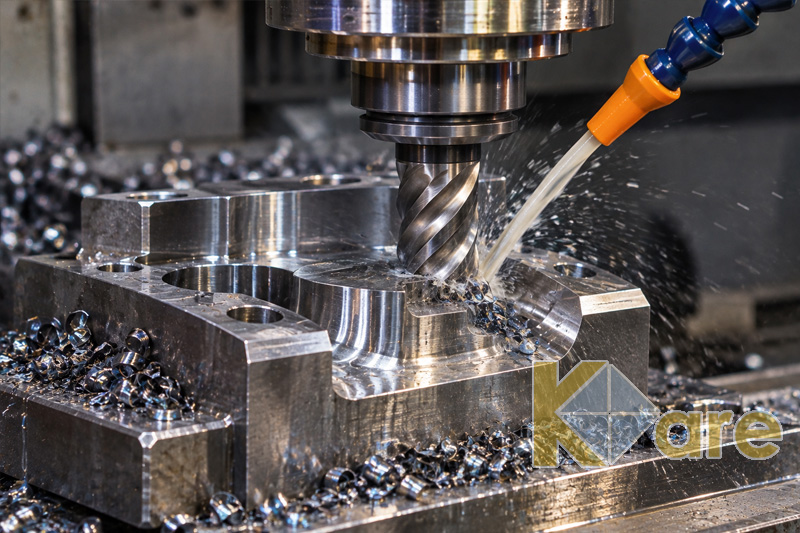
- Punches, dies and tooling for cold metal forming.
- Moulds and tooling for hot-working operations.
- Measuring instruments and precision mechanical components.
- Wear-resistant parts of industrial machinery.
Tool steel as scrap metal
Tool steel scrap is generated during the manufacture and replacement of dies, knives, moulds, cutting tools and industrial tooling. Unlike ordinary steel scrap, some grades contain valuable alloying elements such as chromium, tungsten, vanadium or molybdenum.
| Scrap category | Description |
|---|---|
| Carbon tool steel | Used tools and components without significant alloying element content. |
| Alloy tool steel | Dies, knives, punches and tooling containing chromium, vanadium or other additions. |
| High-alloy tool steel scrap | Materials with elevated concentrations of certain alloying elements requiring grade and composition verification. |
Proper sorting involves removing foreign materials, separating different grades and verifying chemical composition. Appearance and magnetic behaviour alone cannot reliably identify a specific steel grade. Instrumental analysis may be required.
Recycling of tool steel
Tool steel scrap is sorted, prepared and sent for metallurgical recycling. Separating alloy grades helps preserve the value of their alloying elements and allows more accurate preparation of the metallurgical charge.
Kare Pluss purchases scrap metal in Latvia. Acceptance of a particular batch of tool steel, its classification and assessment conditions should be confirmed according to the material's composition, quantity and condition.