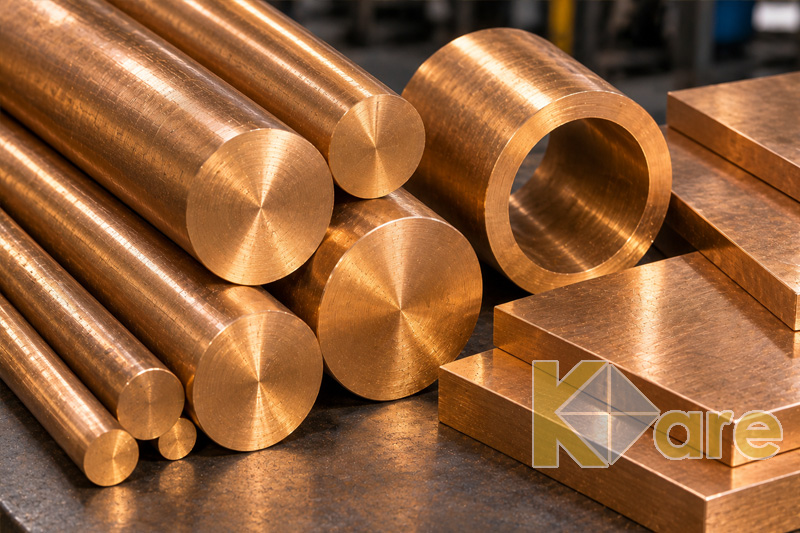
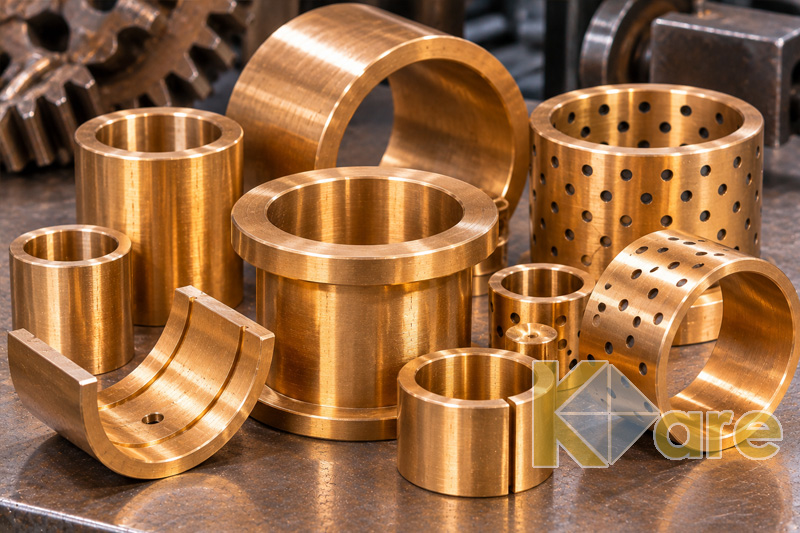
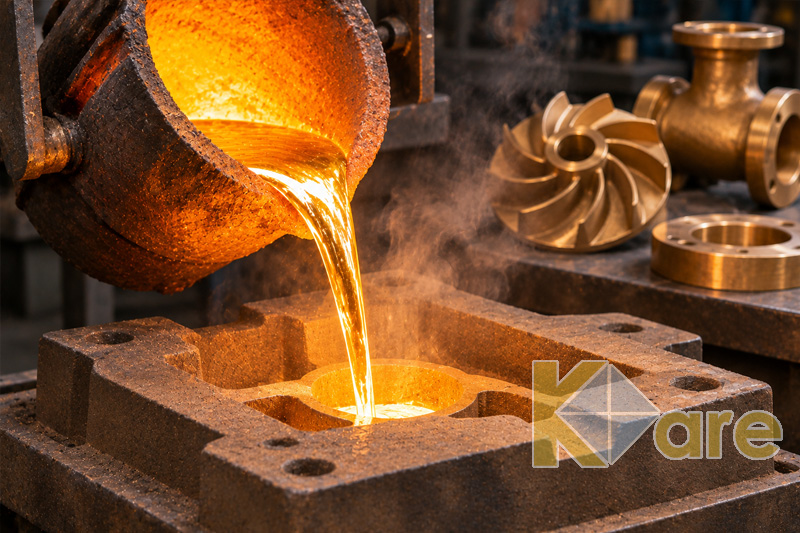
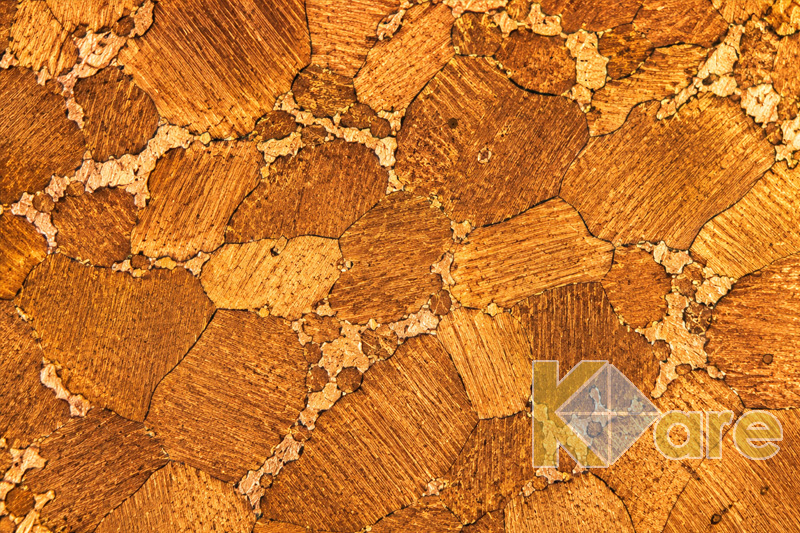
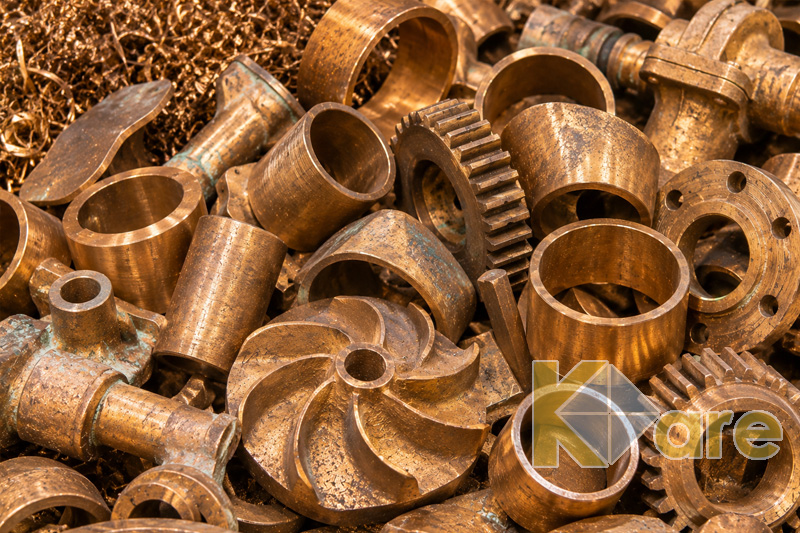
Tin bronze is an alloy based on copper (Cu) and tin (Sn), and one of the best-known and most historically significant types of bronze. Adding tin changes the strength, hardness, wear resistance and casting properties of copper. Tin bronzes are widely used in engineering, bearings, bushings, valves and artistic castings.
Depending on the grade, the alloy may also contain phosphorus, zinc, lead or nickel. Due to their copper and tin content, bronze scrap materials are valuable for recycling.
Chemical composition of tin bronze
Copper forms the base of the alloy, while tin is its principal alloying element. In common industrial grades, tin content is often approximately 2–12%, although other compositions also exist. Exact proportions depend on the intended application and the relevant material standard.
| Element | Content | Role in the alloy |
|---|---|---|
| Copper (Cu) | Major constituent | Base metal; provides thermal conductivity and corrosion resistance |
| Tin (Sn) | Often approximately 2–12% | Increases hardness, strength and wear resistance |
| Phosphorus (P) | Small additions | Used for deoxidation and influences mechanical properties |
| Lead (Pb) | In selected grades | Improves bearing performance and machinability |
| Zinc (Zn), nickel (Ni) | In special grades | Modify processing and service characteristics |
Main types of tin bronze
Wrought tin bronze. Used for sheets, strips, rods and wire. Certain grades offer good elasticity and are suitable for spring contacts.
Cast tin bronze. Designed for shaped castings, bushings, valve bodies and other complex components.
Phosphor bronze. A family of copper-tin alloys containing a small amount of phosphorus, combining strength, elasticity and wear resistance.
Leaded tin bronze. Contains lead to improve bearing and anti-friction properties and is used in selected bearing components.
European tin bronze grades
European designations use CW grades for wrought copper alloys and CC grades for cast copper alloys. Specific properties depend on composition, material condition and the applicable product standard.
| Grade | Designation | Characteristics and applications |
|---|---|---|
| CW450K | CuSn4 | Wrought bronze for strips, contacts and spring components |
| CW452K | CuSn6 | Strong, elastic bronze for electrical contacts and springs |
| CW453K | CuSn8 | Wear-resistant bronze for spring parts and bushings |
| CC480K | CuSn10 | Cast bronze for wear-resistant and bearing components |
| CC483K | CuSn12 | Cast bronze for bushings and sliding components |
Physical and mechanical properties
Density: typically approximately 8.7–8.9 g/cm³, depending on composition.
Melting range: approximately 850–1050°C for many common grades, depending on tin and other alloying elements.
Colour: ranges from reddish-brown to golden-brown.
Strength and hardness: generally higher than those of pure copper, depending on composition and processing.
Wear resistance: many grades are suitable for friction and sliding components.
Corrosion resistance: good in many atmospheric and aqueous environments, including selected marine applications when the appropriate grade is used.
How does tin bronze differ from brass?
The main difference is the alloying element. Tin bronze contains copper and tin (Cu + Sn), whereas brass contains copper and zinc (Cu + Zn).
Tin bronze is often selected for bushings, bearings and wear-resistant components. Brass is widely used for plumbing valves, fittings and decorative products. However, actual properties depend on the specific grade, so material selection should not be based on the alloy family name alone.
Applications of tin bronze
- Plain bearings, bushings and guide components.
- Gears, worm drives and wear-resistant machine parts.
- Springs, electrical contacts and connectors.
- Pumping equipment, valves and industrial fittings.
- Art castings, sculptures, bells and decorative products.
- Selected marine and industrial equipment components.
Bronze scrap and recycling
Tin bronze occurs in industrial scrap such as old bushings, bearings, gears, valves, castings and production offcuts. Bronze machining chips and cuttings can also be recycled.
During sorting, tin bronze should be distinguished from brass, aluminium bronze and other copper alloys. Instrumental analysis methods may be used to determine composition. Lead content, coatings and foreign inclusions affect the quality of secondary raw materials.
Recycling bronze scrap returns copper and tin to the production cycle, reducing demand for primary metals. Acceptance conditions depend on the grade, composition, cleanliness and type of scrap.