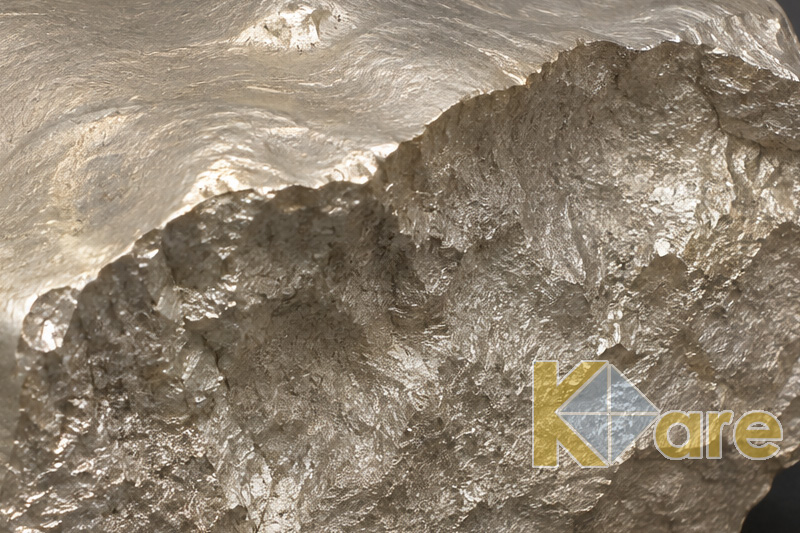
Nickel silver is a copper-based alloy (Cu) whose principal alloying elements are nickel (Ni) and zinc (Zn). It is characterised by a silvery colour, good mechanical properties and suitability for manufacturing thin and complex components. Nickel silver is used in precision instruments, fittings, musical instruments, decorative items and silver-plated products.
What is nickel silver?
Nickel silver belongs to the family of copper-based alloys. Nickel gives the material its silvery appearance and influences its strength and corrosion resistance, while zinc modifies its mechanical properties and processing characteristics. Specific properties depend on the proportions of the components and the material’s delivery condition.
The English name is nickel silver, while the German name is Neusilber. Despite these names, silver is not a principal component of conventional nickel silver. The material’s silvery colour results from its chemical composition and does not require the presence of silver.
Nickel silver should not be confused with cupronickel: both are copper alloys and may look similar, but nickel silver contains zinc as one of its principal components.
Chemical composition of nickel silver
The principal components of nickel silver are copper, nickel and zinc. There is no single composition for the entire alloy family: grades with different nickel and zinc contents are produced for forming, machining and other applications.
For example, CuNi18Zn20 (CW409J) contains approximately 60–63% copper and 17–19% nickel, with the remainder consisting mainly of zinc. Permitted levels of impurities and additional elements are specified for each individual grade.
| Element | Symbol | Role in the alloy |
|---|---|---|
| Copper | Cu | Forms the base of the alloy and provides ductility and suitability for forming |
| Nickel | Ni | Gives a silvery appearance and influences strength and corrosion resistance |
| Zinc | Zn | Modifies the material’s mechanical properties and processing characteristics |
| Lead | Pb | Added to certain grades to improve machinability |
Not all nickel silver grades contain lead. When selecting a material, check the complete grade designation and the manufacturer’s documentation.
Physical and mechanical properties
- Density: approximately 8.7 g/cm³ at room temperature for CuNi18Zn20; other grades may have different values.
- Colour: silvery white; the shade depends on composition and surface condition.
- Strength and hardness: depend on the grade and the degree of cold working.
- Ductility: suitable grades can be rolled, drawn, bent and stamped.
- Spring properties: certain grades and material conditions are suitable for resilient components.
- Thermal conductivity: considerably lower than that of pure copper; approximately 33 W/(m·K) for CuNi18Zn20.
- Electrical conductivity: considerably lower than that of pure copper; approximately 5.5% IACS for CuNi18Zn20.
IACS stands for International Annealed Copper Standard, a reference scale for comparing electrical conductivity with annealed copper. The numerical values given are indicative data for the specified grade, rather than universal properties of the entire alloy family.
European nickel silver grades
European documentation uses chemical composition designations and EN material numbers. Alphanumeric grade designations remain unchanged regardless of the language of the document.
| Grade | EN number | Characteristics | Applications |
|---|---|---|---|
| CuNi12Zn24 | CW403J | Nickel silver with a nominal nickel content of approximately 12% | Sheet metal and stamped components, fittings |
| CuNi18Zn20 | CW409J | Nickel silver with a nominal nickel content of approximately 18% | Resilient components, spectacle frame parts, small metal goods |
| CuNi18Zn27 | CW410J | Higher zinc content than CuNi18Zn20 | Strip and stamped components with specified mechanical properties |
| CuNi12Zn25Pb1 | CW404J | Leaded grade with improved machinability | Components requiring machining |
EN is the European standards system. For example, EN 1652 specifies requirements for copper and copper alloy plate, sheet, strip and circles for general purposes. Other product forms are covered by their respective standards. European standards adopted in Latvia may carry the designation LVS EN.
The material number identifies the grade but does not replace information about the delivery condition, dimensions or mechanical properties. These parameters must be checked separately.
Corrosion resistance
Nickel silver offers good corrosion resistance in many ordinary service conditions. However, a silvery surface does not mean complete resistance to all chemical environments: the material may tarnish and change appearance over time.
Resistance depends on the grade, environment, humidity and surface condition. Nickel silver should not automatically be considered a substitute for marine copper-nickel alloys: its zinc content and different composition require a separate assessment of the intended service conditions.
Production and processing
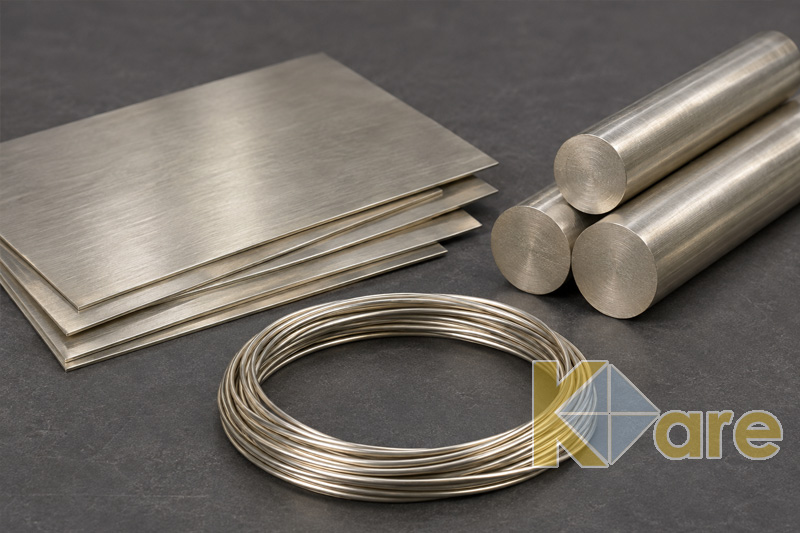
Nickel silver is supplied as sheet, strip, wire, rod, tube and special blanks. Depending on the grade, the material can be rolled, drawn, bent, stamped and machined.
Cold working increases strength and hardness while reducing ductility. Consequently, material intended for deep drawing and material intended for a spring component may have the same chemical composition but different delivery conditions.
Suitability for soldering, welding and coating must be assessed for the specific grade. Nickel silver is also used as a base material for silver plating: the coating and the underlying metal remain different materials.
Applications
- Precision instruments: precision stamped components, shields, housings and mechanism parts.
- Resilient components: contact springs and other parts made from suitable grades in the appropriate material condition.
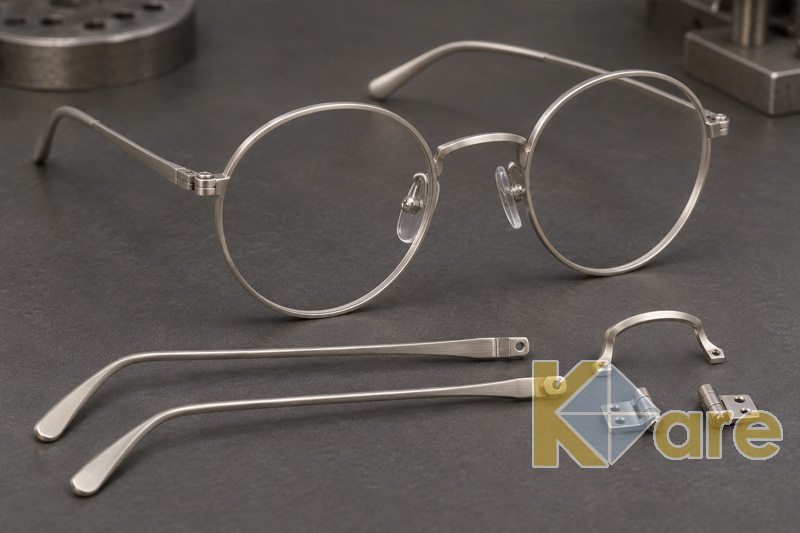
- Optical industry: metal spectacle frame components and accessories.
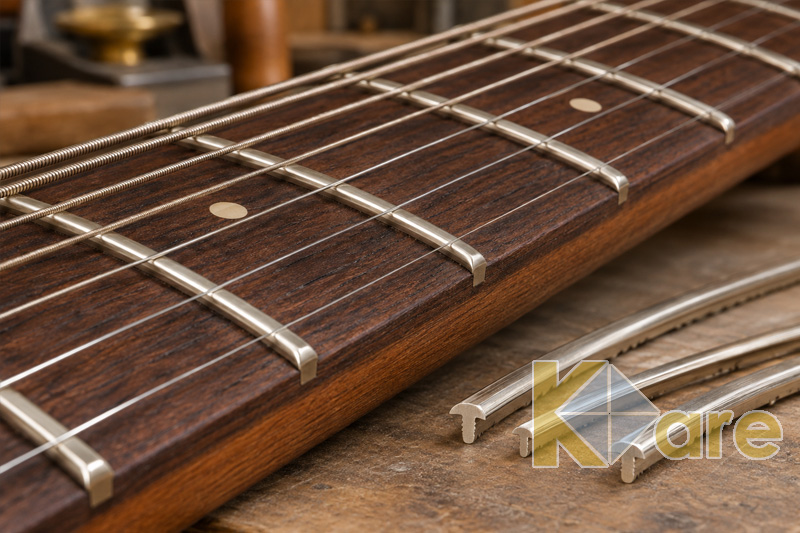
- Musical instruments: certain wind instrument parts, frets for stringed instruments and fittings.
- Small metal goods and fittings: fasteners, zip components, decorative trim and small metal items.
- Household and decorative products: cutlery and ornamental items, including silver-plated products.
Nickel silver, cupronickel and silver: what is the difference?
These materials may have a similar silvery appearance, but their compositions and properties differ. The name nickel silver does not mean that the material is a silver-based alloy.
| Characteristic | Nickel silver | Cupronickel | Silver and silver alloys |
|---|---|---|---|
| Principal composition | Cu + Ni + Zn | Cu + Ni | Ag or an alloy with silver as its principal component |
| Base metal | Copper | Copper | Silver |
| Zinc | One of the principal components | Not a principal alloying element | Depends on the silver alloy grade |
| Silver plating | Possible | Possible | Does not determine the composition of the underlying item |
| Typical applications | Fittings, precision and decorative components | Marine equipment, heat exchangers, coins | Jewellery, electrical contacts, silverware |
Colour and shine alone cannot reliably identify a material. A silver-plated nickel silver item retains its copper-nickel-zinc base and does not become solid silver throughout.
Advantages and limitations
The main advantages of nickel silver are its attractive silvery appearance, polishability, good mechanical properties and wide range of processing options. Different grades allow the manufacture of both decorative products and functional components.
Limitations include low electrical conductivity compared with pure copper, possible surface tarnishing and the dependence of properties on composition and delivery condition. Material cost is also influenced by nickel content.
For products that come into contact with skin or food, suitability cannot be determined from the alloy name alone. The specific grade, coating and requirements applicable to the finished product must be considered.
Nickel silver in scrap metal
Nickel silver scrap arises during the manufacture and dismantling of instruments, fittings, musical instruments, decorative products and household items. It may include sheet and strip offcuts, wire, machining swarf, stamped parts and worn components.
During scrap acceptance, it is important to distinguish nickel silver from cupronickel, brass, stainless steel, silver and nickel- or chromium-plated items. A silvery colour alone does not confirm the presence of nickel in the base metal.
Silver-plated items should be assessed with regard to both the underlying alloy and the coating. A thin silver layer does not mean that the entire weight of the item is silver.
Sorting and composition analysis
Assessment of nickel silver involves determining the copper, nickel and zinc content, along with any additional components. X-ray fluorescence analysis (XRF) can be used to identify the metallic composition.
Coatings, contamination and surface irregularities can affect measurement results. Where necessary, a prepared area of the base metal is analysed and measurements are taken at several locations.
Scrap of known grades should preferably be stored separately. Separating machining swarf, solid components and coated items also helps simplify assessment and subsequent recycling.
Recycling nickel silver
Nickel silver is a valuable secondary raw material because it contains copper, nickel and zinc. After sorting and preparation, the scrap is directed to an appropriate metallurgical recycling process.
Depending on its composition and quality, the material may be used to produce new copper alloys or processed to recover its constituent metals. The process selected depends on impurities, coatings and the requirements of the recycling facility.
Separate collection of nickel silver helps retain the value of its alloying components and reduces the mixing of different non-ferrous scrap streams.