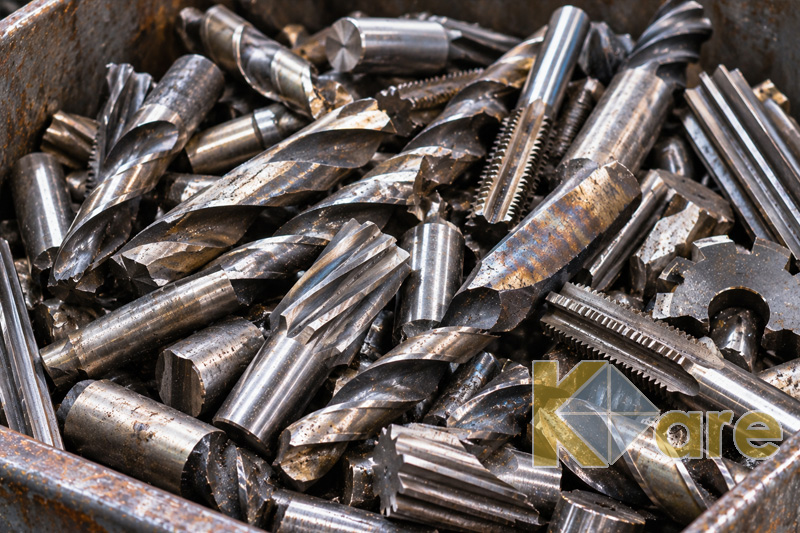
High-speed steel (HSS) is a group of highly alloyed tool steels designed for cutting tools operating at elevated cutting speeds and temperatures. It is based on iron (Fe) and carbon (C), with tungsten (W) and/or molybdenum (Mo), chromium (Cr) and vanadium (V) as important alloying elements.
The defining characteristic of high-speed steel is its ability to retain high cutting-edge hardness as the tool heats up during metalworking. This property is known as red hardness or hot hardness. HSS belongs to the wider family of tool steels but forms a distinct category because of its composition and intended use.
Chemical composition of high-speed steel
The composition depends on the specific HSS grade. In addition to iron and carbon, high-speed steels contain tungsten, molybdenum, chromium and vanadium. Some grades also contain cobalt (Co), which improves the tool's hot hardness.
Main properties
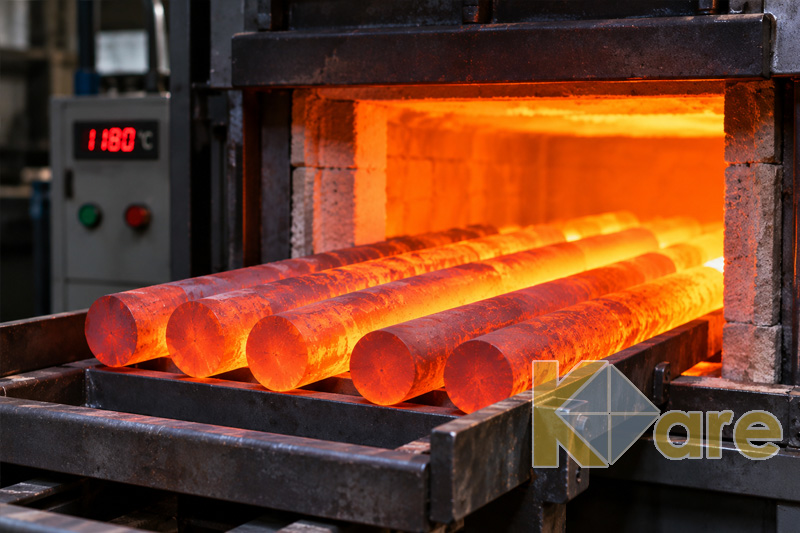
After appropriate heat treatment, high-speed steels combine high hardness, wear resistance and the ability to retain cutting-edge performance at elevated temperatures. Their working properties depend on chemical composition, carbide structure and hardening and tempering conditions.
European high-speed steel grades
European HSS designations are specified in EN ISO 4957. Steel material numbers under EN 10027-2 help identify individual grades. Common examples are listed below.
| EN grade | Material number | Characteristics | Applications |
|---|---|---|---|
| HS6-5-2 | 1.3343 | Molybdenum-tungsten high-speed steel | Drills, milling cutters, taps |
| HS6-5-2-5 | 1.3243 | Cobalt-alloyed high-speed steel | Tools for more demanding cutting conditions |
| HS2-9-1-8 | 1.3247 | High cobalt and molybdenum content | High-performance cutting tools |
| HS18-0-1 | 1.3355 | Tungsten-based high-speed steel | General-purpose cutting tools |
Applications of high-speed steel
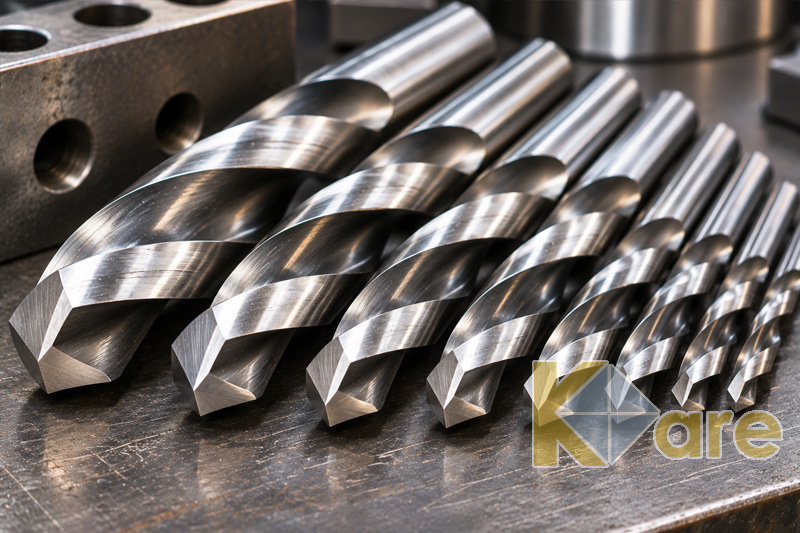
Drills and countersinking tools
Manufacture of twist drills, counterbores and other hole-making tools.
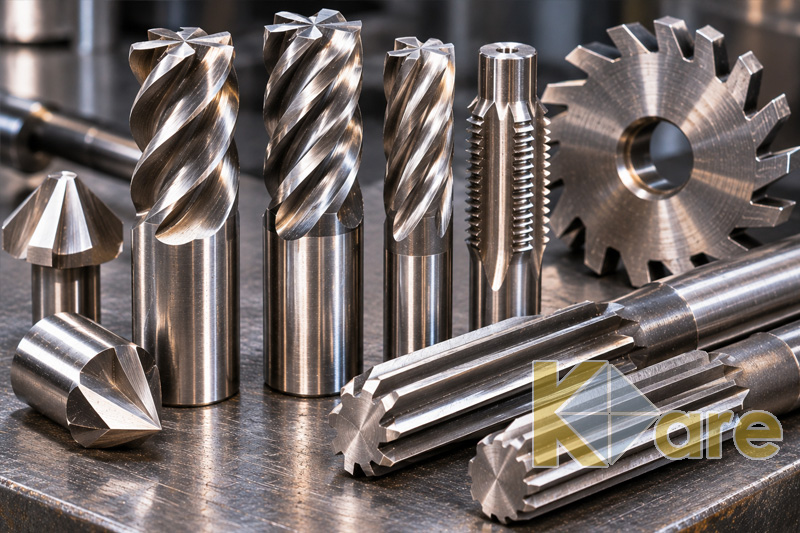
Milling cutters and taps
Production of end mills, disc cutters, taps, dies and thread-cutting tools.
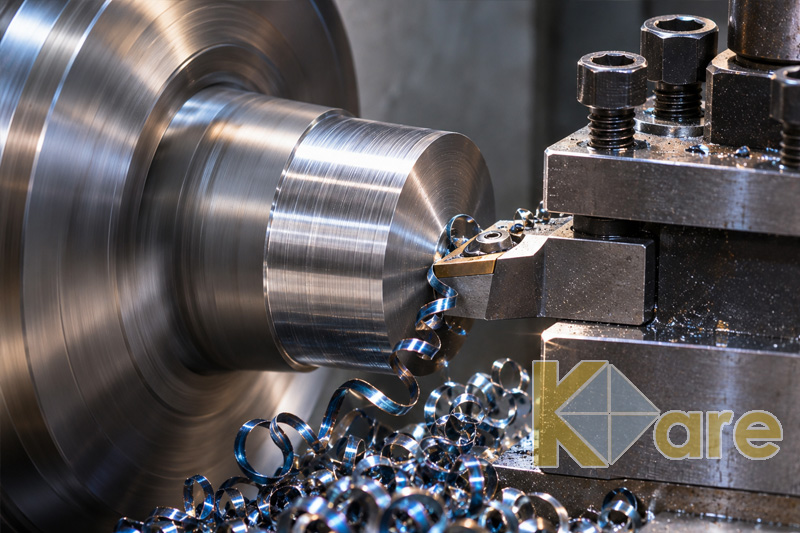
Cutting tools
Manufacture of broaches, reamers, turning tools and specialised cutting tools.
Industrial tooling
Use in selected wear-resistant tooling components and specialised tool parts.
High-speed steel versus conventional tool steel
High-speed steel is a type of tool steel, but not every tool steel is high-speed steel. The main distinction is the ability of HSS to retain hardness at elevated cutting-edge temperatures, which is particularly important during intensive machining operations.
High-speed steel scrap and recycling
HSS scrap is generated when worn drills, milling cutters, taps, broaches and other industrial cutting tools are replaced, as well as during the production and machining of tool-steel blanks. This material may contain valuable alloying elements such as tungsten, molybdenum, vanadium and, in some grades, cobalt.
During sorting, high-speed steel should be separated from ordinary steel scrap, and tool markings should be considered whenever possible. The precise composition is established from the material grade or analytical testing. Recycling enables iron and valuable alloying elements to be recovered for use in metallurgical production.