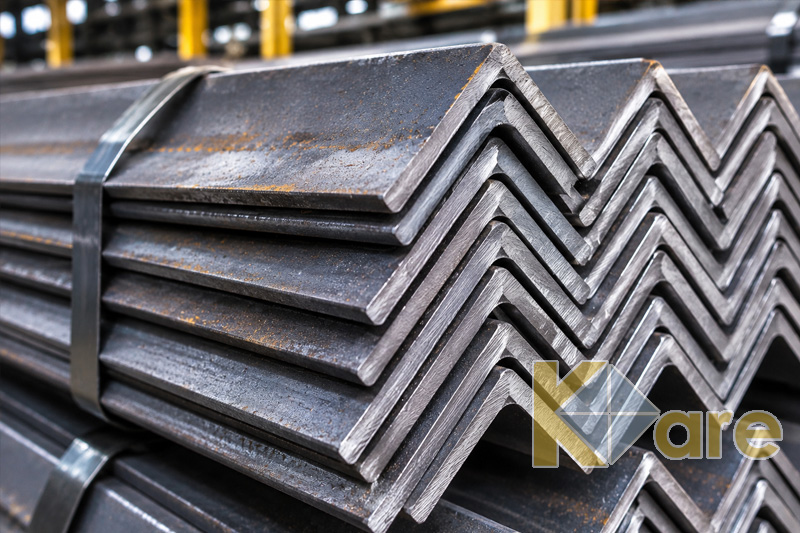
Carbon Steel (Fe + C) — Composition, Properties and Applications
Carbon steel refers to a group of iron-based steels whose properties are largely determined by carbon content, metal microstructure and heat treatment. Unlike specially alloyed steels, the required characteristics are primarily achieved by controlling carbon content and processing conditions.
Carbon steels are used in construction, mechanical engineering and the manufacture of pipes, metal structures, fasteners and industrial equipment. Because they are so widely used, they account for a substantial proportion of steel scrap generated by industry and consumers.
European technical documentation uses steel designations established under EN 10027-1. In Latvia, adopted European standards may carry the national designation LVS EN.
Chemical Composition of Carbon Steel
The main constituent of carbon steel is iron (Fe). Carbon (C) affects strength, hardness, ductility and the ability of steel to harden during heat treatment.
- Iron (Fe): the base metal of the alloy.
- Carbon (C): the principal element influencing carbon steel properties; its concentration depends on the grade.
- Manganese (Mn): used in deoxidation and influences strength.
- Silicon (Si): participates in deoxidation and may increase strength.
- Phosphorus (P): a controlled impurity; excessive amounts may reduce toughness and impair processing properties.
- Sulfur (S): a controlled impurity; elevated concentrations may reduce ductility and impair hot workability.
The expression Fe + C identifies the main constituents of the material but is not a steel grade designation. The precise chemical composition of a particular grade is established by the applicable standard and manufacturer's documentation.
Classification by Carbon Content
Carbon steels are commonly divided into three groups. The boundaries below are approximate and may differ depending on the classification system.
Low-Carbon Steel
Usually contains up to 0.25% carbon. It offers good ductility, weldability and cold-forming properties. Typical applications include sheet products, automotive bodies, pipes and building structures.
Medium-Carbon Steel
Usually contains approximately 0.25–0.60% carbon. It provides higher strength and hardness, particularly after suitable heat treatment. It is used for shafts, axles, gears and mechanical components.
High-Carbon Steel
Usually contains more than 0.60% carbon. Following appropriate heat treatment, it can achieve high hardness and wear resistance. Applications include springs, wire, cutting components and certain types of tools.
European Carbon Steel Grades and EN Standards
European steel designation systems are used throughout the European Union. EN 10027-1 establishes the rules for alphanumeric steel names, while EN 10027-2 establishes the steel numbering system.
EN 10083-2 specifies technical delivery conditions for certain unalloyed steels intended for quenching and tempering. In Latvia, the corresponding adopted European standard is identified by the prefix LVS EN.
Examples of European Steel Grades
| EN grade | Approximate C content | Typical applications |
|---|---|---|
| C15E | About 0.15% | Machine components, fasteners and parts with moderate strength requirements. |
| C22E | About 0.22% | Mechanical components, axles and fasteners. |
| C35E | About 0.35% | Shafts, axles and mechanical engineering components. |
| C45E | About 0.45% | Shafts, gears and mechanically loaded components. |
| C60E | About 0.60% | Spring components and wear-resistant parts after suitable processing. |
Important: the carbon percentages in the table illustrate the grade naming convention. They do not replace the specified chemical composition ranges, which must be checked against the applicable standard and edition.
How to Interpret C45E
- C — identifies an unalloyed steel designated by carbon content.
- 45 — indicates the mean carbon content multiplied by 100, approximately 0.45%.
- E — an additional designation associated with specified requirements for sulfur content.
European structural steels also use names such as S235JR and S355JR. These are primarily based on mechanical property requirements and follow a different naming principle within EN 10027-1. They must not automatically be treated as equivalents of C15E or C45E.
Physical and Mechanical Properties
Carbon steel properties depend significantly on the specific grade and delivery condition.
- Density: approximately 7.85 g/cm³.
- Melting temperature: approximately 1420–1530°C for many common grades.
- Magnetic properties: most carbon steels are ferromagnetic at room temperature.
- Strength: depends on composition, microstructure and heat treatment.
- Hardness: may increase considerably after quenching.
- Ductility: generally decreases as carbon content increases.
- Weldability: generally better in low-carbon steels.
Structural and mechanical design must rely on the specified properties of the particular steel grade rather than average values for the entire carbon steel family.
Heat Treatment
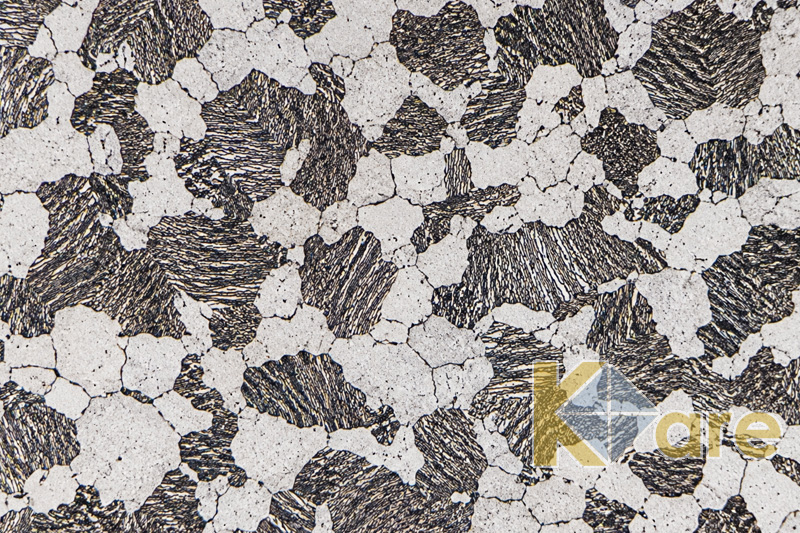
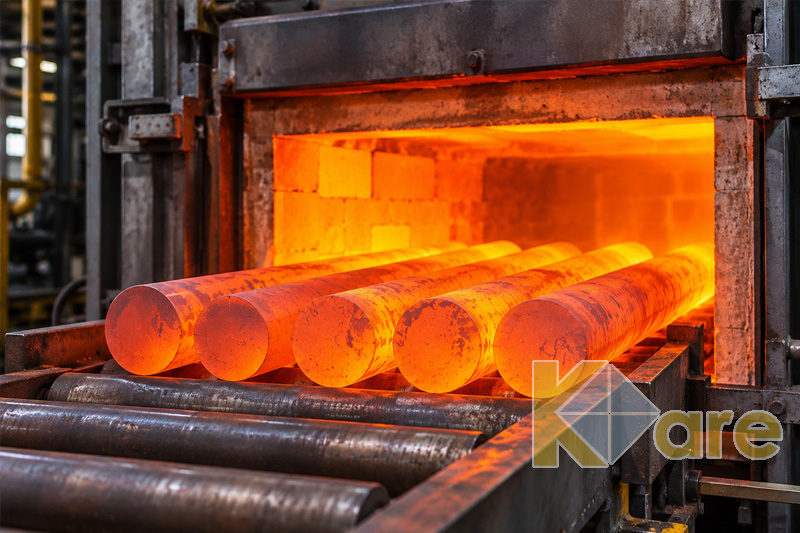
Heat treatment changes the structure and mechanical properties of steel without changing its original chemical composition.
- Annealing: reduces hardness and internal stresses while improving machinability.
- Normalizing: promotes a more uniform microstructure.
- Quenching: increases hardness when the carbon content and processing conditions are suitable.
- Tempering: follows quenching to reduce brittleness and adjust strength and toughness.
Corrosion and Protection
Carbon steel is generally susceptible to atmospheric corrosion. Exposure to oxygen and moisture causes rust to form, gradually damaging the metal surface.
Protective measures include painting, hot-dip galvanizing, powder coating and other anticorrosion systems. The appropriate method depends on operating conditions and product requirements.
Applications of Carbon Steel
- Construction: beams, reinforcing bars, profiles and steel frames.
- Mechanical engineering: shafts, axles, gears, bushings and fasteners.
- Automotive manufacturing: body panels, frame components and mechanical parts.
- Pipe manufacturing: structural pipes and process pipelines.
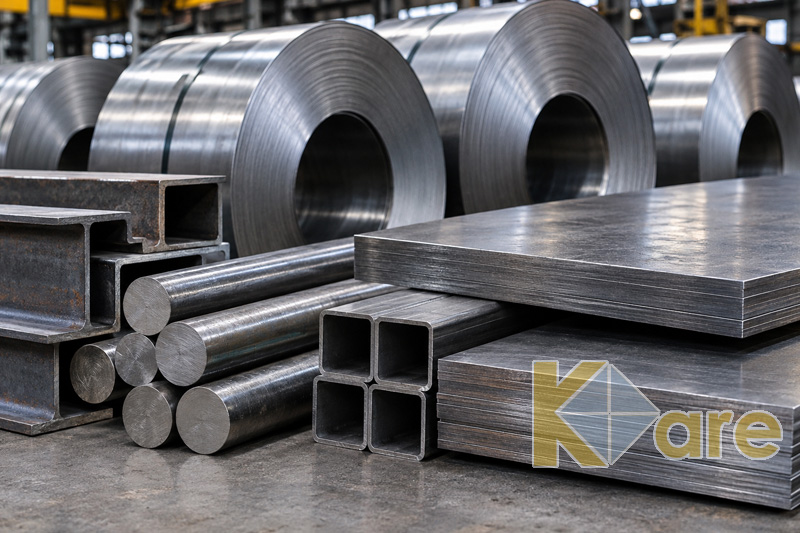
- Rolled steel products: sheets, strips, bars and structural profiles.
- Industrial equipment: housings, tanks, supports and auxiliary structures.
Carbon Steel Production
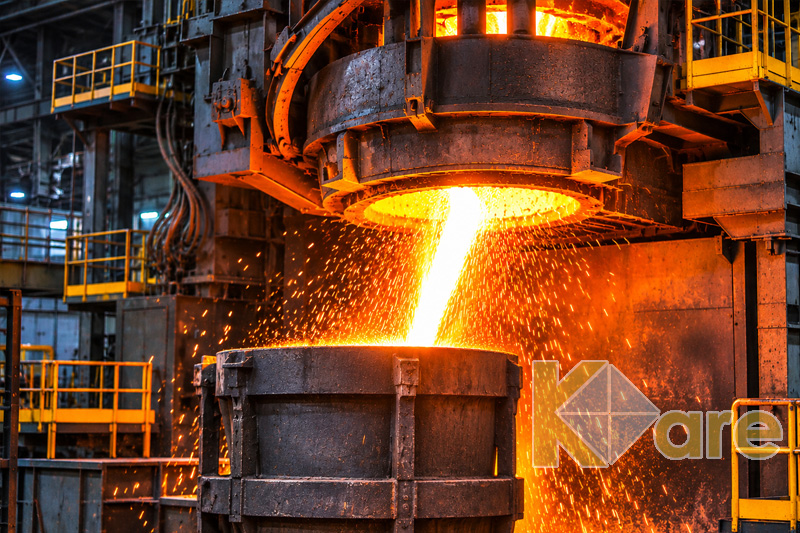
The principal industrial steelmaking methods include basic oxygen steelmaking and electric arc furnace production. Raw materials include pig iron, steel scrap and other iron-bearing materials.
During steelmaking, carbon content is adjusted, unwanted impurities are reduced and chemical composition is controlled. The metal is then cast and processed by rolling, forging or other manufacturing methods.
Carbon Steel as Scrap Metal
Carbon steel scrap is one of the main categories of ferrous scrap. It is generated during building demolition, vehicle recycling, equipment replacement and the manufacture of metal products.
Common sources include:
- steel beams, profiles and reinforcing bars;
- sheet metal and rolled-product offcuts;
- automotive bodies and frame components;
- steel pipes and storage tanks;
- machine components and manufacturing waste.
During sorting, carbon steel should be separated from stainless and other highly alloyed steels, non-ferrous metals and non-metallic contaminants. Magnetic separation helps recover a substantial proportion of steel scrap, but cannot reliably identify a specific steel grade by itself.
Appearance and magnetic properties cannot reliably distinguish C15E, C45E and C60E. Appropriate analytical methods are required to identify the chemical composition accurately.
Steel scrap recycling returns metal to production and reduces demand for primary raw materials. Sorting quality influences the ability to manufacture new steel with specified characteristics.
Interesting Facts About Carbon Steel
- Carbon steel is not a single grade but a large family of materials.
- The designation C45E is written identically in technical documents in different European languages.
- Increasing carbon content generally raises the potential hardness after quenching but reduces ductility.
- The same grade may exhibit different properties depending on heat treatment.
- A steel grade cannot be reliably identified by colour, weight or magnetic attraction alone.