Beryllium copper is a high-strength copper alloy in which beryllium (Be) is the principal alloying element. It combines high strength, elasticity, wear resistance and useful electrical conductivity. The material is used in electrical contacts, springs, precision mechanisms and specialised tools.
What is beryllium copper?
Beryllium copper belongs to the family of precipitation-hardenable copper alloys. After appropriate heat treatment, it develops excellent mechanical properties while retaining useful characteristics of its copper base.
Depending on the grade, these alloys may contain nickel, cobalt and other additions that influence strength, electrical conductivity and processing characteristics. High-strength and high-conductivity grades are designed for different operating requirements.
Chemical composition
Copper (Cu) forms the base of the alloy. Beryllium content varies by grade: high-strength alloys often contain approximately 1.6–2.0% beryllium, while high-conductivity varieties may contain considerably less.
| Element | Symbol | Function |
|---|---|---|
| Copper | Cu | Base metal providing thermal and electrical conductivity |
| Beryllium | Be | Enables precipitation hardening and increased strength |
| Cobalt | Co | Used in selected grades to control microstructure and properties |
| Nickel | Ni | Present in certain high-conductivity compositions |
Physical and mechanical properties
- Density: typically around 8.2–8.9 g/cm³, depending on grade.
- Strength: heat-treated high-strength grades may exceed 1,000 MPa in tensile strength.
- Elasticity: excellent spring performance, important for contacts and resilient components.
- Electrical conductivity: depends on composition and condition; high-conductivity grades differ from high-strength grades.
- Wear resistance: good when the appropriate grade and treatment are selected.
- Magnetic properties: many grades are essentially non-magnetic.
Beryllium copper grades
Beryllium copper alloys are produced under different standardisation systems. High-strength and high-conductivity varieties differ in beryllium content and additional alloying elements.
| Grade | System | Characteristics | Applications |
|---|---|---|---|
| CuBe2 | EN | High-strength copper-beryllium alloy | Springs, contacts and precision parts |
| C17200 | UNS | High-strength beryllium copper | Electrical contacts and spring components |
| C17510 | UNS | High-conductivity nickel-beryllium copper alloy | Contact parts and electrical components |
Heat treatment
One of the defining features of beryllium copper is its ability to strengthen through ageing after suitable solution heat treatment. During ageing, fine precipitates form within the alloy, increasing its strength and hardness.
Heating temperatures and holding times depend on the grade, component dimensions and required properties. Incorrect heat treatment can reduce performance.
Processing and manufacturing
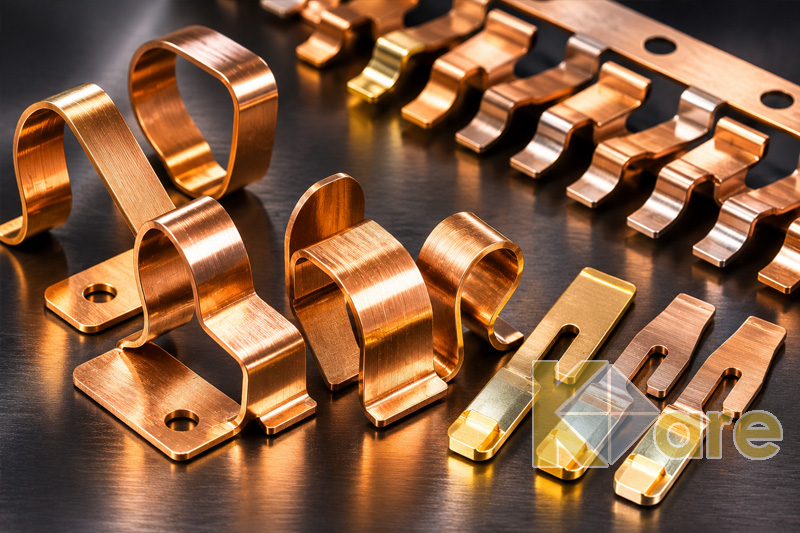
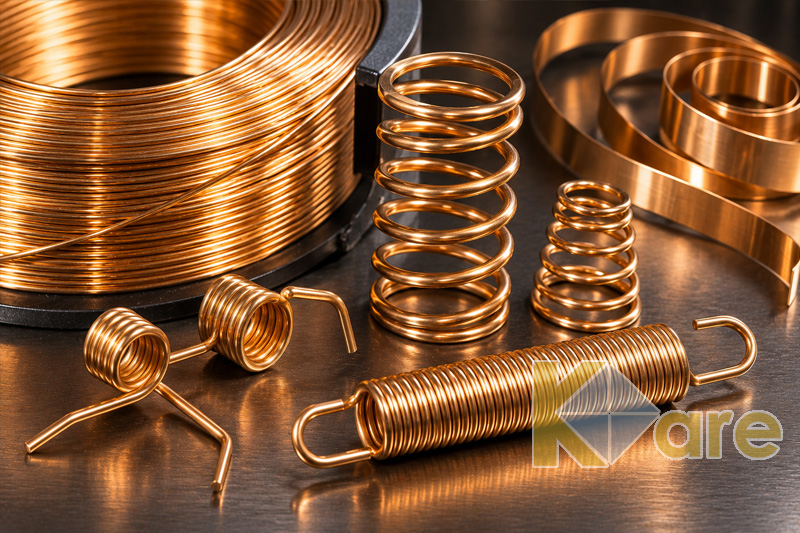
Beryllium copper is supplied as strip, sheet, wire, rods and specialised stock. It is used to manufacture stamped, machined and spring components. The processing method depends on the material condition and final product requirements.
Machining operations must prevent the formation and release of hazardous beryllium-containing dust and airborne particles. Standard precautions for machining ordinary copper may not be sufficient.
Applications
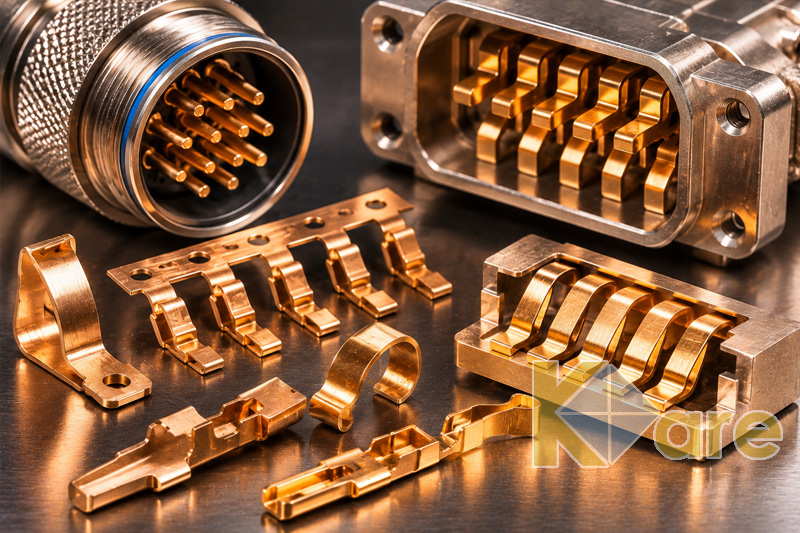
- Electrical engineering: contact assemblies, connectors and spring-loaded conductive components.
- Precision instruments: fine springs, diaphragms and resilient parts.
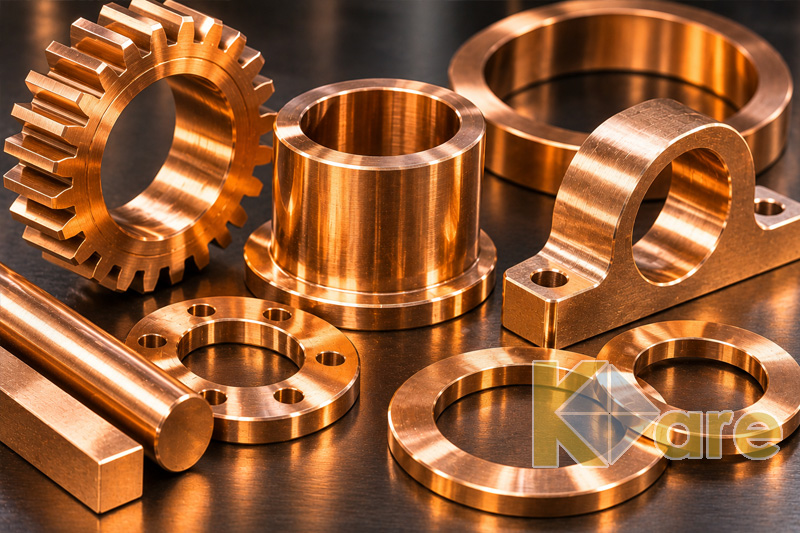
- Mechanical engineering: wear-resistant components and specialised mechanisms.
- Tool manufacturing: specialised tools designed to reduce the risk of impact sparks.
- Industrial equipment: electrodes and contact components made from selected high-conductivity grades.
Advantages and limitations
Key advantages include high strength, elasticity, durability and the ability to combine mechanical performance with electrical conductivity. Limitations include alloying cost, the need for controlled heat treatment and special occupational safety requirements.
Beryllium copper as scrap metal
Beryllium copper scrap may include strip and rod offcuts, electrical contact parts, springs, production residues and dismantled components. Accurate classification requires information about the alloy grade and chemical composition.
Appearance alone cannot reliably distinguish beryllium copper from other copper alloys. Identification requires an analytical method capable of detecting beryllium; not every standard handheld scrap-metal analyser is suitable for this purpose.
Safety when handling beryllium copper
Beryllium and certain beryllium compounds present serious health hazards when airborne dust or fumes are inhaled. Grinding, dry machining, cutting and melting require particular control because they may generate hazardous airborne contaminants.
Such operations require appropriate engineering controls, exposure monitoring and compliance with applicable occupational safety requirements. Scrap of unknown composition should not be crushed, heated or remelted without proper assessment and controls.
Recycling beryllium copper
Recycling beryllium-containing copper alloys requires reliable identification, separate collection and specialised processing conditions. Remelting operations must control both the composition of the recovered metal and potential hazardous emissions affecting workers and the environment.
With suitable industrial controls, recovered material can be used to manufacture new copper alloys. Separate sorting preserves material value and helps prevent contamination of other non-ferrous scrap streams.