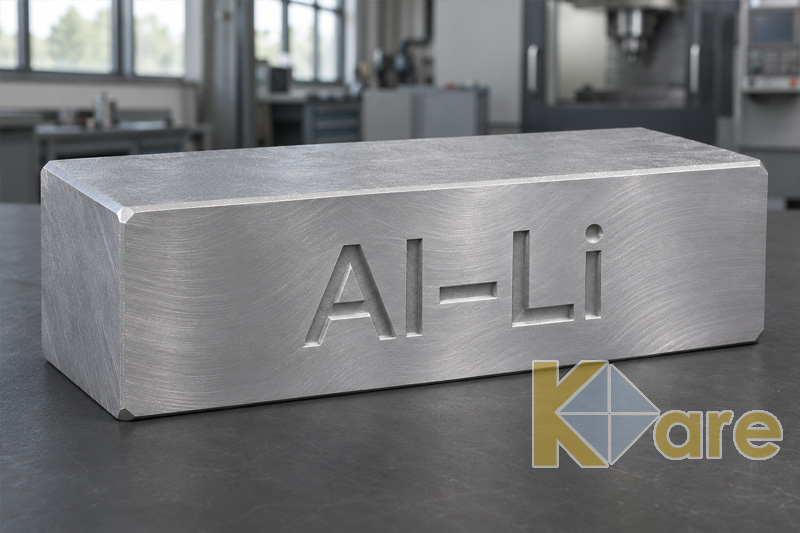
Aluminium-lithium alloys are lightweight structural materials based on aluminium with lithium additions. They are developed to combine reduced density, high specific stiffness and the required strength characteristics. Their principal applications are aircraft and spacecraft structures, where reducing weight is particularly important.
What are aluminium-lithium alloys?
Lithium is a lightweight alloying element that can reduce the density of aluminium materials and increase their elastic modulus. This makes aluminium-lithium alloys attractive for structures in which weight, stiffness and strength all matter.
The formula Al + Li identifies a family of materials rather than the exact composition of every grade. Industrial alloys usually contain additional elements, including copper, magnesium, silver and zirconium.
Many modern grades belong to the Al–Cu–Li system. Aluminium-lithium alloys should therefore not be treated as exclusively binary materials or assigned collectively to a single numerical series.
Chemical composition
| Element | Symbol | Role in the alloy |
|---|---|---|
| Aluminium | Al | Base metal |
| Lithium | Li | Reduces density, increases elastic modulus and participates in strengthening precipitates |
| Copper | Cu | An important constituent of many modern heat-treatable grades |
| Magnesium and silver | Mg, Ag | Influence precipitation and property development in selected compositions |
| Zirconium | Zr | Helps control the structure and recrystallisation behaviour |
| Other elements | Mn, Zn and others | Present depending on the grade and application |
Lithium and other element contents should be checked against the specification for the individual grade. A higher lithium content does not automatically mean a better material: strength, ductility, fracture toughness and manufacturability must be balanced.
Physical and mechanical properties
- Appearance: silvery metal that resembles other aluminium alloys.
- Density: reduced compared with comparable conventional aluminium alloys.
- Elastic modulus: lithium additions can increase material stiffness.
- Specific properties: a favourable relationship between mechanical properties and density.
- Strength: depends on composition, temper and product form.
- Fracture toughness: depends on grade, processing and loading direction.
- Fatigue performance: assessed for the individual grade and structural application.
- Anisotropy: properties can vary with direction relative to rolling or extrusion.
No single density, strength or ductility value applies to the entire family. Design calculations use data for the specific material, thickness and delivery temper.
Grades and designations
| Grade | Features | Application examples |
|---|---|---|
| 2050 | A modern aluminium-copper-lithium alloy | Plate and machined load-bearing components |
| 2195 | An Al–Cu–Li alloy known for space applications | Cryogenic tanks and other critical structures |
| 2198 | An aluminium-lithium alloy for structural sheet products | Panels and aircraft skin components |
Four-digit designations identify individual wrought aluminium alloys. A commercial family name does not replace the grade and temper designation.
European and international aerospace projects use EN requirements, aerospace specifications and customer documents. An EN AW designation and reference to a particular standard should be stated only when supported by the material documentation.
Heat treatment and tempers
Many industrial aluminium-lithium grades are heat-treatable. Their properties are developed through a combination of solution heat treatment, quenching, controlled deformation and ageing.
Strengthening precipitates form during ageing. Their composition, size and distribution depend on alloy chemistry and processing conditions.
T8, T84 and other designations describe particular processing conditions. Properties for one temper must not be transferred to another without verification.
Corrosion resistance
Corrosion behaviour depends on composition, temper and service conditions. Critical structures are assessed for general corrosion, localised attack and susceptibility to stress corrosion cracking.
Surface preparation, protective coatings, joint sealing and prevention of undesirable contact with other materials form part of the product design.
Production and processing
Depending on the grade, aluminium-lithium alloys are supplied as sheets, plates, extruded profiles and other product forms. Production requires control of composition, structure and processing conditions.
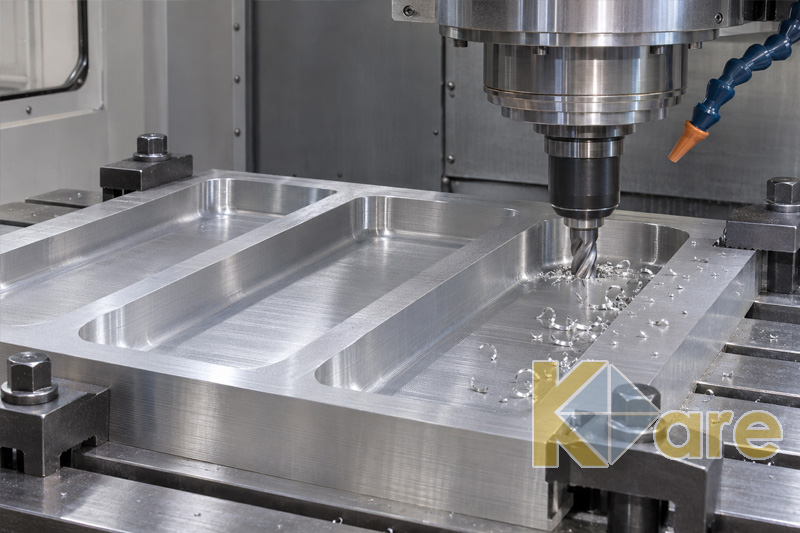
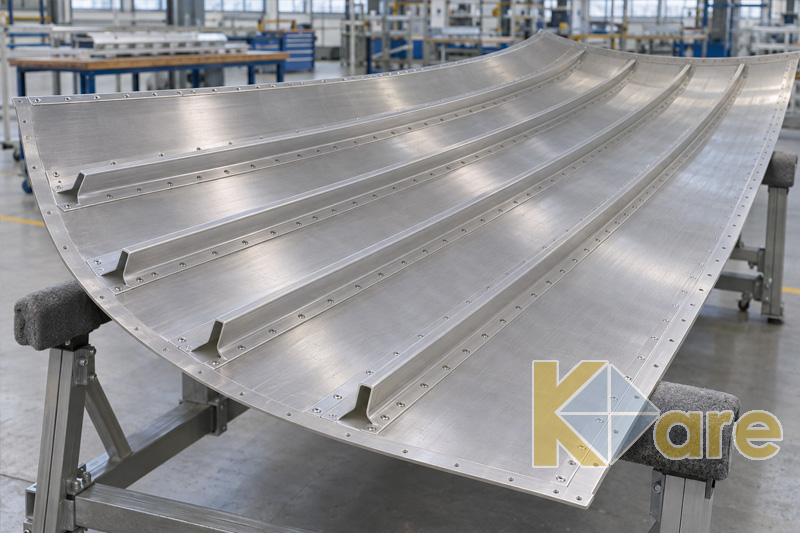
Plate is machined into components, including panels with integral stiffening ribs. Formability and permissible bend radii depend on material temper and thickness.
Joining components
Structures use mechanical joints and, for suitable grades, specialised welding processes. Weldability should not be assumed to be the same throughout the family.
Fusion welding and friction stir welding require appropriate process parameters and verification of joint properties. Structural changes, residual stresses and performance in the joint region must be considered.
Applications
- Aircraft structures: skin panels, stringers and load-bearing components.
- Wing structures: selected panels and internal components made from suitable grades.
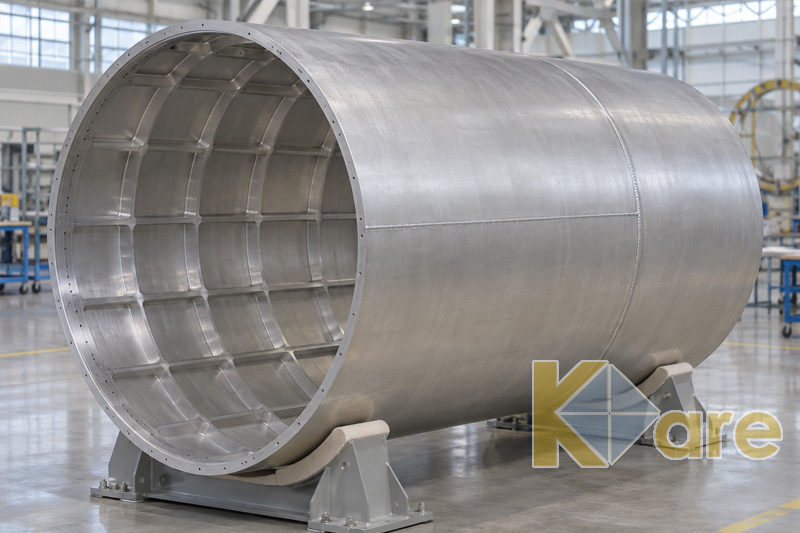
- Space technology: tanks and structural elements with demanding weight targets.
- Cryogenic systems: components with verified low-temperature properties.
- Precision structural parts: machined products requiring stiffness combined with low weight.
A well-known example is the use of alloy 2195 in the Space Shuttle Super Lightweight External Tank. Suitability for cryogenic conditions is established for the particular grade, temper and joints.
Comparison with other aluminium alloys
| Group | Main components | Features |
|---|---|---|
| Aluminium-manganese | Al + Mn | Formability and strengthening by cold working |
| Aluminium-magnesium | Al + Mg | Corrosion resistance and processability of suitable grades |
| Aluminium-zinc | Al + Zn + Mg, sometimes Cu | High strength after appropriate treatment |
| Aluminium-lithium | Al + Li, often Cu and other elements | Reduced density and increased specific stiffness |
Advantages and limitations
The main advantages are the potential to reduce structural weight and achieve high specific stiffness. Composition and processing can be selected to meet the requirements of aircraft and spacecraft components.
Limitations include cost, manufacturing and joining complexity, directional properties and demanding quality control. Greater stiffness alone does not guarantee greater component strength or service life.
How a grade is selected
Selection considers loads, stiffness, fatigue and fracture-toughness requirements, service temperature, thickness and joining method. Available product forms and approved design properties are also important.
The material is selected using the full grade and temper designation, specification and structural requirements rather than the general formula Al + Li alone.