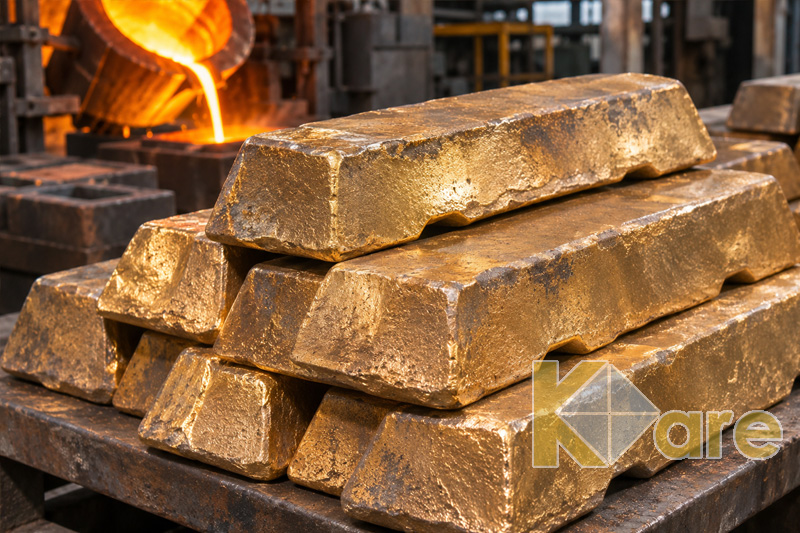
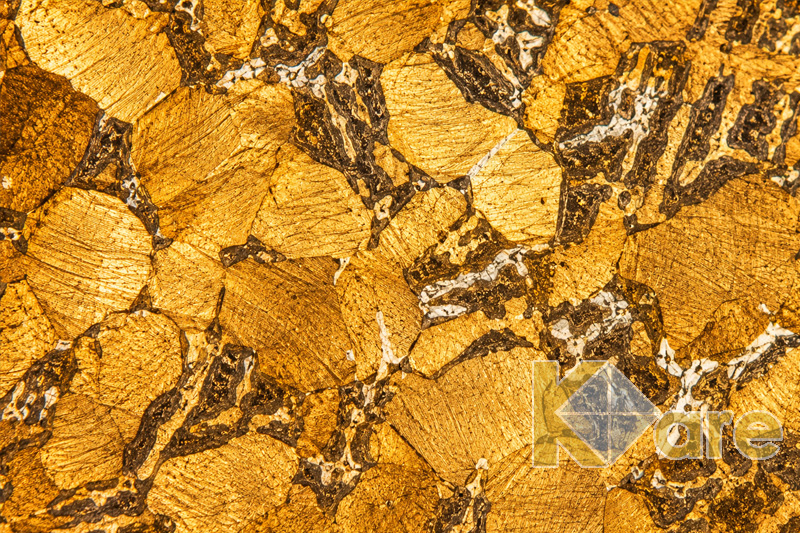
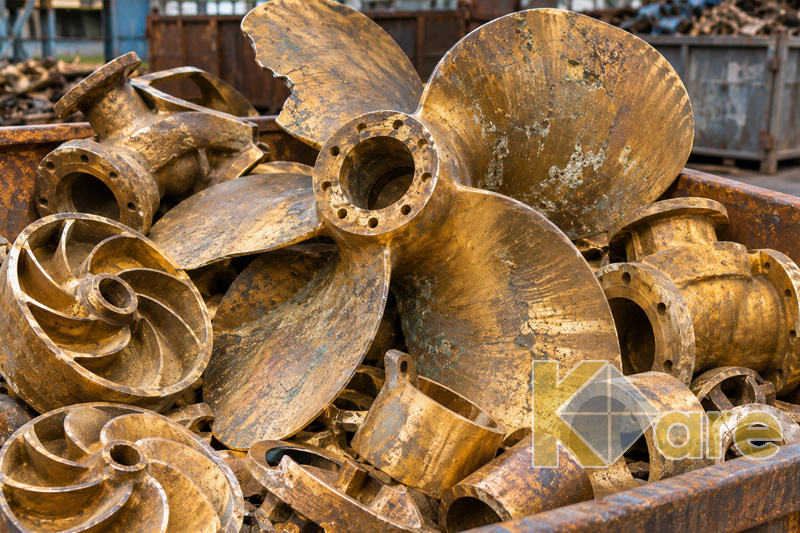
Aluminium bronze is a family of copper alloys in which aluminium (Al) is the principal alloying element. Despite its name, the base metal is copper (Cu), while aluminium is added to improve strength, hardness, wear resistance and corrosion resistance.
Aluminium bronzes are used in shipbuilding, mechanical engineering, the chemical industry, and the manufacture of pumps, valves, bushings and critical machinery components. Depending on the grade, the alloy may also contain iron, nickel and manganese.
Chemical composition of aluminium bronze
Copper forms the base of aluminium bronze. In many industrial grades, aluminium content is approximately 5–12%. Iron, nickel and manganese may be added to improve mechanical and service properties. The exact composition is determined by the material grade and its applicable standard.
| Element | Typical content | Role in the alloy |
|---|---|---|
| Copper (Cu) | Major constituent | Base metal, providing thermal conductivity and ductility |
| Aluminium (Al) | Often approximately 5–12% | Increases strength, hardness and corrosion resistance |
| Iron (Fe) | In selected grades | Contributes to strengthening and microstructural refinement |
| Nickel (Ni) | In special grades | Improves mechanical strength and resistance in aggressive environments |
| Manganese (Mn) | In selected grades | Influences strength and processing characteristics |
Main types of aluminium bronze
Binary aluminium bronze. Consists primarily of copper and aluminium. Used for components requiring strength and corrosion resistance.
Iron-containing aluminium bronze. Alloyed with iron to promote a stronger microstructure and improved wear resistance.
Nickel aluminium bronze. Contains nickel and iron. Combines high strength, corrosion resistance and favourable service properties in seawater.
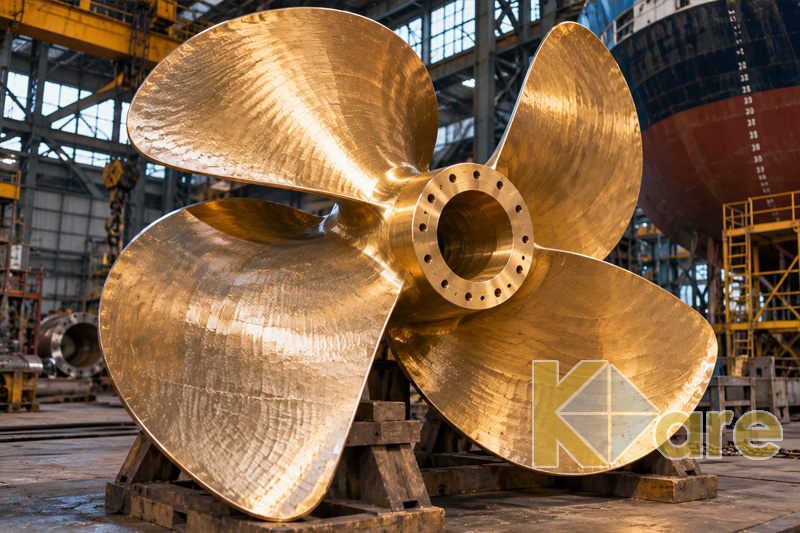
Cast aluminium bronze. Used for shaped castings, pump housings, marine propellers, valves and other complex components.
Wrought aluminium bronze. Used to produce rods, sheets, strips and other semi-finished products for forming and machining.
European aluminium bronze grades
European material designations use CW numbers for wrought copper alloys and CC numbers for cast copper alloys. Aluminium bronze grades include the following examples.
| Grade | Designation | Characteristics and applications |
|---|---|---|
| CW302G | CuAl8Fe3 | Wrought iron-containing aluminium bronze for strong components |
| CW307G | CuAl10Ni5Fe4 | Nickel aluminium bronze for heavily loaded, corrosion-resistant components |
| CC331G | CuAl10Fe2-C | Cast bronze for machinery components and industrial valves |
| CC333G | CuAl10Fe5Ni5-C | Cast nickel aluminium bronze for marine and pump components |
Actual properties depend on chemical composition, manufacturing method, heat treatment and the requirements of the relevant standard.
Physical and mechanical properties
Density: typically around 7.4–8.0 g/cm³, depending on the grade.
Melting range: approximately 1000–1080°C for many industrial grades; exact values depend on composition.
Colour: golden-yellow or yellowish-brown, sometimes with a reddish tint.
Strength: high among copper alloys, particularly for nickel aluminium bronze grades.
Wear resistance: good when the appropriate grade and operating conditions are selected.
Corrosion resistance: high in many industrial and marine environments due to a protective surface oxide film.
Magnetic properties: depend on composition and microstructure; certain iron-containing grades may exhibit magnetic behaviour.
Why is aluminium bronze corrosion-resistant?
Aluminium promotes the formation of a thin, protective oxide film on the alloy surface. This film limits further interaction between the metal and its surroundings, improving corrosion resistance.
As a result, certain aluminium bronze grades are suitable for seawater, pumping systems and industrial equipment. However, performance depends on alloy composition, flow velocity, temperature, environmental chemistry and other operating conditions.
How does aluminium bronze differ from tin bronze and brass?
Aluminium bronze contains copper and aluminium (Cu + Al). Tin bronze is based on copper and tin (Cu + Sn), while brass is based on copper and zinc (Cu + Zn).
Aluminium bronzes are often selected for heavily loaded, corrosion-resistant components. Tin bronzes are widely used in bushings and plain bearings, while brass is common in fittings, plumbing valves and decorative products. Actual properties always depend on the specific grade.
Applications of aluminium bronze
- Marine propellers and shipboard equipment components.
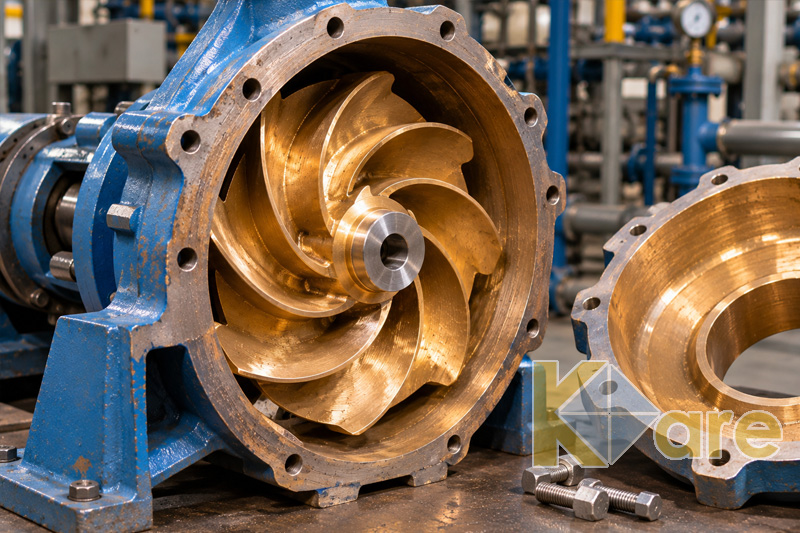
- Pump impellers, housings and shut-off valve components.
- Bushings, plain bearings, guides and wear-resistant parts.
- Gears and heavy engineering components.
- Chemical and petrochemical processing equipment.
- Components operating under significant mechanical loads and in corrosive environments.
Aluminium bronze scrap and recycling
Aluminium bronze occurs in industrial scrap as old marine propellers, pump components, bushings, valves, gears, castings and manufacturing offcuts. Machining chips and cuttings can also be recycled.
During sorting, aluminium bronze should be distinguished from brass, tin bronze and other copper alloys. Colour alone cannot reliably identify its composition, so instrumental analysis may be required.
Aluminium bronze is a valuable copper-based secondary raw material. Recycling returns copper, aluminium and other alloying elements to the production cycle. Acceptance conditions depend on composition, cleanliness, contamination and scrap type.